
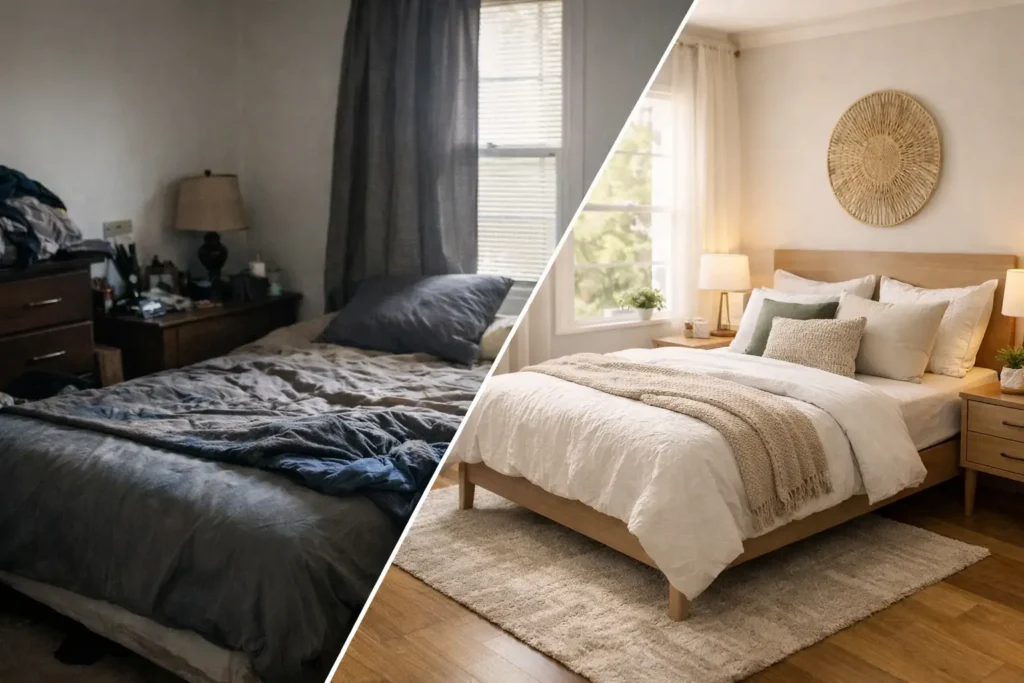

A small bedroom makeover before after does not need a wall-moving renovation to feel dramatic. Often, the biggest change comes from clearing visual noise, choosing furniture that earns its footprint, and giving the room one calm direction. Whether your bedroom is a rented apartment nook, a first home’s tiniest room, or the space where everyone seems to drop laundry, bags, and bedtime clutter, it can still become a place you look forward to ending the day.
The most satisfying transformations are not about making a small room pretend it is large. They are about making every inch feel intentional, comfortable, and personal.
A Small Bedroom Makeover Before After Starts With What You See
Before buying paint or a new comforter, take an honest look at the room as it is right now. The “before” is usually not one big problem. It is a collection of small frustrations: a bed that overwhelms the layout, a nightstand piled with cords, clothes without a true home, dim lighting, or decor that no longer feels like you.
Take a few photos from the doorway and from the bed. Photos make it easier to spot what your eyes have learned to ignore. Notice where the room feels crowded, what takes up the most visual space, and what you use every day. That last part matters. A pretty bedroom that makes it hard to get dressed or store a blanket will not feel restful for long.
Decide what your “after” needs to do
Choose two or three priorities before you start. Maybe you need better clothing storage, a lighter feel, and a reading spot. Maybe the goal is simply to make the room feel more grown-up and less temporary. Keeping the goal narrow prevents the common mistake of bringing home lots of small decor pieces that add personality but not relief.
A helpful rule is to spend first on the item that solves a daily problem. In one room, that may be under-bed storage. In another, it may be blackout curtains that finally make sleep easier. Your best makeover is the one that supports the way you actually live.
6 Changes That Create a Noticeable Before and After
1. Rethink the bed placement before buying furniture
The bed is usually the room’s largest piece, so its location sets the whole mood. Centering it on the longest wall can look balanced, but it is not always the most functional choice. In a narrow room, shifting the bed toward one wall may create a clearer path and make space for a slim dresser or a small desk.
Leave enough room to walk comfortably, especially around the side you use to get in and out of bed. If a full or queen bed fills almost every wall, skip oversized nightstands. A wall-mounted shelf, petite pedestal table, or narrow cabinet can give you a landing spot without squeezing the room further.
2. Use one calming color story
Small bedrooms feel busiest when every surface asks for attention. A simple palette gives the room an immediate sense of order, even before you organize a drawer. Start with a soft neutral, warm white, muted blue, sage, clay, or another color that makes you exhale. Then layer in two supporting tones through bedding, art, and textiles.
This does not mean everything needs to match. In fact, matching every item can make a room feel flat. The goal is connection. For example, creamy walls, natural wood, soft green bedding, and a small rust-colored pillow feel collected because the colors share an earthy warmth.
If you rent or do not want to paint, let the largest washable textiles do the work. A duvet cover, curtains, and an area rug can change the room’s personality just as clearly as a new wall color.
3. Give clutter a hidden home
A beautiful small bedroom still needs to hold real life. The trick is keeping daily necessities accessible without leaving them on display. Use the space under the bed for off-season clothes, extra linens, or shoes in low-profile bins. Choose a nightstand with a drawer or door if books, hand cream, charging cords, and medication tend to gather there.
Vertical storage is equally helpful. A tall, narrow dresser can often store more than a wide, low one while preserving valuable floor space. Wall hooks behind the door work well for robes and bags, but set a limit. When every hook is full, the room starts to look like a storage closet instead of a retreat.
Open shelving can be lovely, but it comes with a trade-off: it requires regular editing. If you prefer a low-maintenance bedroom, closed storage will usually feel calmer.
4. Make lighting part of the makeover
Many underwhelming bedroom “befores” have one thing in common: all the light comes from a single overhead fixture. Adding layers makes a room feel softer and more useful at the same time. A bedside lamp creates an inviting evening glow, while a floor lamp can brighten a dark corner without requiring electrical work.
Choose warm bulbs rather than cool, bluish ones. Warm light is kinder to skin tones, bedding colors, and the winding-down routine you want your bedroom to support. If surface space is limited, plug-in wall sconces are a smart alternative to table lamps. They can look polished without taking over a tiny nightstand.
5. Choose curtains that make the room feel taller
Curtains are one of the easiest ways to change a small bedroom’s proportions. Hang the rod several inches above the window frame and extend it beyond the window on both sides. When the curtains are open, they will reveal more glass and bring in more natural light. When they are closed, they create a fuller, more finished backdrop.
Keep the fabric close to the wall color for an airy effect, or choose a subtle pattern if the rest of the room is simple. For better sleep, use blackout panels or add a blackout liner. This is one upgrade that improves both the after-photo and your actual morning.
6. Edit decor instead of filling every empty spot
The final layer is where a bedroom starts to feel like yours, but a small room needs a lighter hand. Choose a few pieces with presence: one meaningful framed print, a textured throw, a small tray for bedside essentials, or a plant if the room gets enough light. Let each piece have room around it.
Mirrors can help bounce daylight around, particularly when placed across from or beside a window. Still, do not add one only because small-space advice says you should. If a mirror reflects a crowded closet, laundry basket, or busy doorway, it may double the visual clutter instead.
A Realistic Weekend Makeover Plan
You can make a visible difference in a weekend by working in the right order. Start by removing everything that does not belong in the bedroom. Then clear surfaces, sort clothing, and make a donation bag before you bring in any new organizers. It is much easier to see what storage you need once the excess is gone.
Next, move the furniture and test the layout. Make the bed with fresh or newly chosen bedding, then add curtains, lighting, and a rug if those are part of your plan. Save art and small accessories for last. This order helps you avoid decorating around clutter and makes the room feel better at every stage.
For a budget-friendly approach, focus your spending on one or two high-impact pieces. New bedding and window treatments can transform a tired room more than several trendy accessories. Shop your home, too: a lamp from the living room, a favorite framed photo, or a basket already on hand may be exactly what the space needs.
Small Bedroom Makeover Mistakes to Avoid
Do not assume smaller furniture is always better. A room full of tiny pieces can feel more scattered than a room with one properly scaled dresser and a simple bed. Fewer, more useful pieces generally create a calmer result.
Avoid pushing every piece of furniture against the wall just because the room is small. Sometimes that works, but sometimes it leaves an awkward empty center and makes the layout feel accidental. Test a rug partly under the bed, pull a chair slightly away from the wall, or use a bench only if it does not block movement.
Finally, resist the urge to copy someone else’s before-and-after exactly. A beautiful room online may depend on a large closet, abundant daylight, or a lifestyle very different from yours. Let inspiration guide your choices, but let your habits make the final call.
Make the After Feel Like Home
The best small bedroom makeover is not the one with the most expensive furniture or the most picture-perfect styling. It is the one that gives you a clear place to rest, get ready, and put away the things that follow you through everyday life. Add the photo, quilt, book, or color that makes you feel at home, then leave a little breathing room around it. Your bedroom does not need to be bigger to feel like a cozy corner you love.
Where Your Budget Makes the Biggest Difference
One pattern I’ve noticed over the years is that people often spend their budget on decorative accessories first, hoping they’ll make the room feel finished. In reality, the biggest transformation usually comes from improving the elements you interact with every single day.
If your budget is limited, prioritize upgrades in this order:
A comfortable mattress or supportive pillows if your current setup affects your sleep. Quality bedding that feels comfortable and instantly refreshes the room. Better lighting, especially warm bedside lighting that creates a relaxing atmosphere. Practical storage solutions that eliminate visible clutter. Decorative accessories only after the room already functions well.
A thoughtfully organized bedroom with simple decor almost always feels more luxurious than a beautifully decorated room that still feels cluttered. Before buying something new, ask yourself one question: Will this solve a daily problem or simply fill an empty space? That simple habit can prevent unnecessary purchases and lead to a makeover you’ll appreciate long after the excitement of shopping wears off.
Final Thoughts
One thing I’ve learned from seeing countless bedroom makeovers is that the rooms people love most are rarely the ones with the biggest budgets. They’re the ones where every choice has a purpose.
It’s easy to get distracted by dramatic before-and-after photos online, but those images don’t always show what makes a room enjoyable to live in every day. A bedroom should make your mornings easier, your evenings calmer, and your routines feel effortless. If moving one piece of furniture creates a better walkway, or replacing a cluttered nightstand with a closed-storage option makes the room feel peaceful, that’s a successful makeover—even if no one else notices the change.
I also recommend making improvements gradually instead of trying to replace everything at once. Live with each update for a few days before buying the next item. You’ll often discover that solving one problem naturally reveals what actually needs attention next, helping you avoid costly impulse purchases.
The best before-and-after transformation isn’t measured by how different the room looks in photos. It’s measured by how the space supports your daily life. When your bedroom feels easier to keep tidy, more comfortable to sleep in, and more relaxing to spend time in, you’ve created a makeover that will still feel successful months from now—not just on reveal day.
About the Author
Fher is an architect specializing in residential design and space optimization. With hands-on experience improving how homes function and feel, he shares practical insights to help homeowners create spaces that are both beautiful and livable.