
There is nothing quite like slicing into a loaf of bread with a crisp crust and a soft, flavorful center. Unfortunately, that fresh-from-the-bakery texture rarely lasts more than a day or two if bread is stored the wrong way.
Many people assume the refrigerator is the best place for bread, while others leave it sitting on the counter inside the plastic bag it came in. Both methods often lead to disappointment. Refrigeration speeds up staling, and sealed plastic can trap excess moisture that encourages mold.
This is exactly why bread boxes have remained a kitchen staple for generations.
A well-designed bread box creates a stable environment that helps bread stay fresh longer without sacrificing texture or flavor. Beyond their practical purpose, modern bread boxes also help reduce countertop clutter and add a decorative touch that fits almost any kitchen style.
In this guide, you’ll learn how bread boxes actually work, whether they’re worth buying, which materials perform best, and how to choose one that fits your kitchen and your baking habits.
What Is a Bread Box?
A bread box is a storage container designed to keep bread at room temperature while maintaining the ideal balance between airflow and humidity.
Unlike airtight containers, which trap moisture, or open-air storage, which dries bread out quickly, a bread box creates what many bakers describe as a “microclimate.” It protects bread from rapid moisture loss while allowing just enough ventilation to reduce the risk of mold.
Although bread boxes have been around for well over a century, they remain one of the simplest and most effective ways to store homemade bread, artisan loaves, sandwich bread, bagels, rolls, and pastries.
How Bread Boxes Actually Work
Fresh bread contains a surprising amount of moisture. As it sits on your countertop, that moisture naturally migrates toward the crust and eventually escapes into the air.
The challenge is finding the right balance.
If too much moisture remains trapped, mold develops more quickly.
If too much moisture escapes, the starches inside the bread begin to crystallize, causing the loaf to become firm and stale. This process, known as starch retrogradation, happens faster than many people realize.
A bread box slows this process by creating a controlled environment that:
- Maintains moderate humidity
- Allows gentle air circulation
- Shields bread from direct sunlight
- Protects it from temperature fluctuations
- Reduces exposure to dust and kitchen odors
Rather than stopping bread from aging altogether—which isn’t possible—it slows the process enough to noticeably extend freshness.
Why a Bread Box Often Works Better Than Plastic Bags
One mistake I often see is assuming the original plastic bag is the best place to keep bread.
While plastic prevents bread from drying out, it also traps condensation. That extra moisture softens the crust and creates conditions where mold can develop sooner, especially in warm kitchens.
Paper bags have the opposite problem. They allow too much moisture to escape, causing bread to become dry much faster.
A bread box sits comfortably between these two extremes, which is why professional bakers and home bakers alike continue to recommend them.
Benefits of Using a Bread Box
Keeps Bread Fresh Longer
Most breads stay soft for longer when stored inside a bread box compared with being left exposed on the countertop.
This is especially noticeable with artisan breads that don’t contain as many preservatives.
Helps Reduce Food Waste
Throwing away half a loaf every week may not seem like much, but over time it adds up.
Better storage means you’ll actually finish the bread you buy instead of replacing stale loaves every few days.
Keeps Your Kitchen Looking Tidier
Bread bags, tortillas, buns, and pastries often end up scattered across the countertop.
A bread box gives these everyday items a dedicated place while making your kitchen feel more organized.
Adds Character to Your Kitchen
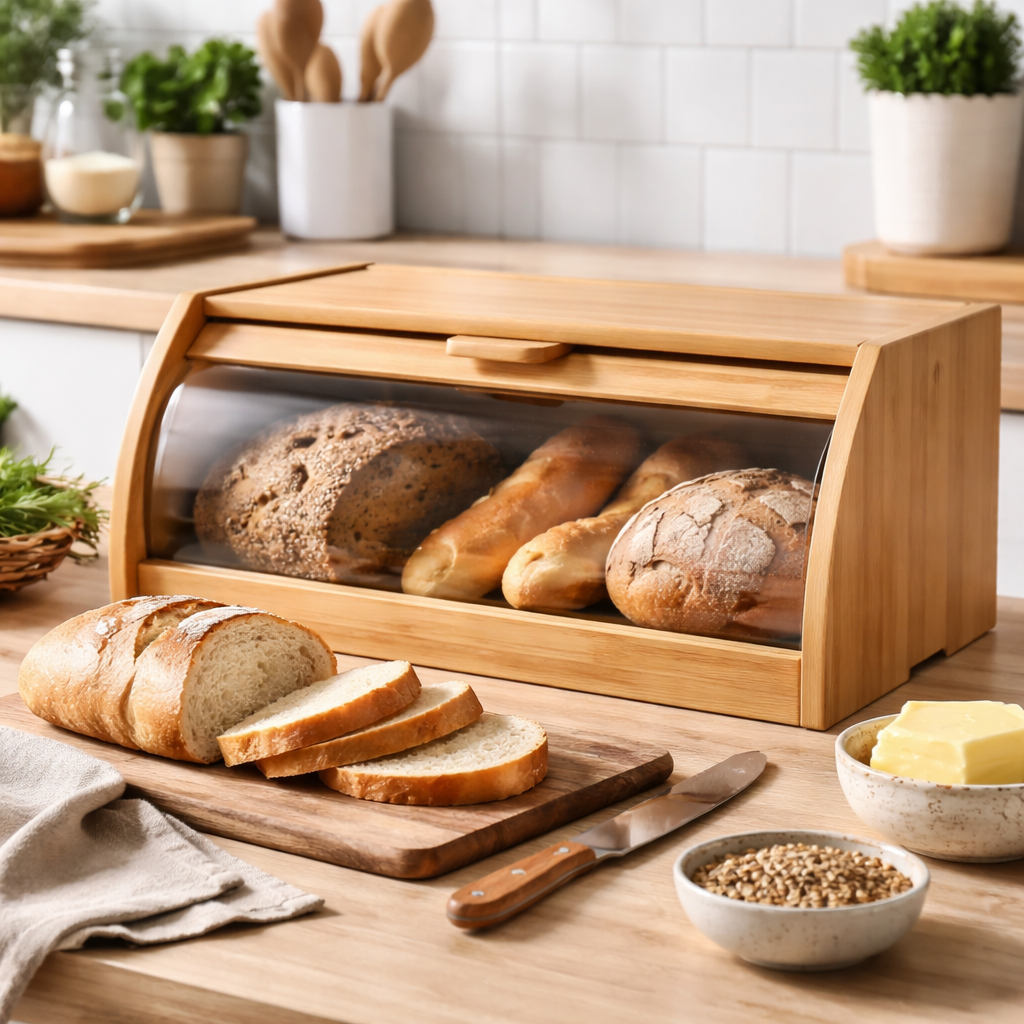
Today’s bread boxes come in styles ranging from rustic farmhouse to Scandinavian minimalism and modern industrial designs.
Instead of hiding them away, many homeowners choose one that complements their countertop décor.
Types of Bread Boxes
Wooden Bread Boxes
Wood remains one of the most popular choices because it naturally helps regulate humidity.
It works especially well in kitchens with moderate humidity levels and fits beautifully in farmhouse, cottage, or traditional interiors.
Best for:
- Homemade bread
- Rustic kitchens
- Natural décor styles
Metal Bread Boxes
Metal bread boxes are durable, easy to clean, and often feature discreet ventilation holes.
Many contemporary kitchens use powder-coated steel bread boxes because they combine functionality with clean, minimalist design.
Best for:
- Modern kitchens
- Daily sandwich bread
- Easy maintenance
Ceramic Bread Boxes
Ceramic models are attractive and heavier, making them less likely to slide across countertops.
However, they generally provide less ventilation than wood or metal, so choosing a well-designed model is important.
Best for:
- Decorative kitchens
- Smaller households
Plastic Bread Boxes
Plastic bread boxes are lightweight and budget-friendly.
Quality varies significantly, so it’s worth looking for models with built-in ventilation rather than completely airtight lids.
Best for:
- Temporary storage
- Budget-conscious shoppers
How to Choose the Best Bread Box
The best bread box isn’t necessarily the biggest or the most expensive. It depends on how your household uses bread.
Ask yourself a few simple questions.
How much bread do you usually buy?
If you typically purchase one loaf each week, a compact model is plenty.
Families who keep multiple loaves, rolls, tortillas, or bagels may benefit from a larger design.
What does your kitchen look like?
Since bread boxes usually stay on the countertop, choose one that complements your cabinets, appliances, and overall style.
Is it easy to clean?
Removable lids and smooth interiors make routine cleaning much easier.
Does it provide ventilation?
Small ventilation holes or a slightly loose-fitting lid are usually preferable to completely airtight storage.
Where Should You Place a Bread Box?
Location matters more than many people realize.
For the best results, place your bread box:
- Away from direct sunlight
- Away from ovens, dishwashers, and stoves
- On a dry countertop
- In a location with stable room temperature
Even the best bread box won’t perform well if it’s constantly exposed to heat.
Bread Box vs Refrigerator
Many people automatically refrigerate bread because they assume colder temperatures keep food fresh longer.
Bread is one of the exceptions.
Cold temperatures actually speed up the staling process by changing the structure of the starches inside the loaf.
Unless you’re trying to extend storage for several weeks by freezing bread, room-temperature storage inside a bread box is usually the better option.
| Bread Box | Refrigerator |
|---|---|
| Maintains texture | Dries bread faster |
| Better flavor | Flavor declines sooner |
| Slower staling | Faster staling |
| Ideal for daily use | Better only for short-term storage before freezing |
Common Bread Storage Mistakes
Even with a quality bread box, a few habits can shorten the life of your bread.
Some of the most common mistakes include:
- Placing warm bread inside before it has cooled completely.
- Forgetting to clean crumbs from the bottom of the bread box.
- Overfilling the container so air cannot circulate.
- Leaving the bread box next to the oven.
- Storing damp kitchen towels inside the bread box.
These small details often make a bigger difference than the material of the bread box itself.
Are Bread Boxes Worth Buying?
In my experience, they’re one of those kitchen accessories that people don’t think they need until they start using one.
If your household buys bread several times a week, bakes homemade loaves, or simply wants a cleaner-looking countertop, a bread box is a surprisingly worthwhile investment.
It won’t keep bread fresh forever, but it does create noticeably better storage conditions than leaving a loaf exposed or sealed inside plastic.
For many families, that means less food waste, fewer trips to the grocery store, and better-tasting bread throughout the week.
Final Thoughts From Experience
Bread boxes have been around for generations for a simple reason—they solve a problem that every bread lover eventually runs into.
The biggest mistake isn’t choosing the wrong material or style. It’s expecting bread to stay fresh when it’s stored in conditions that are either too dry or too humid. A good bread box helps create the balance that fresh bread needs.
If you’re shopping for one, don’t focus only on appearance. Think about how much bread your household goes through, where you’ll keep the box, and how easy it will be to clean. Those practical details usually matter far more than whether it’s made from wood, metal, or ceramic.
When chosen well and used correctly, a bread box becomes one of those everyday kitchen essentials that quietly makes life a little easier—and your morning toast a little better.
About the Author
Fher is an architect specializing in residential design and space optimization. With hands-on experience improving how homes function and feel, he shares practical insights to help homeowners create spaces that are both beautiful and livable.