
A rental kitchen can be perfectly functional and still make you avoid spending time in it. Maybe the cabinets are an orange-toned oak, the backsplash is dated, or the counters feel impossible to decorate around. These renter kitchen makeover examples prove that you do not need a full renovation, permission for major construction, or a designer budget to create a kitchen that feels like yours.
The most successful rental updates work with what is already there. They add warmth, cover visual distractions thoughtfully, and make everyday tasks easier. Before buying anything, take a few photos of the kitchen in daylight and decide what bothers you most: color, clutter, poor lighting, lack of storage, or all of the above. Start there instead of trying to change every surface at once.
10 renter kitchen makeover examples for real life
1. The peel-and-stick backsplash refresh
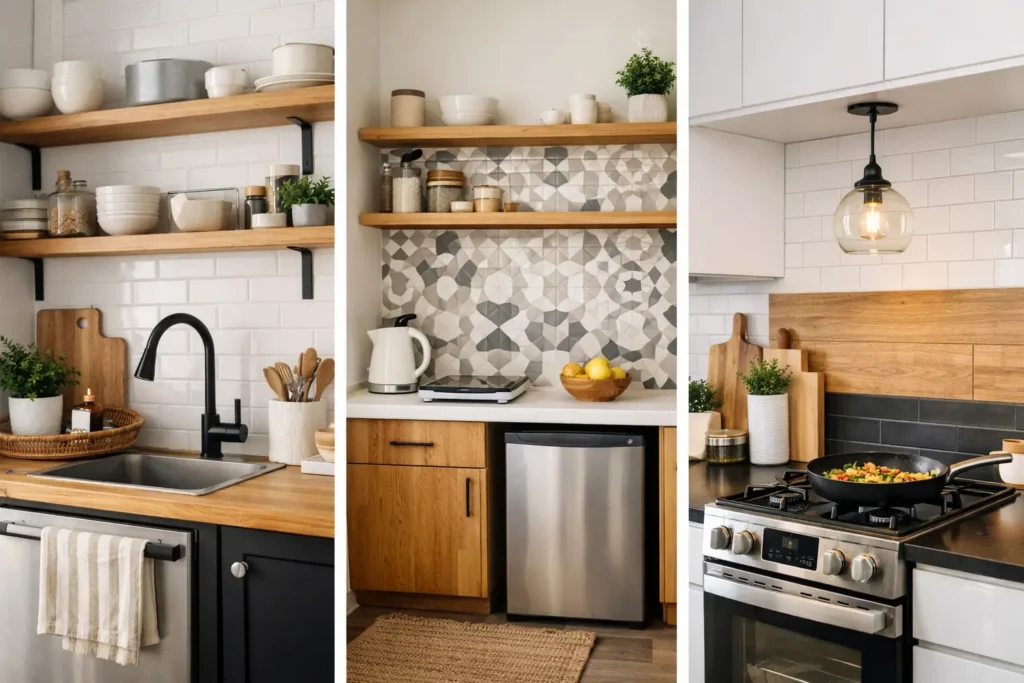
A plain painted wall or tired existing backsplash can change the whole mood of a kitchen. Removable tile decals and peel-and-stick backsplash panels come in classic subway tile, soft marble looks, zellige-inspired patterns, and more understated finishes. A warm white tile pattern is an easy choice when you want the room to feel brighter without committing to a strong trend.
This works best on a clean, smooth, non-textured surface. Measure around outlets carefully, buy a little extra for mistakes, and keep the original packaging and any leftover material. In a kitchen with heavy grease buildup or uneven walls, a backsplash may not adhere well enough to be worth the effort.
2. The countertop “moment” instead of a countertop replacement
You may not be able to change laminate counters, but you can stop letting them dominate the room. One renter-friendly approach is to create a composed zone with a substantial wood cutting board, a ceramic utensil crock, a small tray for oils, and a lamp or rechargeable light in a safe corner away from the sink and stove.
The point is not to cover every inch. A few useful, beautiful pieces make the counter feel intentional while preserving prep space. If your countertops are busy or dark, choose a simple palette in wood, cream, black, or clear glass to calm the visual noise.
3. The cabinet hardware switch
Changing cabinet knobs and pulls is one of the most convincing small upgrades a renter can make. Matte black gives basic white or honey-oak cabinets a cleaner, more tailored look. Brushed brass adds warmth, while simple wood knobs can soften a cold, all-white kitchen.
Remove one existing pull before shopping so you can measure the distance between screw holes. Store the original hardware in a labeled bag, along with the original screws, and reinstall it before moving out. If the holes do not match your preferred hardware, skip this project rather than drilling new ones without written approval.
4. The open-shelf look without removing cabinets
Open shelves are appealing because they make a kitchen feel personal, but taking cabinet doors off can create more stress than style in a rental. Instead, style one existing open area: the top of the refrigerator, a narrow wall shelf if your lease allows it, or even a rolling cart.
Use everyday items as the display. A small collection of mugs, cookbooks, a bowl of fruit, and one trailing plant or faux stem are enough. Keep the colors edited so it reads as cozy rather than crowded. This is especially helpful in a small apartment kitchen, where visual breathing room matters as much as storage.
5. The contact-paper cabinet experiment
For cabinets you truly cannot live with, removable contact paper can be a high-impact option. It is often used on flat, smooth cabinet fronts to create a softer white, deep green, or pale wood effect. Done carefully, it can make an older kitchen feel surprisingly current.
It is also the most patience-heavy choice on this list. Greasy cabinet fronts, raised panels, humid rooms, and textured finishes can lead to peeling edges and a result that looks less polished up close. Test a hidden interior spot first, clean thoroughly, and apply one door at a time. If you are short on time or unsure about removal, focus on hardware and styling instead.
6. The lighting layer that changes the mood
Many rentals rely on one overhead fixture that makes every surface look flat. Add a layer of light with battery-operated under-cabinet lights, a small table lamp on a counter, or a cordless lamp on a nearby cart. The goal is a gentle pool of light that makes morning coffee and dinner cleanup feel less harsh.
Choose warm white light rather than a blue-toned bulb. Keep cords away from water and heat, and do not block ventilation around appliances. This is a modest change, but it often gives a kitchen the finished, lived-in feeling that a new decorative object cannot create on its own.
7. The renter-friendly floor upgrade
A washable runner can distract from worn vinyl, add color to a neutral kitchen, and make standing at the sink more comfortable. Look for a low-pile, machine-washable style with a non-slip backing, especially if you cook often or have kids and pets underfoot.
For a narrow galley kitchen, a runner that leaves a few inches of floor visible on each side will look more deliberate than one crammed wall to wall. Vintage-inspired patterns are forgiving around crumbs and splashes, while a simple striped runner brings order to a busier kitchen.
8. The fridge and pantry organization reset
Sometimes the kitchen feels dated because it feels overfull. Clear bins, drawer organizers, and labeled containers make ordinary cabinets work harder, even when the cabinet boxes themselves are not attractive. A tidy fridge is also a makeover you feel every single day, not just when guests stop by.
Start with the zone that frustrates you most. It may be a chaotic snack shelf, the drawer full of food-storage lids, or the under-sink cabinet where cleaning supplies disappear. Avoid buying organizers before measuring. The best system is not the prettiest one online; it is the one that fits your shelves and your actual routine.
9. The temporary dining nook
If your kitchen has a blank wall or an awkward corner, a small dining setup can make it feel more complete. Think a round pedestal table, two lightweight chairs, and a washable placemat or linen napkin. Even a tiny bistro table creates a place to sit with coffee rather than treating the kitchen as a room you pass through.
In a very small space, choose furniture with visual lightness: slim legs, an open base, or stools that tuck fully underneath. A small piece of art leaned on a shelf or mounted with renter-approved hanging strips can add personality without turning the nook into another storage zone.
10. The color-coordinated everyday essentials
This is the easiest makeover example, and it is often overlooked. Replace the mismatched items that remain visible all day: dish towels, soap dispenser, sponge holder, drying mat, oven mitts, and food-storage containers. Choose two or three colors that suit the fixed finishes you cannot change.
For example, warm oak cabinets look lovely with creamy textiles, olive green, and black accents. Cool gray counters pair well with soft blue, natural wood, and stainless steel. You do not need a themed kitchen. You need a few repeated details that make the room feel calm and considered.
How to choose the right rental kitchen upgrades
Not every renter kitchen needs a dramatic before-and-after. If the layout works but the room feels sterile, prioritize lighting, textiles, and a few useful countertop pieces. If storage is the daily problem, organization and a rolling cart will do more for your quality of life than a new backsplash ever could.
Also check your lease before changing hardware, applying adhesive products, or hanging anything substantial. Take before photos, save receipts, and keep every original fixture in one clearly labeled box. A good rental makeover should make move-out day manageable, not create a surprise repair bill.
The most welcoming kitchens are not always the newest ones. They are the ones shaped around real breakfasts, rushed weeknights, shared snacks, and the small rituals that make a place feel like home. Pick one upgrade that solves a daily annoyance this week, then let your kitchen become more personal one useful layer at a time.
Final Thoughts From Experience
After working through enough home updates, one thing becomes clear: a successful rental kitchen makeover is rarely about changing the most surfaces. It is about identifying what is actually making the kitchen feel uncomfortable or unfinished, then fixing that problem without creating another one.
If the kitchen feels dark, start with lighting. If it feels chaotic, improve the storage and organization before adding more decor. If the cabinets are the main eyesore, try hardware and color coordination before covering every door with an adhesive product. And if the layout already works, there may be no reason to change it at all.
I also recommend treating every renter-friendly update as a reversible experiment. Test adhesive products before committing to an entire wall or a full set of cabinets. Measure twice before buying organizers or furniture. Keep original hardware and fixtures together. And take photos of the kitchen before you make changes, especially if you are planning to use removable products.
The goal is not to make a rental kitchen look like a completely different room. A better goal is to make it work better for the way you actually live.
That might mean a warmer light beside the coffee station, a runner that makes standing at the sink more comfortable, a cabinet organization system that saves you five minutes every morning, or simply replacing a collection of mismatched everyday items with a few pieces that feel intentional.
Those changes may not look dramatic in a before-and-after photo. But they are the changes you notice every day.
And that is what I would prioritize in any rental: solve the daily annoyance first, make the improvement reversible when possible, and let the kitchen become more personal without fighting the space you have.
About the Author
Fher is an architect specializing in residential design and space optimization. With hands-on experience improving how homes function and feel, he shares practical insights to help homeowners create spaces that are both beautiful and livable.