
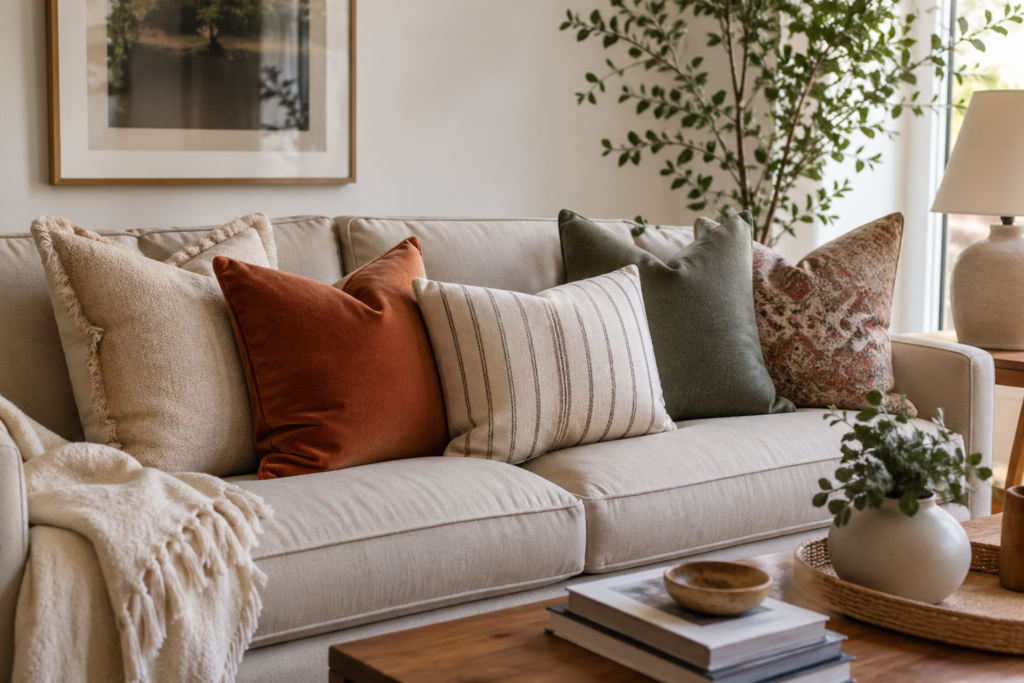

Most people assume that refreshing a living room requires a new sofa, a fresh coat of paint, or a complete redesign. In my experience as an architect, that’s rarely true. One of the most overlooked — and surprisingly powerful — tools in interior design is something far simpler: cushions.
The mistake I often see is treating cushions as an afterthought — random accessories added at the end instead of intentional design elements. But when used strategically, they can completely redefine a space without touching a single piece of furniture.
From a design perspective, decorating living rooms with cushions is not about piling on pillows. It’s about controlling color, texture, rhythm, and visual balance in a way that feels cohesive and intentional.
Let’s break down how to do this properly.
Why Cushions Are One of the Most Powerful Design Tools
They Control the Color Story
In any living room, color is the first thing the eye registers. Cushions give you the ability to introduce, reinforce, or completely change a color palette without permanent commitment.
In my experience, homeowners often hesitate to commit to bold colors in large furniture pieces. Cushions solve that problem. You can test warm tones, cool palettes, or seasonal variations without risk.
For example:
- A neutral sofa can shift from minimalist to vibrant with just a change in cushion colors.
- Earth tones can make a space feel grounded and calm.
- High-contrast palettes create energy and visual interest.
They Add Texture and Depth
Flat spaces feel unfinished. Texture is what makes a room feel layered and complete.
Cushions allow you to combine:
- Linen for a relaxed feel
- Velvet for depth and richness
- Knits or boucle for warmth
- Leather accents for contrast
One mistake I often see is using cushions in the same fabric. That creates a flat, showroom-like effect. Real homes benefit from variation.
They Define Style Without Renovation
From a design perspective, cushions can push a room into a specific style direction:
- Modern: clean lines, limited color palette
- Bohemian: mixed patterns, layered textures
- Transitional: subtle contrasts, balanced tones
- Farmhouse: soft neutrals, tactile fabrics
Instead of replacing furniture, cushions allow you to reinterpret what you already own.
How to Decorate Living Rooms with Cushions (The Right Way)
Start With a Base Palette
Before buying anything, define your base color scheme.
In my projects, I typically work with:
- 1 dominant color (already present in the room)
- 1 secondary color
- 1 accent color
Cushions should reinforce — not fight — this palette.
For example:
- Beige sofa → add warm browns, muted greens, and soft rust tones
- Gray sofa → combine charcoal, off-white, and subtle blues
Without this structure, cushions become visual noise.
Work in Odd Numbers
This is a small detail, but it makes a big difference.
Arrangements of 3 or 5 cushions tend to feel more natural and less staged than even numbers. This asymmetry creates a relaxed, lived-in look.
For example:
- 3 cushions on a small sofa
- 5 on a sectional
Symmetry works in formal spaces, but most living rooms benefit from controlled imperfection.
Mix Sizes Intentionally
One mistake I often see is using identical cushion sizes across the entire sofa.
Instead, create hierarchy:
- Large cushions (22–24 inches) as the base
- Medium cushions (18–20 inches) for layering
- Smaller or lumbar cushions for contrast
This creates depth and prevents the arrangement from feeling flat.
Balance Patterns Carefully
Patterns can elevate a space — or overwhelm it.
A reliable rule I use:
- 1 solid color
- 1 subtle pattern
- 1 bold pattern
All tied together by a shared color palette.
From a design perspective, patterns should complement each other, not compete for attention.
Common Mistakes When Decorating Living Rooms with Cushions
1. Using Too Many Cushions
Why it happens:
People assume more cushions equal more comfort and style.
The problem:
It reduces functionality. If you have to remove five cushions just to sit down, the design is working against you.
How to fix it:
Limit the number based on the size of the sofa. Every cushion should have a purpose — either visual or functional.
2. Ignoring the Room’s Existing Elements
Why it happens:
Cushions are often purchased separately without considering flooring, rugs, or wall colors.
The problem:
They feel disconnected, like they belong to a different room.
How to fix it:
Pull colors from existing elements:
- Rug patterns
- Artwork
- Curtains
In my experience, cohesion always wins over trendiness.
3. Choosing Style Over Comfort
Why it happens:
People prioritize aesthetics and forget usability.
The problem:
Cushions that are too stiff or too delicate don’t get used — and that defeats their purpose.
How to fix it:
Choose inserts that are comfortable and durable. A well-designed living room should invite use, not discourage it.
4. Matching Everything Too Perfectly
Why it happens:
There’s a tendency to buy cushion sets.
The problem:
It creates a generic, catalog-like look.
How to fix it:
Mix pieces intentionally. Variation creates character and makes the space feel personal.
When It Works / When It Doesn’t
When It Works
Decorating living rooms with cushions works best when:
- The base furniture is neutral or adaptable
- You want a seasonal or flexible design
- The layout of the room is already functional
- You need a budget-friendly update
In these cases, cushions can completely transform the atmosphere without structural changes.
When It Doesn’t
There are limits.
This approach won’t work well if:
- The furniture itself is outdated or damaged
- The room lacks proper lighting
- The layout is dysfunctional
- There are conflicting design styles already in place
From a professional standpoint, cushions enhance — they don’t fix fundamental design problems.
Practical Tips for Immediate Results
1. Refresh Seasonally
Swap cushion covers instead of buying new inserts.
- Spring/Summer: lighter fabrics, fresh colors
- Fall/Winter: heavier textures, deeper tones
This keeps your space evolving without major investment.
2. Invest in Quality Inserts
Cheap inserts collapse quickly and ruin the look.
In my experience, a good insert makes even a simple cushion look high-end. Look for:
- Down or down-alternative fills
- Slightly oversized inserts for a fuller look
3. Use Cushions to Bridge Design Gaps
If something feels off in your living room, cushions can help connect elements.
For example:
- Tie together a rug and sofa with shared colors
- Introduce a missing accent tone
- Soften overly rigid furniture lines
4. Don’t Forget Negative Space
Not every inch of the sofa needs to be filled.
Leaving some space creates balance and allows each cushion to stand out.
5. Rotate Instead of Replacing
Sometimes, simply rearranging existing cushions creates a new look.
Try:
- Moving cushions between rooms
- Changing the order or grouping
- Flipping to a different side (if reversible)
Final Thoughts (From Experience)
After years of working in residential design, I’ve learned that impactful spaces are rarely about expensive upgrades. They’re about thoughtful decisions.
Decorating living rooms with cushions is one of those deceptively simple strategies that, when done right, delivers disproportionate results. But the key is intention.
It’s not about adding more — it’s about adding better.
A well-composed cushion arrangement can:
- Clarify your color palette
- Add depth and texture
- Reinforce your design style
But more importantly, it can make your living room feel finished — and lived in.
And that, ultimately, is what good design is about.
About the Author
Fher is an architect specializing in residential design and space optimization. With hands-on experience improving how homes function and feel, he shares practical insights to help homeowners create spaces that are both beautiful and livable.


Pingback: How to Make a Home Cozy Without Overspending - everydayhomestyle.io