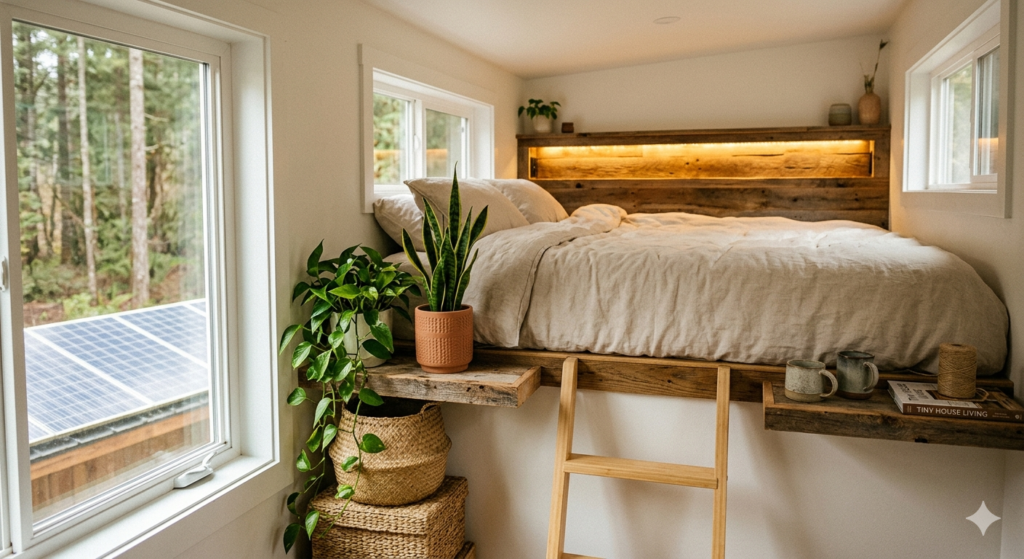

Over the past few years, I’ve noticed a clear shift in how people think about their homes. Bigger is no longer better. Instead, there’s a growing desire for spaces that feel intentional, efficient, and aligned with a more sustainable lifestyle.
That’s where sustainable tiny houses come in.
These compact homes aren’t just about saving space—they represent a different way of living. One that prioritizes simplicity, reduces environmental impact, and focuses on what truly matters. And honestly, after working in home design and seeing how much space (and money) is often wasted, the appeal makes a lot of sense.
In this guide, I’ll walk you through what makes tiny homes sustainable, their real benefits (and limitations), and how you can apply these ideas—even if you’re not planning to downsize completely.
What Are Sustainable Tiny Houses?
Sustainable tiny houses are small-scale homes—typically under 400 square feet—designed to minimize environmental impact while maximizing efficiency.
But in practice, they’re more than just a size category. They reflect a mindset.
A sustainable tiny home usually includes:
- Energy-efficient systems (like solar panels)
- Eco-friendly or recycled materials
- Smart space-saving design
- Reduced water and energy consumption
From my experience, the real difference isn’t just the structure—it’s how people live in them. You become more aware of every purchase, every watt of energy, and every square meter you use.
Why Tiny Houses Are a Sustainable Choice
1. Lower Environmental Impact
One of the biggest advantages is the reduced carbon footprint.
Tiny homes require fewer materials to build and consume significantly less energy over time. Many incorporate renewable energy systems like solar panels or rainwater harvesting.
In practical terms:
- Less space = less heating and cooling
- Fewer materials = lower construction impact
- Smaller footprint = less land use
That’s a triple win.
2. Energy Efficiency by Design
Unlike traditional homes, tiny houses are designed with efficiency in mind from the start.
You’ll often find:
- High-performance insulation
- Natural ventilation strategies
- LED lighting and efficient appliances
These design decisions aren’t just “nice to have”—they’re essential. Every element has to work harder in a small space.
3. Financial Freedom
This is something many articles overlook—but it’s huge.
Tiny homes can cost significantly less than traditional houses, often under $70,000 depending on the build.
That means:
- Lower mortgage (or no mortgage at all)
- Reduced utility bills
- Less maintenance cost
In my opinion, this is one of the strongest reasons people make the switch—not just sustainability, but freedom.
4. Encourages Minimalism
Living in a tiny home forces you to be intentional.
You simply don’t have space for unnecessary things. Over time, this leads to:
- Less consumption
- Less waste
- More clarity in daily life
It’s not always easy at first, but many people find it surprisingly liberating.
Key Features of Sustainable Tiny Homes
Eco-Friendly Materials
Sustainable tiny houses often use:
- Reclaimed wood
- Recycled metal
- Natural insulation (like wool or cork)
These materials reduce environmental impact while adding character to the home.
Off-Grid Living Systems
Many tiny homes are designed to operate independently.
Common systems include:
- Solar panels for electricity
- Rainwater collection systems
- Composting toilets
These features allow homeowners to reduce reliance on traditional infrastructure and live more sustainably.
Smart Space Design
Design is everything in a tiny home.
You’ll often see:
- Multi-functional furniture
- Hidden storage solutions
- Open layouts with natural light
A well-designed 30 m² space can feel surprisingly comfortable—sometimes even more functional than a poorly designed large home.
Real Challenges of Tiny House Living
Let’s be honest—this lifestyle isn’t perfect.
Limited Space
This is the obvious one.
- Storage is minimal
- Privacy can be challenging
- Hosting guests isn’t always easy
If you’re used to large spaces, this requires adjustment.
Climate Considerations
Because tiny homes have more exposed surface area, temperature regulation can be tricky if not properly designed.
Good insulation and smart design are essential to avoid energy inefficiencies.
Zoning and Legal Issues
Depending on where you live, building or placing a tiny home can be complicated.
Regulations vary widely, so this is something you need to research carefully before committing.
Is a Sustainable Tiny House Right for You?
From what I’ve seen, this lifestyle works best for people who:
- Value experiences over possessions
- Want to reduce living costs
- Care about environmental impact
- Enjoy simple, intentional living
But it’s not for everyone.
If you need a lot of space, work from home with multiple setups, or have a large family, a tiny home might feel restrictive.
How to Apply Tiny Living Principles (Without Downsizing)
Here’s something important:
You don’t need to live in a tiny house to benefit from this philosophy.
You can apply the same ideas in a traditional home:
- Declutter and reduce unused items
- Upgrade to energy-efficient appliances
- Use multi-functional furniture
- Improve insulation and natural lighting
These small changes can significantly reduce your environmental impact—and improve how your home feels.
Final Thoughts
Sustainable tiny houses are not just a trend—they’re part of a larger shift toward more conscious living.
They challenge the idea that we need more space, more things, and more consumption to feel comfortable.
In reality, many people discover the opposite.
Less space can mean more freedom.
Less consumption can mean more clarity.
And a smaller home can create a bigger impact—both financially and environmentally.
If you’re considering this lifestyle, start small. Explore the ideas, test the principles, and see what works for you.
Because at the end of the day, sustainable living isn’t about size—it’s about intention.