
If you want to improve precision and consistency in your cooking, food scales are an essential tool for any kitchen. Whether you’re baking, meal prepping, or tracking nutrition, a food scale helps you measure ingredients accurately and efficiently.
In this guide, you’ll learn what food scales are, their benefits, types, and how to choose the best one for your needs.
What Are Food Scales?
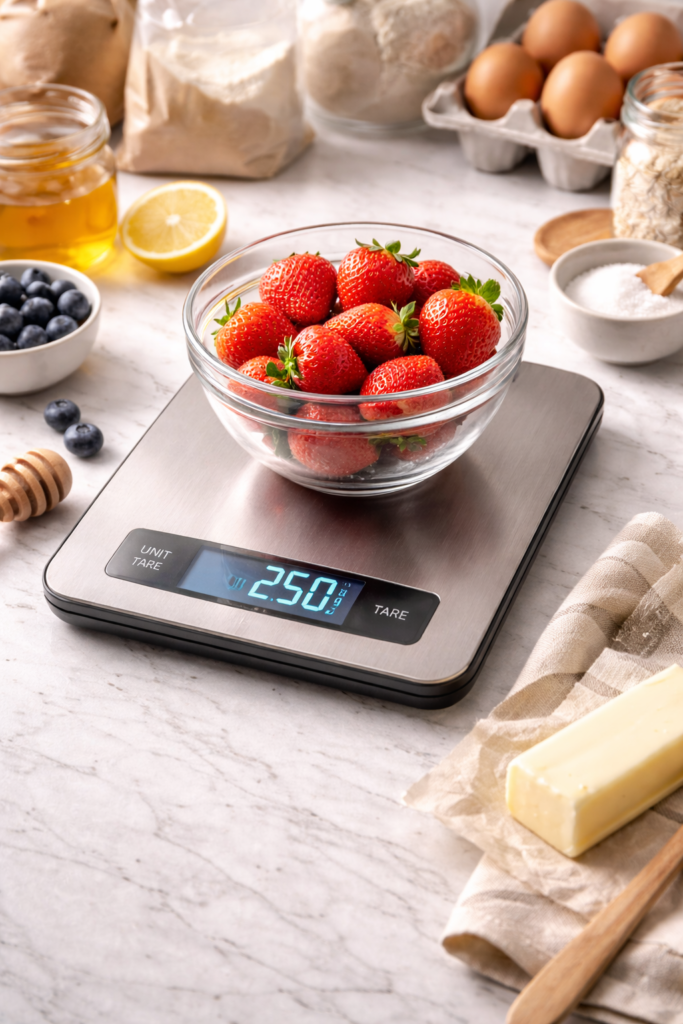
Food scales are kitchen devices used to measure the weight of ingredients. They provide precise measurements in units such as grams, ounces, or pounds, making them more accurate than measuring cups or spoons.
They are commonly used for cooking, baking, portion control, and nutritional tracking.
Why You Need Food Scales
Accuracy is one of the biggest challenges in cooking, especially when following recipes. Food scales solve this problem by ensuring you measure exact quantities every time.
Using a food scale helps improve recipe consistency and overall cooking results, particularly in baking where precision is critical.
They also allow better control over portion sizes and nutrient intake, which is useful for health and fitness goals.
Benefits of Using Food Scales
1. High Accuracy
Food scales measure ingredients precisely, reducing errors compared to volume measurements like cups and spoons.
2. Consistent Cooking Results
Using exact measurements ensures your recipes turn out the same every time.
3. Better Portion Control
Food scales help you manage portion sizes and avoid overeating.
4. Saves Time and Reduces Mess
You can weigh ingredients directly in one container, eliminating the need for multiple measuring tools.
5. Ideal for Baking
Baking requires precision, and even small measurement differences can affect the final result.
6. Supports Healthy Eating
Tracking food weight helps monitor calorie and nutrient intake more effectively.
When a Food Scale Makes the Biggest Difference
While food scales can improve accuracy in almost any recipe, there are certain situations where they provide the greatest benefit.
Baking is one of the most common examples. Ingredients such as flour can vary significantly depending on how they are measured in cups, which may lead to inconsistent results. Measuring by weight helps create more reliable outcomes.
Food scales are also valuable for meal prep and batch cooking. Weighing ingredients allows you to portion meals more consistently and track quantities more accurately.
For pantry organization, scales can help when dividing bulk purchases into storage containers. Knowing exactly how much you’re storing makes inventory management easier and can reduce food waste over time.
Many home cooks discover that once they begin using a food scale regularly, it becomes one of the most frequently used tools in the kitchen.
Types of Food Scales
There are several types of food scales depending on your needs.
Digital Food Scales
These are the most popular due to their accuracy and ease of use. They often include features like tare function, unit conversion, and clear displays.
Mechanical (Analog) Food Scales
These use a spring mechanism and do not require batteries. They are durable but less precise than digital models.
Smart Food Scales
Advanced models connect to apps and track nutritional data, making them ideal for fitness and diet tracking.
Pocket Food Scales
Compact and portable, perfect for small measurements or travel use.
Best Features to Look for in Food Scales
When choosing a food scale, consider these key features:
Accuracy and Precision
Look for scales that measure in increments of 1 gram or less for best results.
Tare Function
Allows you to subtract the weight of containers and measure multiple ingredients in one bowl.
Unit Conversion
Switch easily between grams, ounces, pounds, or milliliters.
Capacity
Choose a scale that can handle the maximum weight you plan to measure.
Ease of Cleaning
Smooth surfaces like stainless steel or glass are easier to clean and maintain.
How to Choose the Best Food Scales
To get the most value, consider:
Your Cooking Needs
- Baking → high precision required
- Meal prep → moderate precision
- Nutrition tracking → smart features helpful
Size and Storage
Compact scales are easier to store in small kitchens.
Budget
Basic digital scales are affordable and suitable for most users.
Ease of Use
Look for simple controls and a clear display.
Food Scales vs. Measuring Cups
Both tools are useful, but food scales offer more precision.
- Food scales: Best for accuracy and consistency
- Measuring cups: Better for quick, rough measurements
For serious cooking or baking, food scales are the better choice.
Tips for Using Food Scales Effectively
To get the best results:
- Use the tare function to reset weight between ingredients
- Measure ingredients directly in your mixing bowl
- Use grams for more precise measurements
- Clean the scale after each use
- Store in a dry place
Common Food Scale Buying Mistakes
One of the most common mistakes is focusing only on price. While affordable models can perform well, accuracy, durability, and ease of use often have a greater impact on long-term satisfaction.
Another frequent issue is choosing a scale with a platform that is too small. Large mixing bowls can block the display, making measurements difficult to read.
Many buyers also overlook the importance of the tare function. This feature allows you to reset the displayed weight after placing a container on the scale, making it much easier to measure multiple ingredients in the same bowl.
Finally, consider how often you’ll use the scale and where it will be stored. A compact design may work best for small kitchens, while avid bakers may prefer a larger model with a higher weight capacity.
Food Scale Features That Matter Most
Habla de:
- Accuracy.
- Tare function.
- Display visibility.
- Unit conversion.
- Weight capacity.
- Easy-to-clean surface.
Are Food Scales Worth It?
Yes, food scales are one of the most valuable tools in any kitchen. They improve accuracy, save time, and help you achieve better cooking results.
They are especially useful for baking, meal prep, and anyone focused on nutrition.
Final Thoughts From Experience
After using food scales for both everyday cooking and baking, one thing becomes clear: precise measurements often simplify the cooking process rather than complicate it.
Many people assume food scales are only useful for professional chefs or serious bakers, but they can benefit almost anyone who wants more consistent results and better control over ingredients. Whether you’re preparing meals, following recipes, or organizing pantry staples, a reliable scale removes much of the guesswork.
If you’re choosing your first food scale, prioritize practical features such as accuracy, a clear display, a dependable tare function, and easy cleaning. These qualities tend to provide more value in daily use than advanced features that may rarely be needed.
A food scale may seem like a small kitchen tool, but it’s one of the simplest ways to improve cooking consistency, reduce waste, and create a more organized kitchen routine.
About the Author
Fher is an architect specializing in residential design and space optimization. With hands-on experience improving how homes function and feel, he shares practical insights to help homeowners create spaces that are both beautiful and livable.