

What Are Kitchen Tools and Utensils?
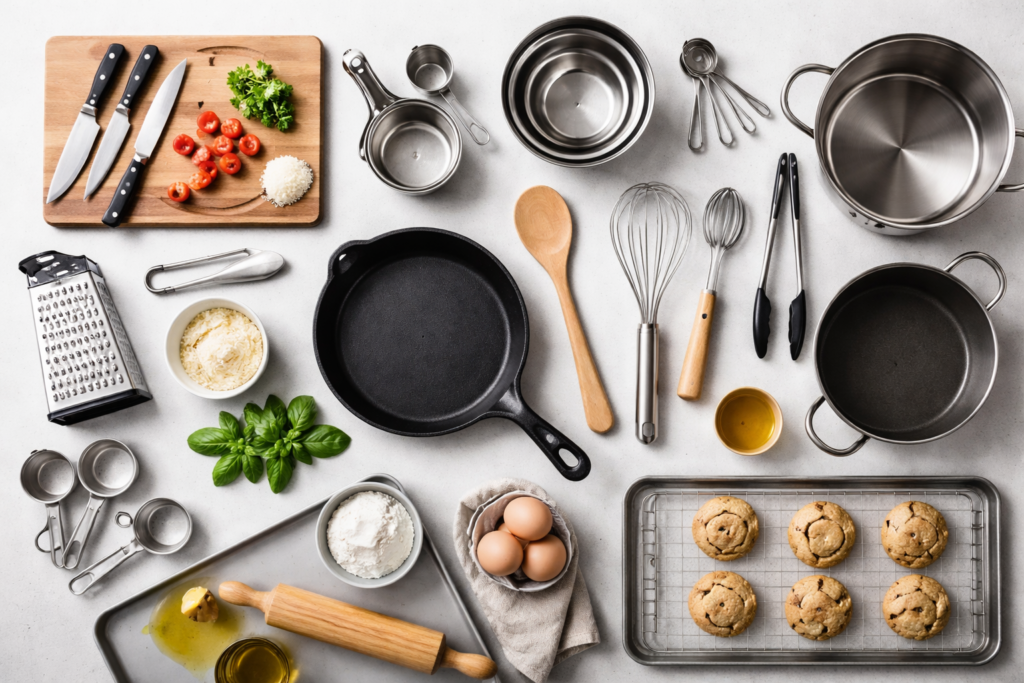
Kitchen tools and utensils are handheld devices used to prepare, cook, and serve food. These include everything from knives and spatulas to measuring cups and whisks.
Each tool is designed to simplify a specific task—cutting, mixing, measuring, or serving—helping you cook more efficiently and achieve consistent results.
Why Kitchen Tools and Utensils Matter
Having the right kitchen tools and utensils is not just about convenience—it directly impacts your cooking experience:
- Efficiency: Save time during food preparation
- Food quality: Improve texture, flavor, and presentation
- Safety: Reduce the risk of accidents with proper tools
- Consistency: Ensure accurate measurements and repeatable results
A well-equipped kitchen makes cooking easier and more enjoyable.
Essential Kitchen Tools and Utensils List
1. Cutting & Preparation Tools
- Chef’s knife – the most versatile cutting tool
- Cutting board – protects surfaces and improves safety
- Vegetable peeler – speeds up prep work
- Grater – ideal for cheese, vegetables, and spices
These tools are fundamental for chopping, slicing, and preparing ingredients efficiently.
2. Cooking Utensils
- Spatula – used for flipping and stirring
- Whisk – helps mix and aerate ingredients
- Ladle – perfect for serving soups and sauces
- Tongs – useful for handling hot food safely
These are everyday utensils used in most recipes.
3. Measuring Tools
- Measuring cups
- Measuring spoons
- Kitchen scale
Accurate measurements are essential, especially for baking and precise recipes.
4. Mixing & Baking Tools
- Mixing bowls
- Rolling pin
- Baking trays
- Cooling racks
These tools help combine ingredients and ensure proper baking results.
5. Cookware Basics
- Frying pan (skillet)
- Saucepan
- Stock pot
Cookware works together with utensils to prepare a wide variety of dishes.
The Kitchen Tools Most People Use Every Day
While there are countless kitchen gadgets available, most home cooks rely on a relatively small group of tools on a daily basis.
A chef’s knife, cutting board, spatula, tongs, measuring cups, and mixing bowls handle the majority of everyday cooking tasks. These versatile tools can be used across a wide range of recipes, from simple weeknight dinners to more elaborate meals.
Before investing in specialty gadgets, focus on building a collection of high-quality essentials. In many kitchens, a few dependable tools provide more value than drawers filled with rarely used accessories.
If you’re setting up a new kitchen or replacing old equipment, prioritize tools that perform multiple functions and can withstand frequent use.
How to Choose the Best Kitchen Tools and Utensils
1. Material
- Stainless steel: durable and long-lasting
- Silicone: heat-resistant and safe for non-stick surfaces
- Wood: gentle on cookware and eco-friendly
2. Functionality
Choose multi-purpose tools to reduce clutter and maximize efficiency.
3. Storage Space
If you have a small kitchen, opt for compact or stackable designs.
4. Cooking Style
Select tools that match your cooking habits, whether you bake often or cook daily meals.
Common Kitchen Tool Buying Mistakes
One of the most common mistakes is purchasing large kitchen tool sets simply because they appear to offer good value. In reality, many of the included items may rarely be used.
Another frequent issue is prioritizing quantity over quality. A single well-made chef’s knife often provides more long-term value than several lower-quality cutting tools.
Storage is another factor many people overlook. Kitchen tools should fit comfortably within your available space and remain easy to access during meal preparation.
Finally, avoid buying gadgets designed for a single task unless you know you’ll use them regularly. Multi-purpose tools typically provide better functionality while reducing clutter and saving money.
Kitchen Tools vs. Kitchen Utensils: What’s the Difference?
- Kitchen tools: a broader category that may include cookware and appliances
- Kitchen utensils: typically smaller, handheld items used during cooking
In everyday language, these terms are often used interchangeably.
How to Organize Kitchen Tools for Better Efficiency
Temas a cubrir:
- Keep everyday tools near prep areas.
- Store baking tools together.
- Use drawer dividers.
- Separate frequently used and specialty items.
- Avoid overcrowded drawers
Pro Tips to Build a Functional Kitchen
- Start with essential items and avoid overbuying
- Invest in quality rather than quantity
- Keep tools organized and within reach
- Replace low-quality tools that affect performance
A minimal, well-selected set of kitchen tools can handle most cooking needs without clutter.
Final Thoughts From Experience
After spending time in kitchens of different sizes and layouts, one pattern appears consistently: the most efficient kitchens aren’t the ones with the most tools—they’re the ones with the right tools.
Many people accumulate gadgets that take up valuable storage space but rarely get used. In contrast, a small collection of reliable, versatile utensils can handle the majority of everyday cooking tasks while keeping the kitchen organized and easy to work in.
If you’re building or upgrading your kitchen, focus on quality, functionality, and the way you actually cook. Choosing tools that match your habits will provide far more value than simply owning a larger collection.
The best kitchen tools are the ones you reach for every day because they make cooking faster, easier, and more enjoyable.
About the Author
Fher is an architect specializing in residential design and space optimization. With hands-on experience improving how homes function and feel, he shares practical insights to help homeowners create spaces that are both beautiful and livable.

Pingback: Room by Room Home Organization Made Simple - everydayhomestyle.io