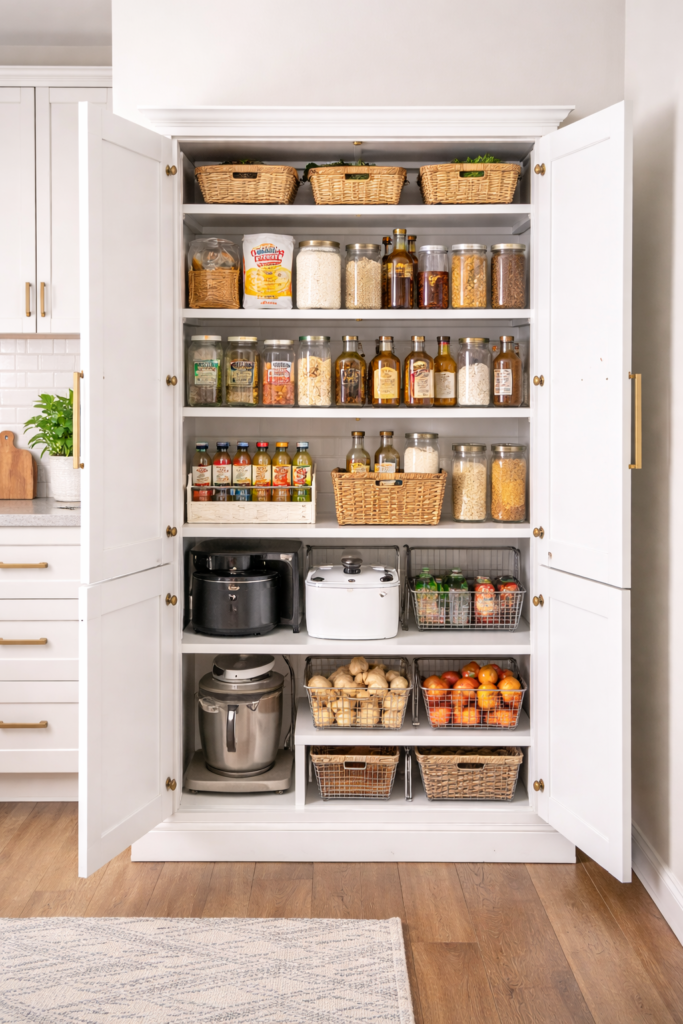

If you’re looking to maximize storage and keep your space organized, pantry cabinets for kitchen are one of the most effective solutions. They help you store food, appliances, and essentials in a structured and accessible way.
In this guide, you’ll learn what pantry cabinets are, their benefits, types, and how to choose the best option for your kitchen.
What Are Pantry Cabinets for Kitchen?
Pantry cabinets for kitchen are dedicated storage units designed to organize food, dry goods, and kitchen supplies. They can be freestanding or built into your kitchen layout and often include shelves, drawers, and compartments for efficient storage.
Unlike regular cabinets, pantry cabinets are designed to maximize vertical space and improve accessibility.
Why You Need Pantry Cabinets for Kitchen
A well-organized kitchen starts with proper storage. Pantry cabinets provide a centralized space to store food and essentials, reducing clutter across countertops and other cabinets.
They also make it easier to find ingredients quickly, improving your cooking efficiency and overall kitchen workflow.
Benefits of Pantry Cabinets for Kitchen
1. Maximizes Storage Space
Pantry cabinets use vertical space effectively, allowing you to store more without taking up extra floor area.
2. Keeps Your Kitchen Organized
With designated sections for different items, pantry cabinets help maintain a tidy and clutter-free kitchen.
3. Improves Accessibility
Shelves and compartments make it easy to locate and access items quickly.
4. Reduces Food Waste
When everything is visible and organized, you’re less likely to forget items and let them expire.
5. Enhances Kitchen Design
Modern pantry cabinets can elevate the look of your kitchen while adding functionality.
Types of Pantry Cabinets for Kitchen
Choosing the right type depends on your space and storage needs.
Freestanding Pantry Cabinets
Standalone units that can be placed anywhere in your kitchen, ideal for flexible layouts.
Built-In Pantry Cabinets
Integrated into your kitchen cabinetry for a seamless and custom look.
Pull-Out Pantry Cabinets
Feature sliding shelves or drawers for easy access to items stored in the back.
Corner Pantry Cabinets
Designed to maximize unused corner spaces in your kitchen.
Slim Pantry Cabinets
Tall and narrow units perfect for small kitchens or tight spaces.
Best Materials for Pantry Cabinets
Wood
Durable and stylish, perfect for traditional or modern kitchens.
Engineered Wood
Affordable and resistant to humidity, making it a practical choice.
Metal
Strong and modern, ideal for industrial-style kitchens.
Laminate
Easy to clean and available in various finishes.
How to Choose the Best Pantry Cabinets for Kitchen
To get the most value, consider the following:
Space and Layout
Measure your kitchen and determine where the pantry cabinet will fit best.
Storage Needs
Think about what you’ll store—dry goods, appliances, or bulk items.
Shelf Adjustability
Adjustable shelves provide flexibility for different item sizes.
Accessibility
Pull-out drawers and open shelving improve ease of use.
Style and Design
Choose a design that complements your kitchen decor.
Choosing the Right Pantry Cabinet for Your Kitchen Size
Not every pantry cabinet works well in every kitchen. One of the most common mistakes homeowners make is choosing a storage solution based solely on appearance without considering how it fits their available space.
For small kitchens, tall and narrow pantry cabinets often provide the best storage-to-footprint ratio. They take advantage of vertical space while preserving valuable floor area.
Medium-sized kitchens typically offer more flexibility and can accommodate wider cabinets, pull-out pantry systems, or combinations of shelving and drawers.
In larger kitchens, built-in pantry cabinets can create a dedicated storage zone that keeps food, small appliances, and cooking essentials organized in one place.
Before purchasing any pantry cabinet, measure not only the available wall space but also the clearance needed for doors and drawers to open comfortably. A cabinet that looks perfect on paper can become frustrating to use if it interferes with walkways or nearby appliances.
Pantry Cabinets vs. Regular Cabinets
While both offer storage, pantry cabinets are specifically designed for food organization.
- Pantry cabinets: Better for bulk storage and organization
- Regular cabinets: Better for general kitchen storage
Many kitchens benefit from using both together.
Tips for Organizing Pantry Cabinets
To maximize efficiency:
- Group similar items together
- Use clear containers for dry goods
- Label shelves and containers
- Store frequently used items at eye level
- Rotate items to use older products first
Common Pantry Cabinet Mistakes to Avoid
Even the best pantry cabinet can become inefficient if it’s not selected or organized properly.
One common mistake is choosing shelves that are too deep. While deep shelves may seem like they offer more storage, items often get pushed to the back and forgotten.
Another frequent issue is storing everything at the same height. Adjustable shelves allow you to create dedicated spaces for canned goods, cereal boxes, small appliances, and bulk purchases.
Many homeowners also underestimate future storage needs. If your pantry is already full on day one, it may not provide enough flexibility as your household grows or your shopping habits change.
Finally, avoid prioritizing style over functionality. A beautiful pantry cabinet should make daily kitchen tasks easier, not simply look good in photos.
Are Pantry Cabinets for Kitchen Worth It?
Yes, pantry cabinets for kitchen are a valuable addition to any home. They improve organization, maximize space, and make daily cooking more efficient.
They are especially useful for families or anyone who buys groceries in bulk.
Final Thoughts
After looking at countless kitchen organization projects, one thing becomes clear: homeowners rarely regret adding more pantry storage, but they often regret choosing the wrong type of storage.
The most successful pantry cabinets aren’t necessarily the largest or most expensive. They’re the ones that match the way a household actually shops, cooks, and stores food on a daily basis.
If you’re adding a pantry cabinet to improve organization, focus first on accessibility and functionality. Features such as adjustable shelves, pull-out storage, and thoughtful compartment sizes often provide more long-term value than decorative details alone.
A well-designed pantry cabinet can reduce clutter, simplify meal preparation, and make everyday kitchen routines more efficient. When chosen carefully, it’s one of the few kitchen upgrades that delivers practical benefits every single day.