
If you want a cleaner, more functional kitchen, kitchen utensil holders are one of the simplest upgrades you can make. They keep your most-used tools within reach while improving organization and style.
In this guide, you’ll learn what kitchen utensil holders are, their benefits, types, and how to choose the best one for your space.
What Are Kitchen Utensil Holders?
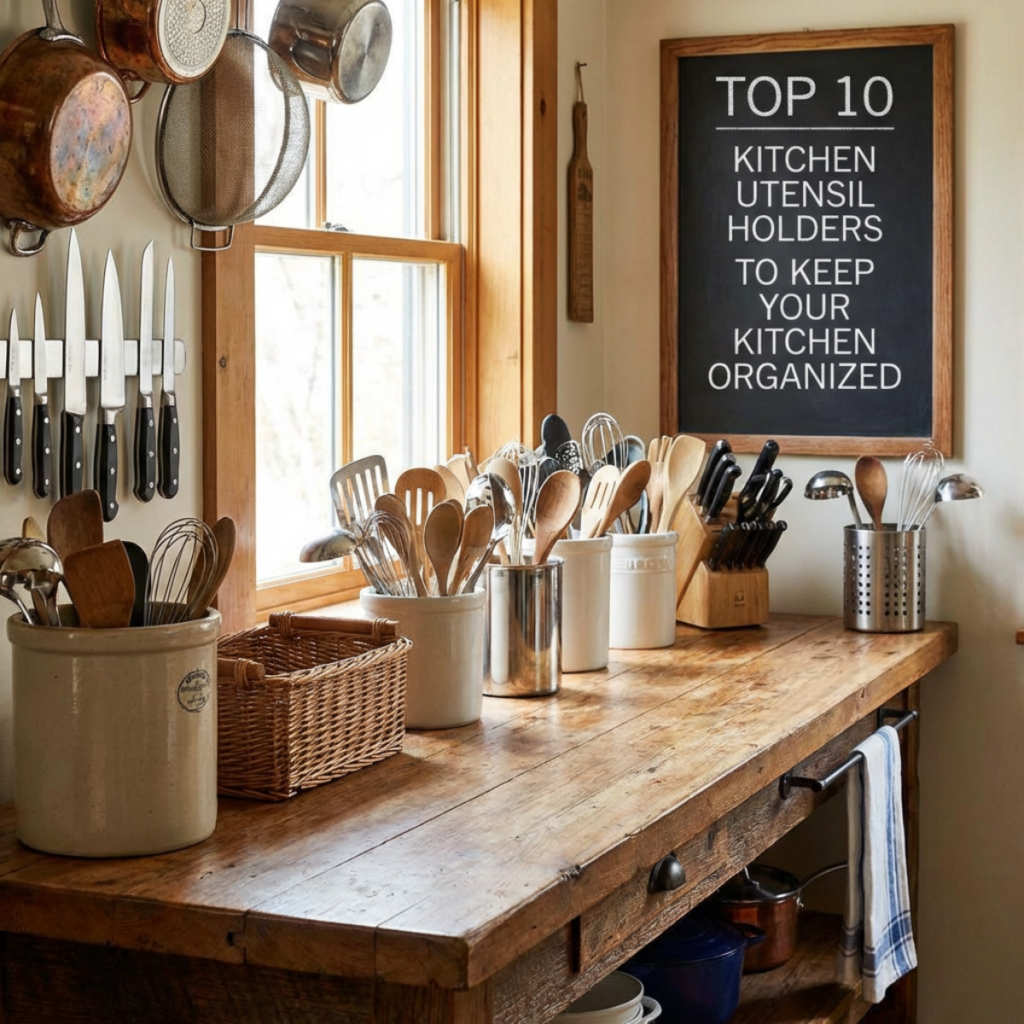
Kitchen utensil holders are containers or storage solutions designed to hold cooking tools like spatulas, spoons, whisks, and tongs. They are typically placed on countertops, mounted on walls, or stored inside drawers.
Their main purpose is to keep utensils organized, accessible, and protected from damage.
Why You Need Kitchen Utensil Holders
Kitchens can quickly become cluttered with tools and accessories. Kitchen utensil holders solve this problem by creating a designated space for your most frequently used items.
They also improve efficiency by keeping utensils within easy reach while cooking, helping you save time and avoid searching through drawers.
Benefits of Kitchen Utensil Holders
1. Better Organization
Utensil holders provide a structured way to store your tools, reducing clutter and keeping your kitchen tidy.
2. Easy Access While Cooking
Having utensils near your cooking area allows for quicker and more efficient meal preparation.
3. Improved Hygiene
Keeping utensils in a holder prevents them from touching dirty surfaces, reducing contamination risks.
4. Maximizes Space
Utensil holders help free up drawer and counter space by organizing tools vertically.
5. Protects Your Utensils
Proper storage prevents damage such as bending, scratching, or wear over time.
6. Enhances Kitchen Style
Modern utensil holders also serve as decorative elements, adding personality to your kitchen.
Types of Kitchen Utensil Holders
Choosing the right type depends on your kitchen layout and storage needs.
Countertop Utensil Holders
These are the most common type, placed near the stove for easy access while cooking.
Wall-Mounted Holders
Mounted on the wall to save counter space and keep utensils visible and dry, reducing moisture buildup.
Drawer Organizers
Ideal for those who prefer a minimalist look, keeping utensils hidden but organized.
Rotating Utensil Holders
Designed with a spinning base for easy access, though they may require more maintenance.
Hanging Holders
Use hooks or rails to hang utensils, perfect for small kitchens with limited space.
Best Materials for Kitchen Utensil Holders
Ceramic
Stylish and stable, ideal for countertop use but heavier to move.
Stainless Steel
Durable, lightweight, and resistant to rust, making it a practical choice for busy kitchens.
Wood
Adds warmth and a natural look, perfect for modern or rustic kitchens.
Plastic
Affordable and lightweight, suitable for simple storage needs.
How to Choose the Best Kitchen Utensil Holder
To get the most value, consider these factors:
Size and Capacity
Choose a holder large enough for your utensils without overcrowding.
Stability
A sturdy base prevents tipping when removing utensils.
Ventilation
Look for features like drainage holes to keep utensils dry and hygienic.
Ease of Cleaning
Select materials that are easy to clean and maintain.
Design and Style
Pick a holder that matches your kitchen aesthetic.
Choosing the Right Utensil Holder Based on How You Cook
Not every kitchen utensil holder works equally well for every household. One of the most important factors to consider is how often and how extensively you cook.
If you prepare meals daily, a larger countertop holder placed near the stove can make cooking more efficient by keeping your most-used tools within easy reach.
For smaller kitchens, wall-mounted systems or hanging rails often provide better space efficiency because they free up valuable countertop space.
Households that cook occasionally may benefit from a more compact holder that stores only essential utensils while keeping less frequently used tools in drawers.
The best utensil holder is not necessarily the largest one—it’s the one that supports your cooking habits while keeping the workspace organized and comfortable to use.
Kitchen Utensil Holders vs. Drawer Storage
Both options are useful, but they serve different purposes:
- Utensil holders: Best for quick access and daily use
- Drawer storage: Best for keeping items hidden and minimizing visual clutter
Many kitchens benefit from using both for maximum efficiency.
Tips for Organizing Kitchen Utensil Holders
To keep your kitchen neat and functional:
- Store only frequently used utensils in the holder
- Group similar tools together
- Avoid overcrowding
- Clean the holder regularly
- Place it near your cooking area for convenience
Common Kitchen Utensil Holder Mistakes to Avoid
Even a well-designed utensil holder can become ineffective if it’s not used properly.
One common mistake is storing too many tools in a single container. Overcrowding makes utensils difficult to grab and often creates visual clutter on the countertop.
Another frequent issue is placing the holder too close to the stove. While convenience matters, excessive heat, grease, and steam can make utensils dirtier and increase cleaning requirements.
Many homeowners also keep rarely used tools alongside everyday essentials. Separating frequently used utensils from specialty tools helps maintain better organization and improves efficiency during meal preparation.
Finally, avoid choosing a utensil holder based solely on appearance. A stylish design is important, but stability, capacity, and ease of cleaning often have a greater impact on long-term satisfaction.
Are Kitchen Utensil Holders Worth It?
Yes, kitchen utensil holders are a simple and effective way to improve organization, save time, and enhance your kitchen’s functionality.
They are especially useful for busy kitchens where efficiency and accessibility matter most.
Final Thoughts
After organizing kitchens of different sizes and layouts, one thing becomes clear: accessibility is just as important as storage. The most effective utensil holders aren’t necessarily the most decorative—they’re the ones that make everyday cooking easier.
A well-placed utensil holder can reduce countertop clutter, improve workflow, and eliminate the frustration of searching through drawers while preparing meals. Small changes like keeping your most-used tools within reach often have a bigger impact than larger organizational projects.
If you’re choosing a kitchen utensil holder, focus first on functionality, then on style. A holder that fits your cooking habits, available space, and cleaning routine will provide far more value than one selected purely for its appearance.
In the end, the best kitchen organization solutions are the ones you’ll use every day, and a thoughtfully chosen utensil holder is one of the simplest ways to create a more efficient and enjoyable kitchen.
About the Author
Fher is an architect specializing in residential design and space optimization. With hands-on experience improving how homes function and feel, he shares practical insights to help homeowners create spaces that are both beautiful and livable.