
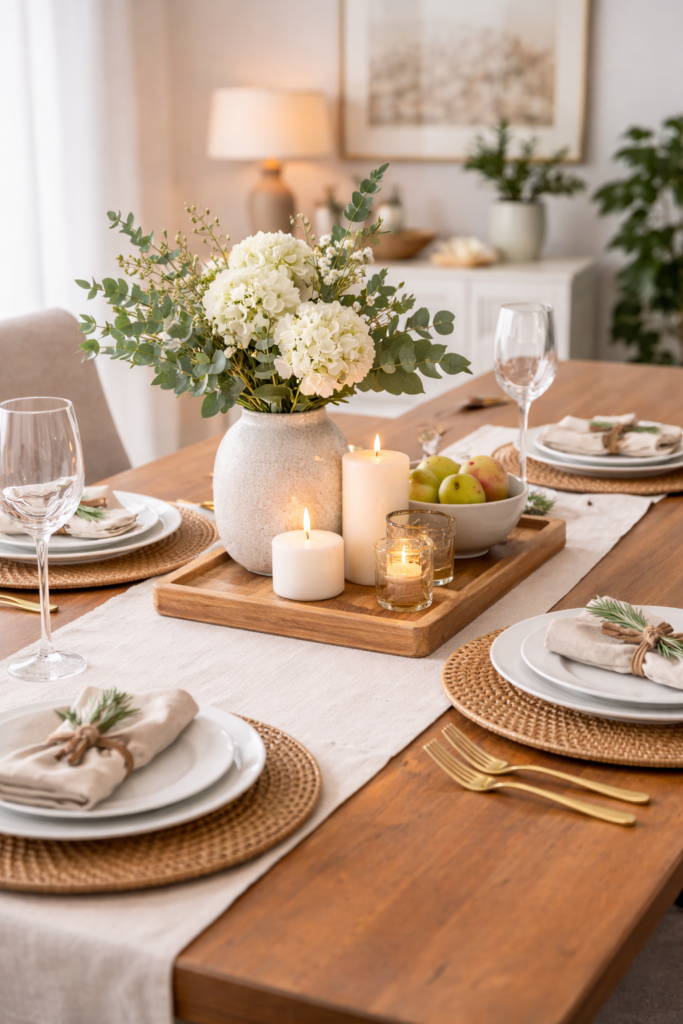

A well-planned dining table decoration can completely transform your space, making everyday meals feel special and creating a welcoming atmosphere for guests. Whether you’re decorating for daily use or special occasions, the right setup balances style and functionality.
In this guide, you’ll learn the best ideas, elements, and tips to create a beautiful and practical dining table.
What Is Dining Table Decoration?
Dining table decoration refers to the arrangement of decorative elements on your table, such as centerpieces, table linens, candles, and tableware, to enhance both appearance and usability.
A dining table is often the centerpiece of a home, where people gather to eat, connect, and socialize, making decoration an important part of the overall experience.
Why Dining Table Decoration Matters
Your dining table is one of the most used surfaces in your home, so its design should feel intentional but still practical.
A well-decorated table:
- Creates a welcoming environment
- Enhances your home’s overall style
- Makes meals more enjoyable
The key is balance—your table should look styled without becoming cluttered or difficult to use.
Benefits of Dining Table Decoration
1. Improves Visual Appeal
A decorated table instantly elevates your dining space and adds character.
2. Creates a Focal Point
A centerpiece anchors the table and defines the room’s style.
3. Enhances Everyday Living
Even simple decor like flowers or candles can make daily meals feel more special.
4. Encourages Social Interaction
A well-designed table promotes comfort and conversation.
5. Reflects Personal Style
Your table decor can showcase your taste through colors, textures, and materials.
Key Elements of Dining Table Decoration
To create a cohesive look, focus on these essential components:
Centerpiece
The centerpiece is the main focal point. Popular options include vases, candles, bowls, or greenery.
👉 Tip: Keep centerpieces low (around 12 inches or less) to maintain conversation flow.
Table Linens
Runners, placemats, or tablecloths add texture and define the space.
Lighting
Candles or soft lighting create warmth and ambiance.
Decorative Accents
Items like trays, small plants, or decorative bowls add personality and depth.
Functional Items
Decor can also be practical—fruit bowls or serving pieces work as both storage and decoration.
Dining Table Decoration Ideas
Minimalist Style
Use a simple centerpiece like a vase or bowl with neutral tones for a clean look.
Rustic Style
Incorporate natural materials like wood, linen, and greenery for a warm feel.
Modern Style
Stick to clean lines, neutral colors, and a few sculptural pieces.
Seasonal Decoration
Switch elements based on the season—flowers in spring, greenery in winter, or fruits in summer.
Everyday Decoration
Keep it simple with:
- A fruit bowl
- A small plant
- A candle
This keeps the table functional and stylish at the same time.
How to Decorate a Dining Table (Step-by-Step)
1. Start with a Base
Add a table runner or placemats to ground the design.
2. Add a Focal Point
Choose one main centerpiece (vase, bowl, or tray).
3. Layer Elements
Add 2–3 supporting items like candles or small decor pieces.
4. Vary Heights
Combine tall, medium, and low elements for visual interest.
5. Keep Space Functional
Leave at least half of the table clear for practical use.
Tips for Perfect Dining Table Decoration
- Use odd-number groupings (1, 3, or 5 items)
- Avoid overcrowding the table
- Mix textures (wood, glass, linen)
- Keep decor easy to move
- Match your table style with your home decor
Common Mistakes to Avoid
- Using oversized centerpieces that block views
- Adding too many small decorative items
- Ignoring functionality
- Mixing too many colors or styles
Keeping your design simple and intentional leads to better results.
Dining Table Decoration for Different Table Sizes
Small Tables
- Use slim or vertical decor
- Keep items minimal
- Avoid wide centerpieces
Medium Tables
- Use a runner + 2–3 items
- Keep a balanced layout
Large Tables
- Use multiple centerpieces or clusters
- Create symmetry across the table
Are Dining Table Decorations Worth It?
Yes, dining table decoration is one of the easiest ways to improve your home’s look and feel. It enhances both aesthetics and functionality, making your space more inviting and enjoyable.
How to Choose Dining Table Decorations That Actually Work in Real Life
One of the biggest challenges with dining table decoration is finding the right balance between appearance and everyday functionality. A setup that looks beautiful in a photo may not work well for daily meals, family gatherings, or small dining spaces.
Before purchasing new decor, consider how often your dining table is used. If it’s part of your daily routine, prioritize pieces that are easy to move, clean, and maintain. Decorative bowls, small plants, and trays often work better than large seasonal displays because they can stay on the table without interfering with meals.
It’s also helpful to think about scale. As a general guideline, the centerpiece should occupy no more than one-third of the table’s width. This helps maintain visual balance while leaving enough room for place settings, serving dishes, and conversation.
For households with children or pets, durability matters just as much as style. Materials such as wood, ceramic, woven fibers, and metal tend to be more practical than fragile glass decorations that require constant attention.
Finally, remember that dining table decoration should complement the room rather than compete with it. If your dining area already contains bold lighting, patterned rugs, or colorful artwork, a simpler table arrangement often creates a more cohesive and sophisticated look.
Final Thoughts From Experience
One thing I’ve noticed when helping people style dining spaces is that the best-looking tables are rarely the most heavily decorated. In fact, the tables that feel warm, inviting, and practical usually follow a simple rule: every item should either add beauty, serve a purpose, or ideally do both.
A common mistake is treating the dining table like a display shelf. Large centerpieces, too many decorative objects, or seasonal decorations that never get updated can quickly make the space feel cluttered and inconvenient for everyday use. In most homes, a well-chosen centerpiece paired with one or two supporting elements creates a more polished result than a table filled with decorations.
If you’re decorating your table for the first time, start with a runner, a simple centerpiece, and one accent item such as candles, greenery, or a decorative bowl. Live with that arrangement for a few days before adding anything else. This approach helps you create a design that feels intentional rather than overcrowded.
The most successful dining table decoration isn’t necessarily the most expensive or elaborate. It’s the one that fits your lifestyle, complements your room, and still leaves enough space for the table to do its primary job—bringing people together comfortably for meals, conversations, and everyday moments
About the Author
Fher is an architect specializing in residential design and space optimization. With hands-on experience improving how homes function and feel, he shares practical insights to help homeowners create spaces that are both beautiful and livable.


Pingback: 12 Small Dining Room Decor Ideas That Work - everydayhomestyle.io