
When your dining area is just a few feet from the kitchen, wedged into an apartment corner, or squeezed between walkways, decorating it can feel oddly high-stakes. You want it to look inviting, but you also need it to function every single day. The best small dining room decor ideas do both – they make the space feel prettier, calmer, and easier to live with.
A small dining room does not need grand furniture or complicated styling to feel finished. In fact, the rooms that work best usually have a clear point of view, a few smart scale choices, and details that support daily life. If your current setup feels tight, cluttered, or a little flat, a handful of thoughtful updates can change the whole mood.
Small dining room decor ideas that make more sense in real life
The first shift is thinking less about filling the room and more about shaping it. In a small space, every piece pulls visual weight. That means your table, chairs, lighting, rug, wall decor, and storage all need to earn their place.
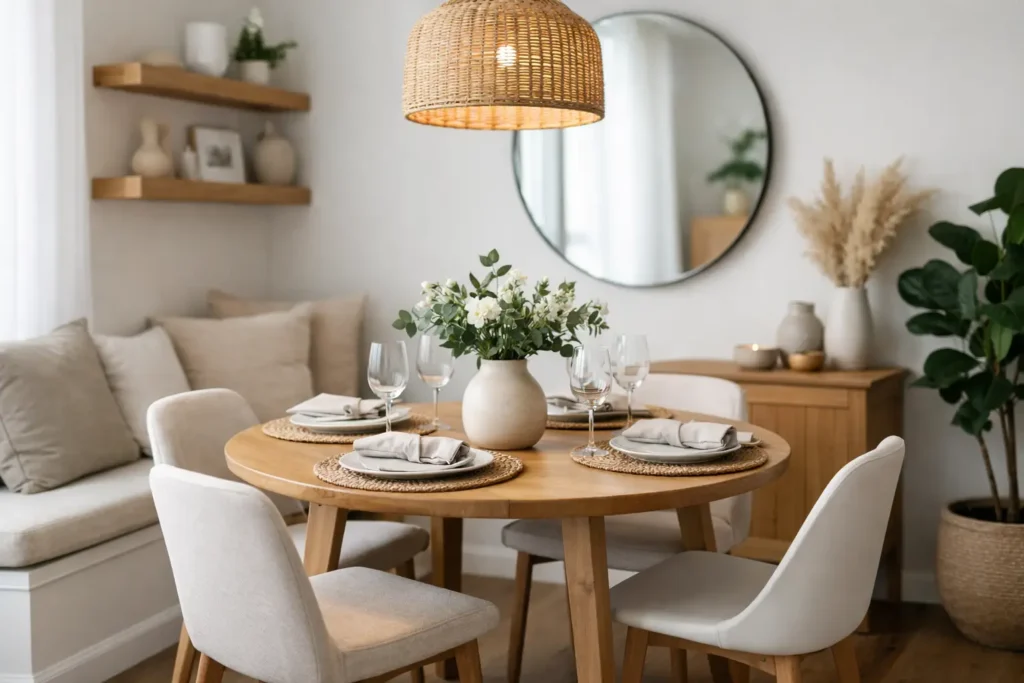
Start with the table itself. Round tables are often the easiest choice for compact rooms because they soften corners and improve flow. If your dining area sits near a walkway, that extra ease of movement matters more than people expect. A rectangular table can still work beautifully, especially in a narrow room, but it should leave enough breathing room around it. If the chairs scrape the wall every time someone sits down, the room will never feel relaxed.
Chair choice matters just as much. Bulky upholstered armchairs can look beautiful in photos, but in a small dining room they often create visual traffic. Slim wood chairs, open-back styles, or simple upholstered seats tend to feel lighter. If comfort is a concern, adding a small chair cushion usually solves more than oversized seating does.
One of the easiest decorating wins is pulling the room together with a rug that fits the footprint properly. Too-small rugs make a dining space feel accidental. A rug should extend beyond the table enough that chairs stay on it when pulled out. If that is not realistic in your room, it may be better to skip the rug entirely rather than force one that looks undersized and fussy.
Use color and contrast carefully
Small rooms are often told to stay all white, but that advice is too simple. Light colors can absolutely help a dining room feel open, yet a room with no contrast can also feel washed out and unfinished. What usually works better is a light, warm base layered with a few grounded accents.
Soft white, warm beige, pale greige, and muted taupe all make lovely backdrops for a dining space. From there, bring in contrast through darker wood tones, black lighting, framed art, or a richer textile. That mix gives the eye somewhere to land. It also makes the room feel intentional rather than temporary.
If you love color, a small dining room is actually a great place to use it. A moody green, dusty blue, terracotta, or even a warm charcoal can create a cozy, tucked-in feeling that works beautifully for meals. The trade-off is that darker colors tend to emphasize the edges of the room, so they work best when paired with good lighting and a bit of reflective surface, like a mirror or glass pendant.
Let lighting do more of the decorating
In many dining rooms, the light fixture is one of the first things people notice. In a smaller one, it can also be one of the most useful design tools. A well-chosen pendant or chandelier adds personality without taking up floor space, which makes it an easy upgrade with a big payoff.
Scale is where people often get stuck. They go too small because the room is small, and the fixture ends up looking timid. A slightly larger light can actually make the room feel more polished, as long as it does not overwhelm the table. Think statement, not oversized.
If your dining area has low ceilings, look for a semi-flush mount with shape and texture rather than a hanging fixture that drops too far. If you have room for a pendant, materials like woven natural fibers, frosted glass, or linen shades can soften the space and add warmth. Harsh overhead lighting rarely flatters a dining room, so warm bulbs make a real difference here.
Add storage that looks like decor
Small dining rooms often need to work harder than larger ones. They may hold dishes, serve as a homework spot, or double as a work zone during the day. That is why smart storage matters, but it should still feel like part of the room.
A narrow sideboard, slim cabinet, or wall-mounted shelf can provide useful storage without crowding the layout. Closed storage is ideal if visual clutter is your biggest issue. Open shelving can look lovely too, but only if you are willing to keep it edited. A few stacked bowls, a small vase, and one or two favorite serving pieces feel styled. A shelf packed with random extras feels stressful fast.
If square footage is especially tight, consider a dining bench with hidden storage or a corner banquette. These solutions are practical, but they also help a small room feel custom. Just make sure they suit your lifestyle. Benches save space, but they are not always the easiest option if people are constantly getting up and down.
Decorate the walls with purpose
Wall decor has a huge impact in a small dining room because there is less furniture competing for attention. The goal is not covering every inch. It is giving the room a focal point.
A mirror is one of the classic small-space tricks for a reason. It reflects light, visually expands the room, and can make a compact dining area feel more open. That said, mirrors work best when they reflect something attractive, like a window, a pendant light, or a styled wall opposite them. If it only reflects cluttered countertops, the effect is not quite as magical.
Artwork is another strong option, especially one larger piece rather than a busy collection of tiny frames. A single oversized print can make the room feel more elevated and less chopped up. If you prefer a gallery wall, keep the spacing tight and the palette cohesive so it reads as one moment instead of scattered pieces.
Wallpaper can also be surprisingly effective in a small dining room. A subtle stripe, soft botanical, or textured grasscloth-style pattern adds character without needing extra decor. In a compact space, even one accent wall can go a long way.
Keep the table styled, but not crowded
Centerpieces in small dining rooms need restraint. A large arrangement may look gorgeous for a party, but for everyday use it can block conversation, eat up surface space, and make the room feel busier than it is.
The most successful table styling tends to be low and simple. A bowl of fruit, a ceramic vase with a few branches, a tray with candles, or a small stack of linen napkins can all add life without getting in the way. If your table is used constantly, choose something easy to move with one hand.
This is also where texture can do a lot of work. A linen runner, woven placemats, or a handmade pottery piece adds softness and personality. In a small room, tactile details often make a bigger impact than adding more objects.
Make the room feel connected to the rest of your home
A small dining room rarely stands alone. It usually opens into a kitchen, living area, or hallway, which means it should feel related to those spaces. That does not mean everything has to match. It does mean the colors, finishes, and overall mood should make sense together.
If your kitchen has black hardware, carrying a little black into the dining light fixture or frames helps the spaces feel connected. If your living room leans warm and casual, a super formal dining setup may feel out of place. Cohesion is what makes a home feel thoughtful, even when each room is simple.
This matters even more in open layouts. A small dining area can look visually cluttered when it introduces too many new materials at once. Repeating wood tones, similar fabrics, or a shared accent color creates calm.
A few small dining room decor ideas worth trying first
If you want the quickest results, start with the changes that shift the room most visibly. Swap in lighter-looking chairs, update the light fixture, add one larger piece of wall art, and clear off any surfaces that have become catchalls. Then look at what the room still needs.
Sometimes the answer is decor. Sometimes it is function. If the space still feels cramped after styling, your furniture may simply be too large. If it feels plain but works well, then texture, lighting, and wall decor are probably the missing layer.
A small dining room does not have to impress anyone with size. It just has to support the way you gather, eat, talk, and move through your day. When the room feels easy to use and pleasant to sit in, it already has what matters most.
Final Thoughts From Experience
After decorating small dining spaces over the years, one thing becomes clear very quickly: the rooms that feel best are rarely the ones packed with the most furniture or decor. They are the ones that feel comfortable to live in every single day.
A small dining room works best when it supports real life first. That usually means choosing pieces that fit the room properly, keeping pathways easy to move through, and resisting the urge to over-style every surface. In smaller homes especially, visual calm matters more than people realize. When the room feels lighter, cleaner, and easier to use, the entire home tends to feel better too.
One mistake people often make is trying to force a “formal dining room look” into a space that simply does not need it. A compact dining area can still feel beautiful, warm, and intentional without oversized furniture, heavy decor, or complicated styling. In fact, the simplest rooms are often the ones guests remember most because they feel relaxed and natural.
If you are updating your own dining space, focus first on the changes that improve both function and atmosphere. Better lighting, chairs with a lighter visual footprint, thoughtful wall decor, and a more balanced layout usually make a bigger difference than buying more accessories. Once the room feels easier to use, decorating becomes much more intuitive.
And finally, give the room permission to evolve slowly. The most inviting homes are rarely finished all at once. They are shaped over time through small decisions that make everyday life feel a little calmer, warmer, and more personal.
That is ultimately what good small dining room decor should do. Not just look nice in photos, but genuinely improve the experience of living in your home.
About the Author
Fher is an architect specializing in residential design and space optimization. With hands-on experience improving how homes function and feel, he shares practical insights to help homeowners create spaces that are both beautiful and livable.