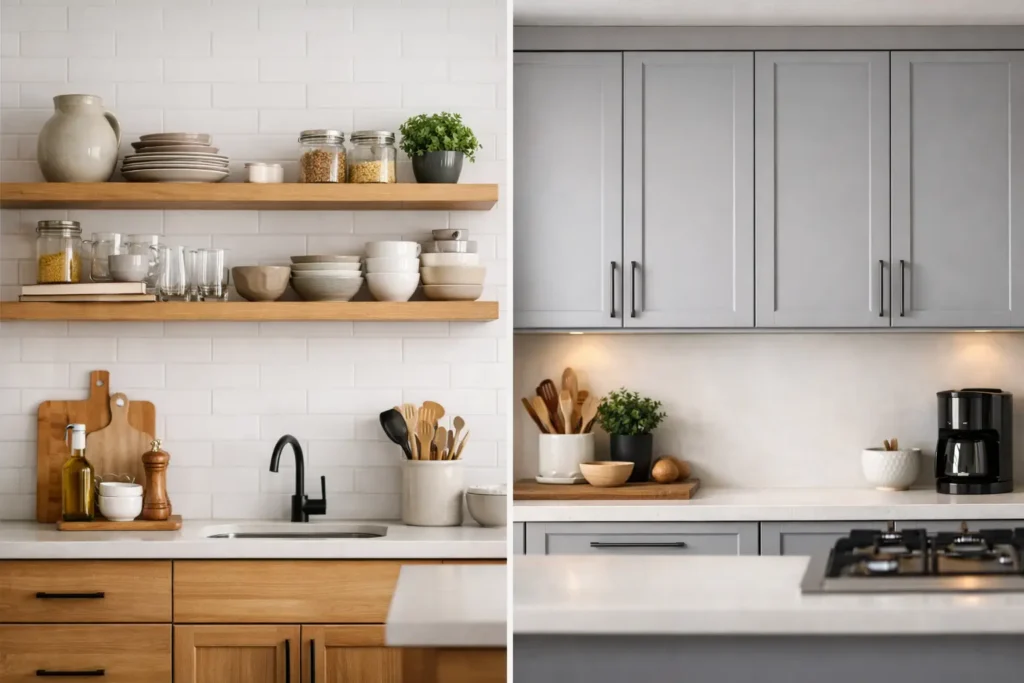

You can usually tell how a kitchen really functions by what happens above the countertop. A row of neatly stacked dishes on open shelves feels airy and inviting. A wall of closed cabinets feels calm, tidy, and hardworking. When people compare open shelving vs cabinets, they are often really asking a bigger question: do I want my kitchen to feel lighter, or do I need it to work harder for real life?
That is why this choice is less about trends and more about habits. The right answer depends on how much you cook, how much visual calm you need, and whether you want your storage to double as part of your decor. For some homes, open shelving adds charm and breathing room. For others, cabinets are what keep the kitchen from feeling like daily chaos.
Open shelving vs cabinets: the biggest difference
At the most basic level, open shelving puts your everyday items on display, while cabinets hide them behind doors. That sounds simple, but the effect on your kitchen is huge.
Open shelving can make a small kitchen feel more open because it removes visual bulk. You see wall space instead of a full row of upper cabinet doors, and that can make the room feel less boxed in. Cabinets, on the other hand, create a cleaner visual line and give you instant cover for the mismatched mugs, snack bins, and random plastic containers most real households own.
If you love a styled, collected look, open shelves can feel warm and personal. If clutter stresses you out, cabinets usually win on day-to-day comfort.
When open shelving makes sense
Open shelving works best when you are storing items that are both useful and attractive. Think everyday plates, glassware, favorite mugs, a few bowls, and maybe a small plant or cookbook. In a kitchen where you use the same core items all the time, open shelves can actually be practical because everything is easy to grab.
They also help in kitchens that need visual lightness. In a small apartment kitchen, galley layout, or older home with limited natural light, replacing some upper cabinets with shelves can make the room feel less heavy. That shift can be especially helpful if your kitchen already feels tight or closed off.
Open shelving also tends to be more budget-friendly if you are updating a kitchen without a full renovation. Installing a couple of sturdy shelves is usually far less expensive than buying and hanging new upper cabinets. For renters or budget-conscious homeowners, that can be a very appealing middle ground.
Still, there is a catch. Open shelves look best when what sits on them is relatively consistent in color, shape, or style. You do not need a magazine-perfect kitchen, but you do need some editing. If your dishes are chipped, your mugs are all over the place, or your pantry overflow usually migrates onto every available surface, shelves may quickly feel like pressure instead of freedom.
The upkeep side of open shelves
This is where many people change their minds. Open shelves collect grease, dust, and cooking residue more quickly than closed cabinets. Even in a clean home, anything near the stove needs regular wiping.
That does not mean open shelving is a bad idea. It just means it works best for people who are comfortable doing light maintenance and who naturally keep things fairly organized. If you do not want to think about how your shelves look every day, cabinets may be a kinder choice for your routine.
When cabinets are the better choice
Cabinets are often the right answer for busy households, family kitchens, and anyone who wants maximum storage with minimum visual noise. They give you room to tuck away the not-so-pretty parts of daily life, from water bottles and lunch containers to oversized appliances and half-used pantry staples.
They are also more forgiving. You can shut the door on uneven stacks, bulk groceries, and all the kitchen tools that make life easier but are not exactly decorative. That alone can make the room feel calmer.
Cabinets generally provide more usable storage per wall because you can layer, stack, and hide more inside them. If your kitchen is short on square footage, that extra concealed storage may matter more than an airy look. Families, frequent cooks, and people who shop in larger quantities often benefit from cabinets simply because they need the capacity.
There is also a practical cleaning benefit. Cabinet doors protect what is inside from dust and grease, which is especially useful if your kitchen sees a lot of frying, baking, or everyday traffic.
Why cabinets sometimes feel too heavy
The downside is that upper cabinets can make a kitchen feel visually dense, especially if the room is small or the cabinets are dark. In some layouts, a full wall of cabinetry can make the space feel closed in.
That does not mean you have to choose between heavy cabinets and no storage. Sometimes the issue is not cabinets themselves but how many there are, what color they are, or whether they stretch across every wall without a break.
Open shelving vs cabinets in real-life kitchens
The most useful answer is often not one or the other. It is both.
A mixed approach works well because it gives you the softness and openness of shelving without forcing your entire kitchen to stay display-ready. You might keep cabinets on most walls for hidden storage, then add two open shelves over a coffee station, by a window, or on a smaller accent wall. That setup lets you show off your prettiest everyday pieces while keeping the messier parts of kitchen life out of sight.
This is often the sweet spot for real homes. You get personality without sacrificing function. You also reduce the styling pressure because only a small section needs to stay visually tidy.
If you are unsure, start there. A little open shelving goes a long way.
How to decide what works for your home
The best way to choose is to look at your habits before you look at inspiration photos. Ask yourself what your kitchen actually needs on a Tuesday night, not just what looks beautiful online.
If you cook often, own a lot of practical but mismatched items, or feel calmer when clutter is hidden, cabinets are likely the stronger choice. If you prefer a lighter look, use a smaller set of everyday dishes, and enjoy styling your space, open shelving may suit you well.
You should also think about what kind of storage problem you are solving. If your kitchen feels cramped because it looks heavy, shelves can help visually. If it feels cramped because you truly do not have enough room for your things, cabinets usually solve more.
Budget matters too. Open shelves can be an affordable update, but if they lead you to replace dishes, buy matching containers, or restyle the kitchen to make everything look cohesive, the cost can creep up. Cabinets cost more upfront, but they may save you from needing to curate what you own.
Best rooms and layouts for each option
Open shelving tends to shine in smaller kitchens, kitchens with a lot of natural light, and homes that lean cozy, casual, or collected in style. Farmhouse, cottage, modern organic, and relaxed traditional spaces often carry shelves well because a little visual texture adds warmth.
Cabinets usually make the most sense in highly functional kitchens, shared family spaces, and homes where storage has to do serious work. They also suit more streamlined or tailored looks, where clean lines and hidden storage support a quieter overall design.
If your kitchen has one awkward blank wall, that is often a great place to test shelving. If your kitchen already lacks enough closed storage, removing upper cabinets entirely can create a problem that style alone will not fix.
A few mistakes to avoid
One common mistake is choosing open shelves only because they are trendy, then realizing you do not enjoy keeping them tidy. Another is assuming cabinets must fill every possible inch of wall space. More storage is helpful, but too much visual weight can make a kitchen feel smaller.
It is also easy to place open shelving in the worst possible spot, like directly next to a high-splatter cooking zone, or to use shelves that are too deep, too flimsy, or too high to reach comfortably. Good storage should make life easier, not more annoying.
At Everyday Home Style, we are big believers in picking ideas that fit your real routine. A beautiful kitchen is not just one that photographs well. It is one that supports your mornings, your dinners, and the way you actually live.
The better question than open shelving vs cabinets
Instead of asking which option is better overall, ask which items deserve open access and which ones deserve a door. That simple shift makes the decision feel less all-or-nothing.
Your favorite dishes, everyday glasses, and a few pretty essentials may belong on shelves. Your food storage containers, small appliances, and backup supplies may belong in cabinets. Once you separate display-worthy daily items from everything else, the answer often becomes clearer.
A kitchen you love does not need to follow one rule perfectly. It just needs to feel good to use, easy to maintain, and comfortable enough to support everyday life.
Who should choose open shelving and who should choose cabinets?
Choose open shelving if:
- You use a smaller collection of dishes and glassware.
- You enjoy styling and keeping things visually organized.
- Your kitchen feels dark or visually heavy.
- You want an affordable update without replacing cabinetry.
- You like displaying everyday items as part of your decor.
Choose cabinets if:
- You cook frequently and own a lot of kitchen tools.
- You prefer a cleaner, less cluttered appearance.
- You have children or a busy family kitchen.
- You buy groceries in bulk or need maximum storage.
- You want lower maintenance and less frequent cleaning.
For many homes, the best answer is a combination of both. Closed cabinets provide hidden storage where you need it most, while a few carefully placed shelves bring personality and openness to the room.
Final Thoughts From Experience
In my experience, homeowners are often surprised to discover that this decision has less to do with style and more to do with everyday habits. One mistake I see frequently is choosing open shelving because it looks beautiful in photos, only to realize later that they don’t enjoy keeping everything on display. On the other hand, I’ve also seen kitchens feel unnecessarily heavy because every inch of wall space was filled with cabinets when a little openness would have made the room feel more inviting.
The kitchens that tend to work best are the ones designed around real life rather than trends. If you love visual simplicity and want to hide the busier parts of daily life, cabinets are hard to beat. If you enjoy a more relaxed, collected look and don’t mind occasional upkeep, open shelves can add warmth and personality that cabinets alone sometimes lack.
For most people, a balanced approach is often the smartest solution. Keeping the practical items behind doors while displaying a few everyday favorites creates a kitchen that feels both functional and welcoming. After all, the goal isn’t to create a picture-perfect kitchen. It’s to create a space that makes cooking, gathering, and everyday living easier and more enjoyable for years to come.
About the Author
Fher is an architect specializing in residential design and space optimization. With hands-on experience improving how homes function and feel, he shares practical insights to help homeowners create spaces that are both beautiful and livable.