
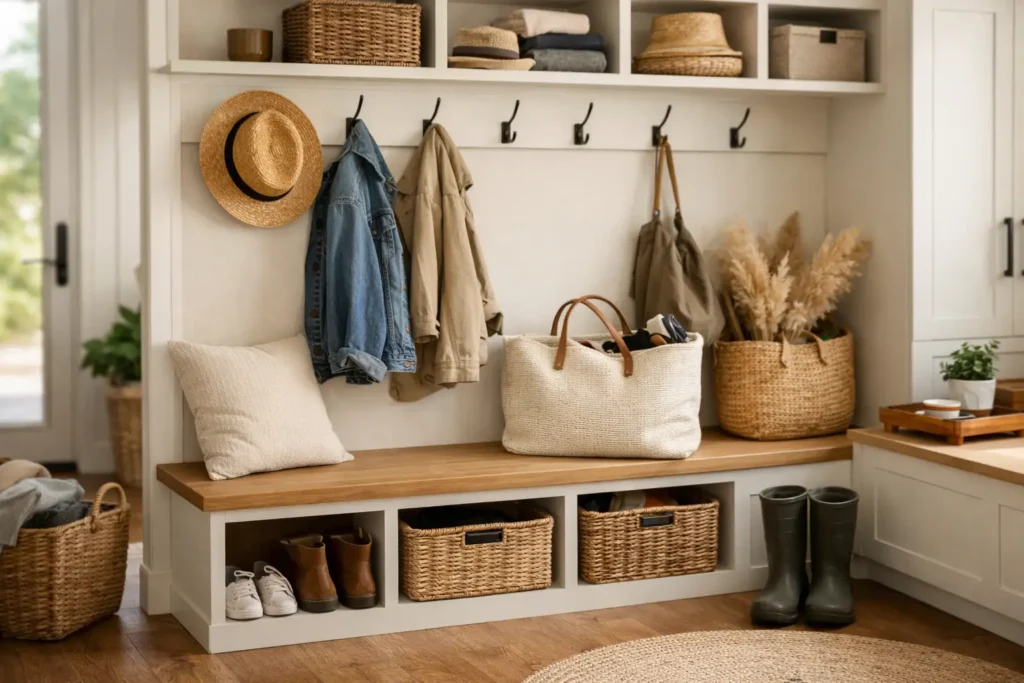

The pile by the front door rarely starts as a pile. It begins with one pair of shoes, one backpack, and a jacket that will be picked up later. A few busy afternoons later, your entryway feels like the household lost-and-found. The best mudroom bench storage ideas solve that everyday problem while making the first room you see feel calm, useful, and welcoming.
A mudroom bench does more than offer a place to sit while tying shoes. It creates a clear landing spot for the things that move in and out of your home every day. Whether you have a dedicated mudroom, a narrow hallway, or a small corner beside the door, the right combination of seating and storage can make a noticeable difference.
Start With How Your Household Actually Comes Home
Before choosing a bench, take a quick inventory of what tends to collect at your door. A family with young children may need easy-access cubbies for backpacks and a deep drawer for sports gear. A couple in a small apartment may only need a slim bench with shoe storage and a few hooks above it.
Measure the wall, but also measure the walkway in front of it. You want enough room to open drawers, sit comfortably, and pass through without bumping into a shoe basket. For most homes, a bench seat between 18 and 20 inches high feels comfortable. A depth of 15 to 18 inches works well for sitting, while a shallower 12-inch bench can be a smart choice in a tight hall.
Think of your bench as a working piece of furniture, not a showroom display. The finish should be able to handle damp coats, dirty sneakers, and the occasional dropped water bottle. Painted wood, washable cushions, wipeable baskets, and durable hardware will make your space easier to maintain.
12 Mudroom Bench Storage Ideas That Earn Their Keep
1. Choose a lift-top bench for hidden overflow
A lift-top storage bench is one of the simplest ways to hide visual clutter. It is especially useful for seasonal items, extra hats and gloves, pet supplies, or reusable shopping bags that do not need to be out every day.
The trade-off is access. A hinged lid is less convenient for items children need independently, and you will want safety hinges if little fingers are around. Use it for backup storage rather than the things everyone reaches for during the morning rush.
2. Build open cubbies under the seat
Open cubbies make it easy to give each person a designated home for shoes, backpacks, or a small bin of daily essentials. They also encourage quick cleanup because nothing needs to be opened or pulled out first.
For a more polished look, slide matching woven baskets into some or all of the cubbies. Baskets soften a built-in bench and hide mismatched footwear, but leave at least one open section if your household needs fast shoe access.
3. Add drawers for a cleaner-looking entry
Drawers are ideal when you want a calm, furniture-like look. They conceal clutter better than cubbies and work well for gloves, dog leashes, sunscreen, umbrellas, and all the small things that otherwise drift across the floor.
Deep drawers can hold shoes, but they need enough interior height to be useful. If you are shopping for a ready-made bench, check drawer measurements instead of assuming a shoe will fit. Full-extension drawer slides are worth the upgrade because they let you see what has settled at the back.
4. Use pull-out wire baskets for wet shoes
If your family comes home with muddy cleats, snowy boots, or rainy-day sneakers, a pull-out basket can be more practical than a closed drawer. Air circulates around damp items, and dirt is easier to spot and clean up.
Place a washable tray or boot mat beneath the basket to protect the floor. This option is wonderfully functional, though it has a more utility-room feel. Balance it with a warm bench cushion or a pretty wall color if you want the space to feel cozier.
5. Pair the bench with vertical lockers
A bench-and-locker combination turns one wall into a hardworking drop zone. Tall cubbies above the seat give coats, bags, and lunch boxes a place to land, while the lower bench handles shoes and sitting.
Assigning one locker to each family member can reduce the daily hunt for missing gear. In a shared household, labels are helpful, but they do not have to look overly schoolroom-like. Try simple wood tags, small framed name cards, or a discreet label inside each cubby.
6. Add a shoe shelf beneath a floating bench
A wall-mounted floating bench is a great solution for smaller mudrooms because the open floor beneath it keeps the area looking lighter. Add one or two low shelves for shoes, or use trays to keep pairs from spreading out.
This style works best when the wall framing can support it properly. If installation is not an option in a rental, get a similar airy effect with a slim-legged console bench and low shoe baskets beneath it.
7. Make room for a dedicated pet station
Pets create their own category of entryway clutter: leashes, towels, treats, paw wipes, and dog coats. Reserve one basket or drawer near the bench for those supplies, and hang a leash hook at adult height.
If space allows, tuck a pet bed beneath one end of the bench. It gives your dog a cozy place to settle while everyone arrives home, and it keeps the bed from taking over the main walkway.
8. Turn a narrow hallway into a mini mudroom
You do not need a large room to create a useful landing zone. In a narrow entry, choose a 10- to 12-inch-deep bench with a row of hooks above it and shallow baskets below. A compact bench provides a place to pause and pull off shoes without crowding the path.
Avoid oversized pillows and deep baskets here. They may look inviting in photos, but they quickly make a narrow passage feel cramped. One tailored cushion and a few tidy storage containers will serve the space better.
9. Use a bookcase base for a budget-friendly built-in look
A row of sturdy low bookcases can create a surprisingly useful bench base. Secure the units together and to the wall when needed, add a wood top or upholstered cushion, and use the open shelves for baskets or shoes.
This approach is especially appealing if you need a custom length without custom-cabinet pricing. Just choose bookcases designed to carry weight, and make sure the top is fully supported before using it as seating.
10. Add a charging drawer for everyday tech
Phones, tablets, headphones, and school devices often end up on the kitchen counter because there is no clear charging spot. A bench drawer with a power strip or charging station can keep those items contained near the door.
Keep cords organized and follow the manufacturer’s safety guidance. This is best for dry, interior entryways rather than a damp garage mudroom, where moisture and electronics are not a happy pairing.
11. Use labeled bins for seasonal swaps
Not every item deserves year-round real estate. Keep a few labeled bins in deeper bench storage for winter accessories, swim gear, or the current sports season. When the weather changes, swap the bins instead of trying to make every category fit at once.
Labels make the system easier for everyone to follow, especially when several people share the same storage. Use broad categories such as Winter Gear or Pool Days rather than creating so many labels that putting things away feels complicated.
12. Finish with a cushion that invites people to use it
A bench that is comfortable gets used, and a bench that gets used helps keep shoes off the floor. Choose a cushion with a removable, washable cover in a medium tone or subtle pattern that can forgive everyday marks.
This is also where you can bring personality into a functional space. A striped cushion, a favorite family photo above the hooks, or a small washable runner can make your mudroom feel like part of your home instead of a storage closet.
Create Zones So Storage Stays Organized
The most successful benches separate the drop zone into simple jobs: a place to sit, a place for shoes, a place for grab-and-go items, and a place for occasional overflow. You do not need every type of storage, but you do need a clear answer for the items that regularly land there.
Keep everyday essentials between knee and shoulder height whenever possible. Kids can reach their own lower cubbies, while coats and bags stay on hooks above. Put less-used items in high lockers or inside lift-top storage. That one small decision makes a mudroom easier to reset at the end of the day.
A bench also works better when you resist filling every inch. Leave a little breathing room in baskets and drawers, and keep one hook empty for a guest or an extra coat. The goal is not picture-perfect storage. It is a dependable spot that helps your home feel more settled when real life walks through the door.
Common Mistakes When Choosing a Mudroom Bench
One mistake I see often is choosing a bench because it looks beautiful in a staged photo rather than because it fits the way the household actually functions. A bench that is too deep can make a narrow entry feel cramped, while one without enough storage often becomes another surface where clutter collects.
Another common mistake is trying to hide everything behind doors and drawers. Closed storage certainly looks tidy, but it only works if it’s convenient enough to use every day. Families with young children often have better success with a mix of open cubbies for daily essentials and closed storage for seasonal or less-used items.
It’s also worth thinking about maintenance before buying. Light-colored cushions without removable covers, unfinished wood, or delicate hardware may look appealing at first, but they rarely hold up well in one of the busiest areas of the home. Choosing durable, easy-to-clean materials usually pays off over time.
Finally, avoid making the bench larger than the space can comfortably handle. A mudroom should make coming and going easier, not create another obstacle to walk around.
Final Thoughts From Experience
After looking at countless entryway layouts and storage solutions, one pattern becomes clear: the best mudroom benches are rarely the biggest or the most expensive. They are the ones designed around everyday habits.
A well-planned bench should make common routines feel almost effortless. Shoes have an obvious place to land, bags are easy to grab on the way out, and everyone in the household knows where their everyday essentials belong. When storage matches real life instead of an idealized photo, it’s much easier to keep the space organized without constantly reminding people to clean up.
If you’re starting from scratch, resist the temptation to add every storage feature at once. Begin by solving the biggest source of clutter—whether that’s shoes, backpacks, pet supplies, or seasonal gear—and expand your system only if you genuinely need more organization later. Simple storage that gets used every day will always outperform a complicated system that nobody wants to maintain.
The mudroom may not be the largest room in the house, but it often sets the tone for everything that happens after you walk through the door. A thoughtfully designed bench creates a smoother daily routine, reduces visual clutter, and helps your home feel calmer from the moment you arrive.
About the Author
Fher is an architect specializing in residential design and space optimization. With hands-on experience improving how homes function and feel, he shares practical insights to help homeowners create spaces that are both beautiful and livable.