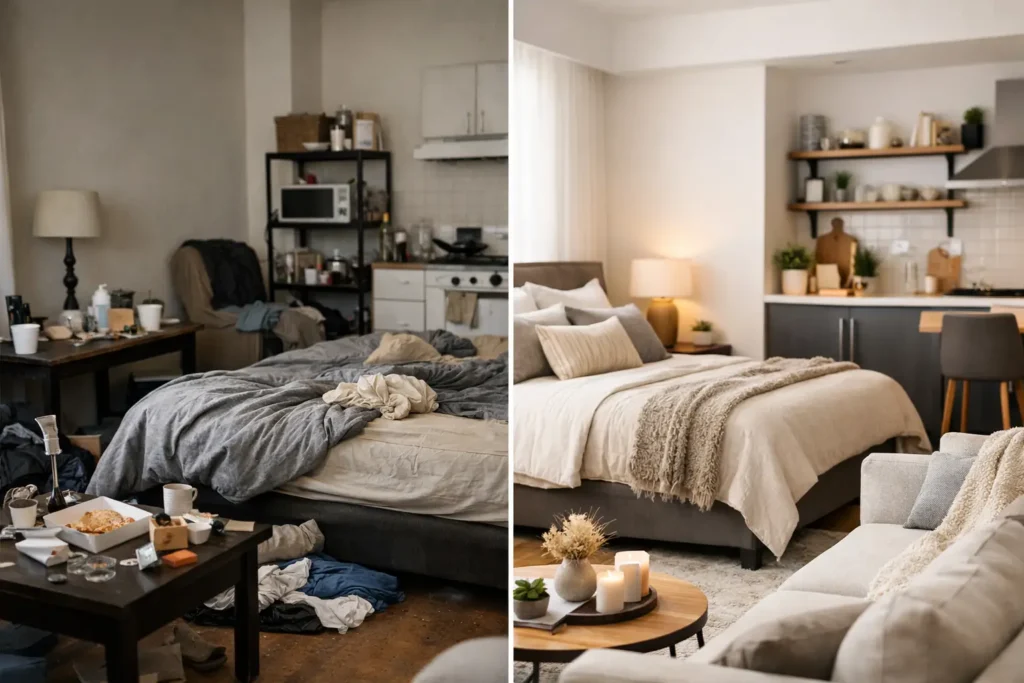

A successful studio apartment makeover before after rarely comes from buying all new furniture. The biggest transformations happen when a room starts working with your daily life instead of against it. That might mean finally giving your bed a little privacy, clearing the chair that has become a clothing pile, or making one small living area feel like a place you genuinely want to come home to.
Studios ask a lot of one open room. It may need to be your bedroom, living room, dining spot, office, and storage closet at the same time. The goal is not to make it look like nobody lives there. It is to create a home that feels calm, useful, and personal – even when square footage is limited.
Start With the Before, Not the Shopping Cart
Before choosing paint colors or adding throw pillows, take a clear look at what is not working. Most studio “before” spaces have the same few challenges: furniture pushed against every wall, no visual separation between sleep and lounging, too much visible storage, and lighting that makes the whole room feel flat.
Walk through your apartment at the times you use it most. Where do you drop your bag? Can you make the bed without moving a chair? Is there a comfortable spot to eat, read, or work? These small frustrations are the real makeover brief.
Take photos from each corner, too. Photos make awkward layouts and clutter hotspots easier to see than your everyday view does. Then choose two or three priorities. A renter who works from home may need a more defined desk zone, while someone who loves hosting friends may need flexible seating and a better dining setup.
The Studio Apartment Makeover Before After Plan
A polished after does not require a perfectly matched furniture set. It needs a simple plan that creates purpose, visual breathing room, and warmth. Think of the following changes as layers. You can make a big difference with just the first few, then build over time as your budget allows.
1. Give every zone a job
An open studio feels messy when everything appears to happen in the middle of the room. Start by identifying zones for sleeping, living, eating or working, and entry storage. Even a tiny apartment can support these roles when each one has a clear visual cue.
An area rug can anchor the living room. A narrow console or small shelf near the door creates an entry landing spot. Your bed area may be defined by a different wall color, a pair of bedside tables, or a curtain behind the headboard. These boundaries do not need to block the room off completely. They simply tell your eye where one activity ends and another begins.
2. Pull furniture away from the walls when it helps
Pushing every piece against the perimeter seems like the obvious way to make a studio feel larger. Sometimes it does the opposite, leaving a lonely blank space in the center and making the room feel like a waiting area.
Try floating the sofa a few inches from the wall or placing it with its back toward the bed to create a natural division. In a longer studio, a sofa can act as a soft room divider without taking the light away. This approach depends on your layout, of course. If floating furniture blocks a walking path, keep the wall placement and use a rug or slim console to define the zone instead.
3. Create privacy around the bed
The bed is often the hardest part of a studio to style because it is always visible. Rather than treating that as a decorating failure, make it feel intentional. A made bed with a simple duvet, two sleeping pillows, and a textured throw instantly reads more like a bedroom than an afterthought.
For extra separation, use an open bookcase, ceiling-mounted curtains, a folding screen, or a tall plant grouping. Open shelving is especially useful because it can divide the room while still allowing daylight to travel through. Choose a solution that is easy to live with. A heavy divider may look dramatic, but it can make a small, dark studio feel boxed in.
4. Replace bulky pieces with hardworking furniture
A makeover often becomes possible when one oversized piece leaves. A huge coffee table, deep sofa, or wide dresser can quietly consume the flexibility a studio needs.
Look for furniture that earns its footprint. A storage ottoman can serve as a coffee table and hold blankets. A drop-leaf table can expand for dinner and fold down afterward. Nesting tables offer surfaces when guests visit without permanently crowding the room. If you are choosing new seating, prioritize a sofa with raised legs or a slim profile so more floor remains visible.
Multifunctional furniture is helpful, but do not buy a complicated piece just because it has five uses. The best choice is the one you will actually use every day without turning simple routines into chores.
5. Use vertical space to calm the floor
When storage lives only at floor level, a studio gets crowded quickly. The before-and-after difference can be as straightforward as moving storage upward.
Install renter-friendly wall shelves where permitted, add a tall bookcase, or use cabinets that reach close to the ceiling. Store less attractive necessities in matching baskets or opaque bins, and leave a little open space on shelves for books, framed photos, or a small ceramic vase. The mix prevents storage from looking overly utilitarian.
This is also the moment to be realistic about what belongs in the apartment. If something has no home, it will keep landing on the counter, bed, or dining chair. A few thoughtful storage solutions help, but editing what you own is often the most budget-friendly upgrade of all.
6. Layer lighting instead of relying on one fixture
Overhead lighting can make a studio feel harsh, particularly at night when every zone needs to feel restful at once. Add at least two additional light sources, such as a floor lamp by the sofa and a small lamp near the bed or desk.
Warm bulbs make a noticeable difference, and lamps create pools of light that make separate zones feel more distinct. If your rental has an unflattering ceiling fixture, you do not necessarily need to replace it. A soft floor lamp and a table lamp can shift the mood enough that the overhead light becomes a practical backup rather than the main event.
7. Choose one calm color story
A studio can handle personality, but too many competing colors tend to make one open room feel busy. Choose a foundation of two or three colors, then repeat them across the apartment. For example, warm white walls, natural wood, soft blue textiles, and small black accents can connect the bed, living area, and kitchen without making everything match exactly.
If you want to try a bolder color, use it with purpose. Paint the wall behind the bed, add removable wallpaper in a dining nook, or bring color in through artwork and curtains. Concentrating color in one area creates impact while preserving the airy feeling that small spaces need.
8. Finish with details that make it yours
The most inviting after photos are not filled with random decor. They include a few meaningful details that make the apartment feel lived in and loved. Hang art at a comfortable eye level, bring in a plant if your light allows, and style one surface with things you actually enjoy seeing.
A tray for keys, a favorite candle, a stack of cookbooks, or a framed vacation photo can make a studio feel personal without adding clutter. Leave some surfaces empty, too. Negative space is not wasted space. It gives your favorite pieces room to stand out.
What Makes the After Feel Bigger
The best studio makeovers do not always add more. They improve sightlines, reduce visual noise, and make the room easier to use. When you can see more floor, reach what you need, and move from the entry to the bed without weaving around furniture, the apartment naturally feels more spacious.
Keep window treatments light and hang curtains higher and wider than the window when possible. Use a larger rug rather than several tiny ones, since small rugs can chop up an open layout. Mirrors can help reflect light, but they work best when they reflect a window, a lamp, or an appealing view instead of a cluttered corner.
Most of all, let the finished space reflect your real routine. A studio does not have to look like a showroom to feel stylish. With a few intentional changes, one room can become a cozy corner that supports the way you rest, work, gather, and live every day.
Common Studio Apartment Makeover Mistakes to Avoid
Many studio makeovers become more expensive than necessary because people focus on buying new decor before solving layout problems. In most cases, moving furniture and reducing visual clutter has a much bigger impact than replacing every piece.
Some of the most common mistakes include:
Buying oversized furniture that overwhelms the room. Using several small rugs that visually break up the floor. Choosing dark curtains that block natural light. Filling every wall with shelves or artwork. Forgetting to leave empty space between furniture pieces. Trying to copy Pinterest layouts that don’t match the apartment’s actual dimensions.
A successful makeover starts with function. Once the room works well for everyday life, decorating becomes much easier and usually costs less.
Final Thoughts From Experience
One thing I’ve noticed from looking at countless small-space makeovers is that the biggest transformations rarely come from spending more money. They come from making smarter decisions about how the space is used.
Many people assume a studio feels cramped simply because it’s small, but more often the problem is that every piece of furniture is competing for attention. Once the layout becomes intentional, storage has a designated place, and each area serves a clear purpose, even a modest apartment begins to feel calmer and more comfortable.
If you’re planning your own studio apartment makeover, don’t feel pressured to complete everything in a single weekend. Start with the layout, improve lighting, remove what no longer serves you, and make one thoughtful change at a time. Those gradual improvements usually create longer-lasting results than a complete redesign done all at once.
The best studio apartment isn’t the one that looks perfect in photos. It’s the one that supports your daily routine, feels welcoming every time you walk through the door, and makes every square foot work a little harder for you.
About the Author
Fher is an architect specializing in residential design and space optimization. With hands-on experience improving how homes function and feel, he shares practical insights to help homeowners create spaces that are both beautiful and livable.