
The shoes by the front door are rarely just shoes. They are the muddy sneakers from soccer practice, the work flats kicked off after a long day, the rain boots that never quite make it to the closet. The best entryway shoe storage solutions give every pair a realistic landing spot, so your home can feel welcoming from the very first step inside.
The right option depends less on having a picture-perfect foyer and more on how your household actually comes and goes. A narrow apartment entry needs a different approach than a busy family mudroom, and a cabinet that hides clutter may be more useful than an open rack that looks tidy only on day one.
Start With How Your Entryway Works
Before choosing storage, take a quick inventory of the shoes that truly live near the door. Count everyday pairs, not the dress shoes and seasonal boots tucked away elsewhere. If four people each leave out two pairs, a six-pair rack will create a pile beside it rather than solve the problem.
Then measure the available depth. A typical shoe needs about 12 inches of depth, while a slim shoe cabinet may extend only 6 to 10 inches from the wall by storing shoes at an angle. Keep a clear path through the entryway, especially near an outward-swinging door, a closet door, or a staircase.
Finally, decide whether you need storage to disappear or simply look more organized. Closed cabinets are calmer visually but can feel fussy for little kids or rushed mornings. Open storage is easy to use, but it asks for a little more daily editing. Neither is automatically better. The best choice is the one your household will keep using.
Best Entryway Shoe Storage Solutions for Every Layout
1. A storage bench for a hardworking entry
A bench with built-in cubbies, drawers, or lift-top storage earns its place in a family entryway. It gives you somewhere to sit while tying shoes and makes the routine feel less chaotic, especially when kids are trying to get out the door.
Open cubbies work well when each person has an assigned space. Choose roomy compartments for sneakers and sandals, then use a basket nearby for loose items such as gloves and dog leashes. A lift-top bench creates a cleaner look, although it is best for shoes that are fully dry and not coated in mud. Add a washable cushion or a simple pillow to make the piece feel like furniture rather than utility storage.
2. A slim tilt-out cabinet for tight spaces
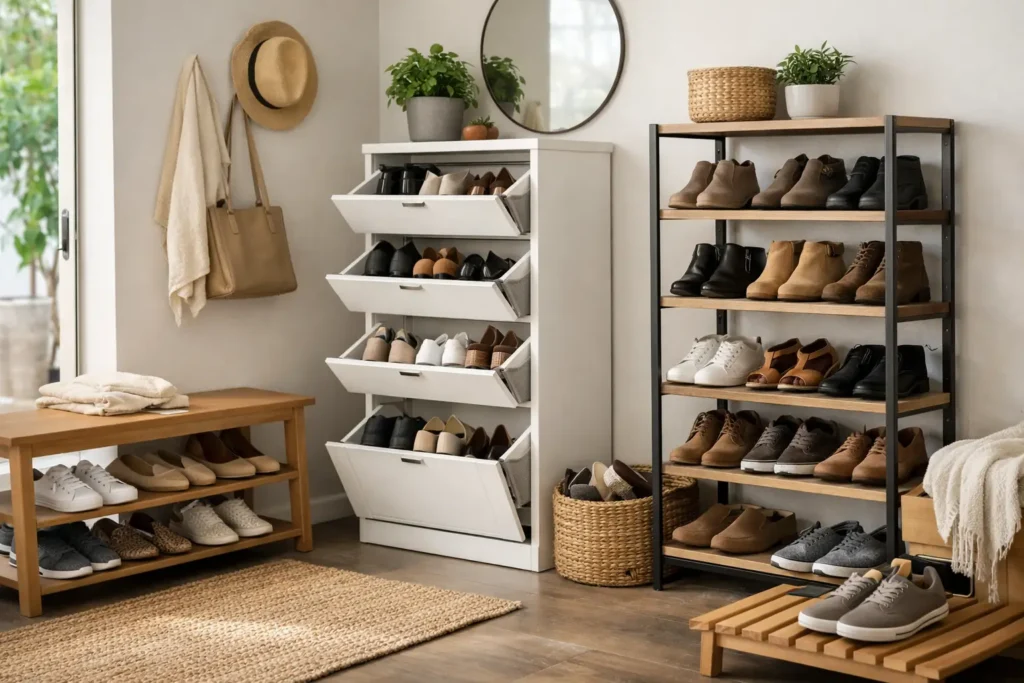
For a narrow hallway, apartment foyer, or entry that opens straight into the living room, a tilt-out shoe cabinet can be a small-space hero. Its shallow profile keeps shoes behind closed doors without taking over the walkway.
This option is particularly helpful for flats, loafers, sandals, and low-profile sneakers. Tall hiking boots, bulky athletic shoes, and winter footwear may not fit, so plan a second spot for those pairs. Secure tall cabinets to the wall, especially in homes with children or pets, and leave enough room in front for the drawers to open comfortably.
3. A low open shoe rack for easy daily habits
An open rack is not the most concealed solution, but it is often the most honest one. If your family walks in, slips off shoes, and heads directly to the kitchen, a simple two- or three-tier rack makes that habit easier instead of asking everyone to open a cabinet and line up pairs perfectly.
Choose a rack that is sturdy enough for adult shoes and low enough to avoid visual clutter. Wood and metal designs tend to feel more intentional than lightweight plastic, particularly in a visible entry. Keeping only the current season on the rack is the key to making it look neat. Summer sandals do not need to compete with snow boots in January.
4. Wall-mounted shelves when floor space is scarce
When there is barely room for a console table, look up. Wall-mounted shelves, narrow picture ledges, or a rail system with baskets can create shoe storage without crowding the floor. This is a smart choice for very small homes, but it needs thoughtful placement.
Install shelves low enough for children to reach if you want them to put away their own shoes. In a more polished adult entry, place a shallow shelf near the floor and keep it limited to a few everyday pairs. Avoid turning the wall into a full shoe display unless the area is tucked away. Shoes can bring visual weight quickly, even in a beautifully styled room.
5. Baskets for flexible, family-friendly storage
A few substantial baskets can make a busy entry feel softer and more forgiving. They are ideal for a rental, a temporary setup, or a home where shoe sizes and routines change often. They also work beautifully beneath a console table or bench.
Give each person a labeled basket, or use one for slippers and one for grab-and-go shoes. Baskets are best for casual footwear rather than delicate heels that can get scuffed or crushed. Choose a washable woven style, metal bin, or sturdy plastic basket if wet shoes are part of your everyday reality.
6. A hall closet refresh for hidden capacity
If your entryway has a coat closet, it may already hold more shoe storage potential than you think. The floor often becomes a jumble because it is the easiest place to drop things, but adding a low shelf, hanging organizer, or stackable shoe bins gives that space a real system.
Keep the most frequently worn shoes at floor level, where they can be reached without a scavenger hunt. Reserve upper shelves for out-of-season pairs and special-occasion footwear. A closet is also the right place for damp boots to dry on a tray before they go back into longer-term storage.
7. A cabinet or console that blends with your decor
In an open-concept home, the entry may share space with the living or dining room. A furniture-style cabinet or closed console lets shoe storage blend in with the rest of the room. Look for a piece with doors, adjustable shelves, and enough ventilation that shoes do not develop a stale smell.
Style the top simply with a small lamp, catchall tray, or a framed photo. The goal is not to disguise every practical need. It is to make the entry feel considered and personal while the useful stuff stays close at hand.
Small Details That Keep Shoe Storage Looking Good
Even the prettiest storage piece needs a few boundaries. Place a durable mat inside and outside the door to cut down on grit, then use a waterproof boot tray for wet or muddy pairs. This simple layer protects floors and prevents moisture from getting trapped inside baskets or cabinets.
A one-in, one-out rule also helps when shoe storage is limited. If a new pair moves into the entryway, an old or out-of-season pair goes to a bedroom closet. For households with children, keep the system simple enough to maintain: one cubby, one basket, or one clearly marked shelf per person is usually plenty.
If shoes tend to collect in a random pile, create a small “take-off zone” rather than expecting instant perfection. A tray or basket beside the door catches the rush-hour drop-offs, and a quick evening reset returns shoes to their proper spots. A home you love does not need to be spotless at every hour. It just needs systems that make getting back to calm feel easy.
Mistakes to Avoid When Choosing Entryway Shoe Storage
The most common mistake is buying storage based on looks alone. A beautiful cabinet that holds only six pairs will be frustrating in an eight-pair household, while a giant bench can make a small entry feel blocked and heavy. Measure the space, count the shoes, and account for door clearance before committing.
Another mistake is storing wet footwear immediately. Let boots and sneakers air out on a tray first, particularly after rain or snow. Closed storage needs occasional cleaning, too. Wipe shelves, shake out mats, and edit out shoes no one wears every few weeks.
Most of all, do not expect one piece to handle every type of shoe. A slim cabinet and a boot tray, or a bench plus a closet shelf, can work together far better than a single oversized solution.
Choose the setup that supports your real mornings and your real front door. When the first few feet of your home feel clear, useful, and a little bit lovely, coming home feels better before you have even taken off your coat.
How to Choose the Right Shoe Storage
Choosing between a bench, cabinet, rack, basket, or closet system becomes much easier when you start with the routine rather than the furniture.
If shoes are dropped at the door because everyone is in a hurry, prioritize accessibility. An open rack or individual cubby may work better than a cabinet with several doors or drawers to open.
If the entryway is visible from the living room, appearance may matter more. In that case, a closed cabinet or furniture-style console can keep everyday clutter contained without making the entry feel overly utilitarian.
For a narrow hallway, measure the usable floor depth and check the swing of nearby doors before buying anything. A storage piece that technically fits but makes the walkway uncomfortable is not a good solution.
Finally, think about the shoes that do not belong in everyday storage. Boots, seasonal footwear, and rarely worn pairs can take up a surprising amount of space. Keeping those items somewhere else often makes a smaller entryway system work much better.
The right storage solution should match the way your household moves through the space. Start there, and the furniture choice becomes much easier.
Final Thoughts From Experience
The best entryway shoe storage is rarely the piece that looks the most impressive in a photo. It is the one that still works on a busy Monday morning when everyone is coming and going at once.
When I look at shoe storage, I think about three things first: capacity, accessibility, and what happens to the shoes when they are wet or out of season. If those three things are not addressed, even a beautiful storage solution can become another source of clutter.
For a small entryway, I would rather use a shallow cabinet or a simple wall-mounted solution than force a large bench into a space that needs a clear walkway. In a family entry, I would prioritize easy access and give each person a defined place for everyday shoes. And if the household regularly deals with rain, snow, or muddy footwear, I would always create a separate drying area rather than putting damp shoes directly into closed storage.
I also would not try to keep every pair of shoes near the front door. Entryway storage works better when it is reserved for the shoes people actually wear most often. Seasonal footwear, special-occasion shoes, and rarely used pairs can live elsewhere. That simple distinction can make a surprisingly small storage area feel much more generous.
The goal is not to create a perfectly styled entryway. It is to create a system that makes the right thing easy to do. When shoes have an obvious place to land, everyone is more likely to put them there.
That is what makes good entryway shoe storage worth the effort: it does more than hide clutter. It quietly makes the daily routine of coming home a little easier.
About the Author
Fher is an architect specializing in residential design and space optimization. With hands-on experience improving how homes function and feel, he shares practical insights to help homeowners create spaces that are both beautiful and livable.