
The first time I added abstract art to my home, I wasn’t even sure if I liked it.
It didn’t “look like anything,” and honestly, I didn’t know how to make it fit with the rest of my space.
But once I understood how abstract art works — and how to use it properly — everything changed. It became one of the easiest ways to make a room feel modern, intentional, and unique.
If you’ve ever looked at abstract art and thought “I don’t get it”, this guide is for you.
What Is Abstract Art (In Simple Terms)
Abstract art is a type of art that doesn’t try to represent real objects. Instead, it uses:
- color
- shapes
- lines
- textures
to create emotion or visual impact rather than a literal image ()
That’s why two people can look at the same piece and see completely different things — and both are right.
👉 And that’s exactly what makes abstract art so powerful in home decor.
Why Abstract Art Works So Well in Home Decor
Before using it, I thought abstract art was just a trend. But it actually solves a lot of common decorating problems.
Here’s what I noticed after trying it:
1. It Works in Any Style
Whether your home is:
- modern
- minimalist
- cozy
- eclectic
Abstract art adapts easily because it’s not tied to specific imagery ()
2. It Instantly Adds Personality
Unlike generic prints, abstract art feels:
- more personal
- less “mass-produced”
- more intentional
👉 Even a simple piece can completely change the mood of a room.
3. It Creates a Focal Point (Without Overthinking It)
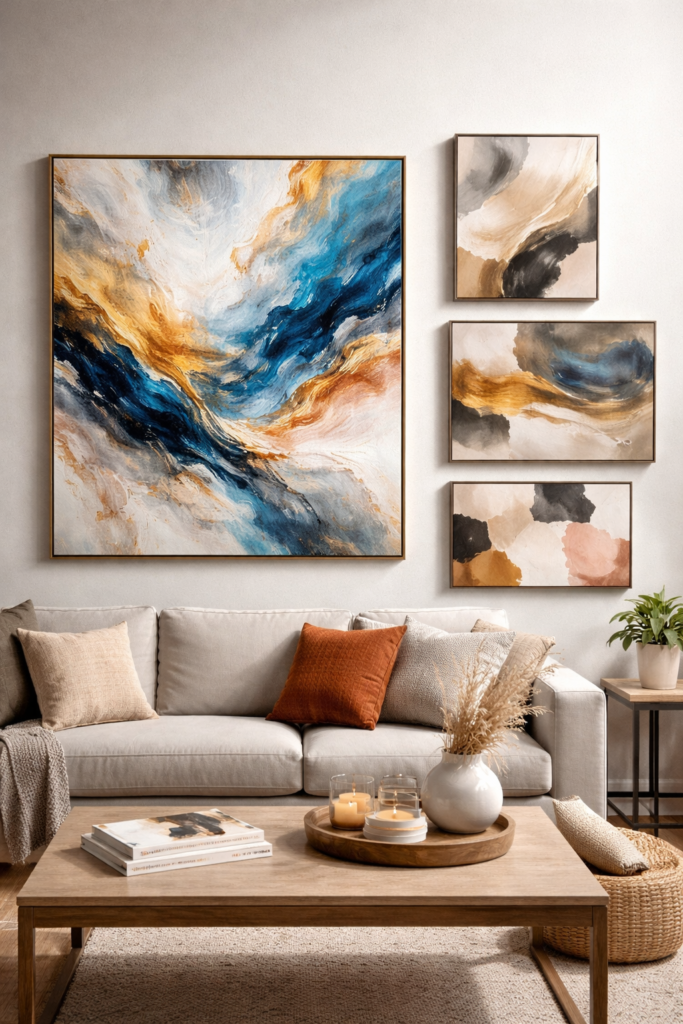
One of the easiest upgrades I made was adding a large abstract canvas above my sofa.
It immediately:
- pulled the room together
- added color
- made the space feel finished
Design-wise, large artwork naturally draws attention and anchors a room ()
5 Simple Ways to Use Abstract Art at Home
These are ideas I’ve personally tested — and that actually work.
1. Start with One Large Statement Piece
If you’re unsure where to begin, start here.
I added one oversized abstract piece to my living room, and it instantly became the center of attention.
👉 Best places:
- above a sofa
- above a bed
- dining area
2. Build a Gallery Wall (But Keep It Cohesive)
I tried mixing too many random pieces at first — and it looked messy.
What worked better:
- sticking to 2–3 colors
- similar frame styles
👉 This keeps everything looking intentional instead of chaotic.
3. Match Colors with Your Space (Not Perfectly)
Big mistake I made:
Trying to match art exactly with furniture.
What works better:
- pick 1–2 colors from your room
- find art that complements (not copies) them
👉 This creates balance without looking forced.
4. Use Abstract Art in Small Spaces
You don’t need a big wall.
I added a small abstract piece in my hallway — and it made the space feel more designed.
👉 Great for:
- hallways
- bathrooms
- small corners
5. Go Minimal if You’re Not Sure
If bold colors feel risky, start simple.
Minimal abstract art:
- neutral tones
- simple shapes
- clean composition
👉 It’s easier to style and still looks modern.
Common Mistakes to Avoid (Learn From Mine)
❌ Using pieces that are too small
Makes the space feel incomplete
❌ Hanging art too high
Breaks the visual connection with furniture
❌ Adding too many pieces
Creates clutter instead of impact
👉 Pro tip: fewer, bigger pieces usually work better
Final Thoughts
Abstract art might feel confusing at first — I get it, I’ve been there.
But once you stop trying to “understand” it and start using it as a design tool, it becomes one of the easiest ways to upgrade your space.
If you’re just starting:
👉 Go with one piece you like and build from there
That’s exactly what worked for me.
.


Pingback: How to Find Your Decorating Style - everydayhomestyle.io
Pingback: 11 Entryway Ideas for Small Spaces - everydayhomestyle.io