
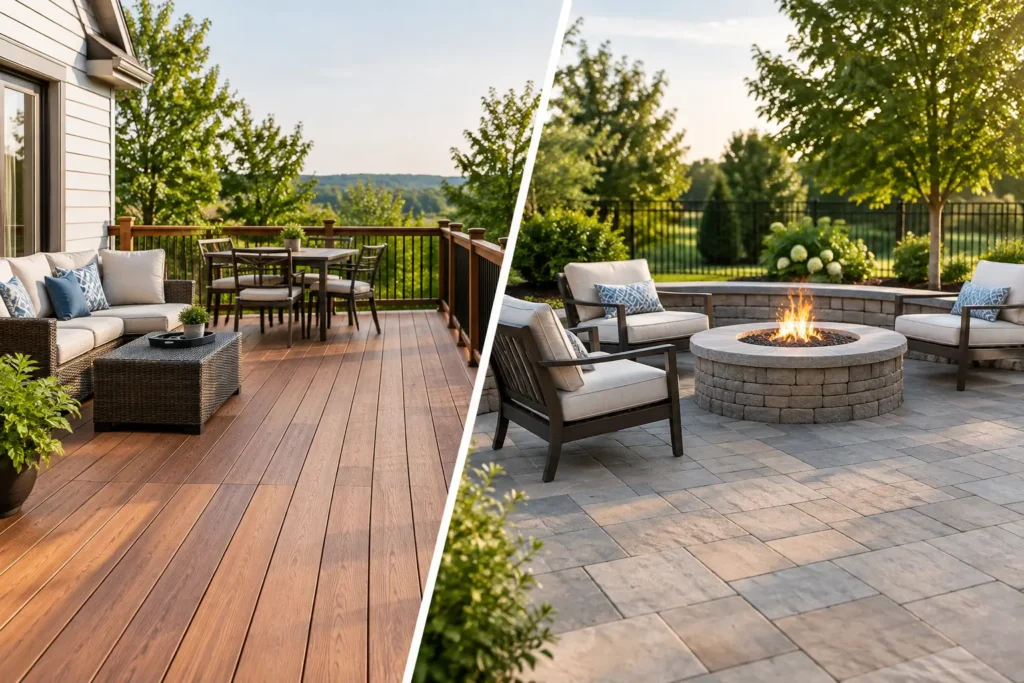

A great outdoor space starts with a realistic question: what will actually make you want to step outside more often? When comparing deck versus patio materials, the prettiest option is not always the best fit for your budget, yard, climate, or weekend routine. A deck can turn a sloped backyard into a usable hangout, while a patio may give a flat yard that grounded, room-like feeling many of us love.
The right choice is less about chasing a magazine-perfect before-and-after and more about building a space that works for coffee in the morning, wet towels after swim lessons, casual dinners, and all the little moments in between.
Start With Your Yard, Not the Material
Decks and patios solve different problems. A deck is an elevated structure, usually built from wood or composite boards on a framing system. Because it sits above the ground, it is especially useful when a yard slopes away from the house, the back door is raised, or the ground is uneven.
A patio sits at ground level and is commonly made from concrete, pavers, natural stone, brick, or gravel. It tends to feel more permanent and connected to the landscape. If your yard is mostly level and you want an easy transition from your kitchen or living room to an outdoor dining area, a patio often makes practical sense.
Before falling in love with a material sample, look at drainage, sun exposure, the height of your exterior door, and how you use the area. A low door opening can make a patio easy to install. A door several feet above grade may make a deck the more natural and less disruptive choice.
Deck Materials: Warmth With a Few Trade-Offs
A deck brings visual warmth that is hard to replicate. It can make a plain backyard feel like an extension of the home, especially when paired with comfortable seating, a simple outdoor rug, and string lights. But not all deck boards live the same life.
Pressure-Treated Wood
Pressure-treated lumber is often the most budget-friendly deck material upfront. It is widely available, can be stained in a range of colors, and has that classic wood look many homeowners want. For a first outdoor project, it may leave more room in the budget for railings, furniture, or landscaping.
The trade-off is maintenance. Wood needs regular cleaning, sealing, or staining to help it resist moisture, fading, and splintering. In humid climates, shade can encourage mildew. In areas with strong sun, boards can dry out and weather quickly. It is a good choice if you do not mind giving your deck attention every year or two.
Cedar and Other Natural Woods
Cedar, redwood, and hardwoods offer a more elevated, organic look than basic treated lumber. Cedar is naturally more resistant to insects and decay, and its grain can make even a small deck feel special.
Still, natural wood changes outdoors. It can fade to silver-gray unless maintained, and premium species can raise the initial cost quickly. Choose it when the real-wood character is part of what makes the project feel worth it, not because you expect a maintenance-free surface.
Composite Decking
Composite decking is made from a blend of recycled wood fibers and plastic. It has become a popular choice for busy households because it does not need staining or sealing, and it resists rot and splinters better than wood. Many options also come in warm, convincing wood tones, from soft weathered oak to richer brown shades.
Its biggest drawback is price. Composite costs more upfront, and dark boards can become noticeably hot in full sun. Quality also varies, so a sample is worth testing in the spot where the deck will go. If your outdoor area gets intense afternoon sun, lighter colors are usually more comfortable under bare feet.
PVC Decking
PVC decking contains no wood fibers, making it highly resistant to moisture and a smart option around pools, coastal areas, or very wet climates. It is lightweight and low-maintenance, but it is often one of the pricier choices and may not have the same natural texture as wood.
For most everyday backyards, composite hits the sweet spot between appearance and upkeep. PVC is best when moisture resistance is the top priority.
Patio Materials: Grounded, Flexible, and Full of Character
Patios can feel wonderfully settled into a yard. They work beautifully for outdoor dining tables, fire pit seating, container gardens, and play-friendly spaces where a low, stable surface matters. Your patio material will shape both the cost and the mood.
Poured Concrete
Concrete is one of the most practical patio choices. It is typically more affordable than natural stone, easy to sweep, and suitable for clean-lined contemporary spaces as well as casual family yards. A plain concrete slab can also look more intentional with an outdoor rug, oversized planters, and cozy seating.
Concrete is not invincible, though. It can crack as the ground shifts or freezes and thaws. Those cracks may be minor and charming in a relaxed backyard, but they can bother homeowners who want a perfectly uniform look. Stamping or staining concrete adds personality but also adds cost, and patterned finishes can be harder to repair invisibly later.
Concrete Pavers
Pavers are individual units that create a patio surface with joints between them. They come in many colors, sizes, and patterns, so they can lean modern, traditional, or cottage-like depending on the layout. They are also easier to repair than a concrete slab because a damaged paver can be replaced instead of redoing the entire surface.
The installation matters here. A paver patio needs a carefully prepared base and proper edging to stay level. Weeds can also appear in the joints if they are not maintained, although polymeric sand can help reduce that chore. Pavers cost more than a simple slab but deliver a polished look with lasting flexibility.
Natural Stone and Brick
Natural stone offers beautiful variation that makes an outdoor space feel layered and timeless. Flagstone, bluestone, and travertine each have a distinct personality, and brick brings a classic, welcoming look that pairs especially well with older homes and garden-focused yards.
These materials are often more expensive to buy and install. Some stone surfaces can be uneven for dining chairs, while certain finishes get slippery when wet. Ask about local availability, because a stone that is common in one region can be a costly specialty material in another.
Gravel
Gravel is the relaxed, budget-conscious option. It works especially well for a small seating nook, a fire pit area, or an informal garden path, and it has a soft crunch that feels right at home in a casual backyard.
It is not ideal everywhere. Chair legs can sink, loose stones migrate into the lawn, and snow removal can be frustrating in colder climates. A gravel patio feels best when you embrace its easygoing nature rather than expecting it to perform like a smooth dining-room floor.
Deck Versus Patio Materials: Compare the Everyday Details
When deciding between deck versus patio materials, think beyond the initial estimate. Your long-term comfort and upkeep are part of the real cost.
A deck is usually the better answer for a raised entry, uneven terrain, or a view you want to enjoy from above. It can be less disruptive than major grading work, but it may require permits, footings, railings, and periodic structural inspections. Wood decks need the most maintenance, while composite reduces the chore list at a higher purchase price.
A patio is often less expensive per square foot when the site is level and access is straightforward. It is easier to connect visually to garden beds and lawn, and it does not need railings. However, poor drainage or an unstable base can lead to settling, cracking, or water collecting close to the house.
Comfort matters, too. Deck boards generally feel softer and warmer underfoot than stone or concrete, but can heat up in direct sun. Patios offer a sturdy base for furniture and grills, though light-colored stone and concrete are often the better choice in hot, sunny yards.
A Simple Way to Choose
If you are stuck, use your biggest constraint as your guide. A sloped yard or high back door points toward a deck. A level yard and a tighter budget often point toward concrete or pavers. A low-maintenance wish list can justify composite decking or quality pavers, while a love of natural texture may make cedar, brick, or stone worth the extra care.
Also consider the scale of the project. A modest paver landing outside the door can make a huge difference without redesigning the whole yard. Likewise, a small deck with room for two chairs and a side table can become the peaceful outdoor spot you use every day.
The best material is the one that supports the life you want to have outside. Pick a surface that feels good underfoot, fits your maintenance reality, and leaves enough room in the budget for the welcoming details that make it feel like home.
Final Thoughts From Experience
One thing I have learned from looking at outdoor projects is that homeowners often spend too much time choosing the surface and not enough time thinking about how the space will actually be used.
The material matters, but it is only one part of the decision.
A beautiful composite deck will not solve a drainage problem. An expensive stone patio will not make an awkwardly sized outdoor space more comfortable. And choosing the least expensive material does not always mean choosing the least expensive project once installation, maintenance, repairs, and site preparation are included.
Before making a final decision, I would pay particular attention to three things: the condition of the yard, the amount of maintenance you are realistically willing to handle, and the way your household will use the space.
If the yard slopes significantly, I would start by investigating a deck rather than trying to force a patio into a site that needs extensive grading. If the ground is relatively level, I would look closely at concrete and pavers before assuming a deck is the better option. And if maintenance is already something you struggle to keep up with, I would think carefully before choosing a material that needs regular staining or sealing.
I would also avoid choosing a material from a small showroom sample alone. Outdoor materials can look completely different in full sunlight, after rain, or next to your home’s siding and landscaping. If possible, look at a larger sample and see it in lighting similar to the conditions in your yard.
Finally, leave room in the budget for the parts that make an outdoor space comfortable. Good drainage, proper site preparation, shade, lighting, comfortable seating, and easy access to the house can have a bigger impact on how often you actually use the space than upgrading from one premium material to another.
The goal is not to build the most expensive deck or patio you can afford. It is to create an outdoor space that fits your yard, your maintenance habits, and the way you live.
When those three things line up, the material choice usually becomes much easier.
About the Author
Fher is an architect specializing in residential design and space optimization. With hands-on experience improving how homes function and feel, he shares practical insights to help homeowners create spaces that are both beautiful and livable.