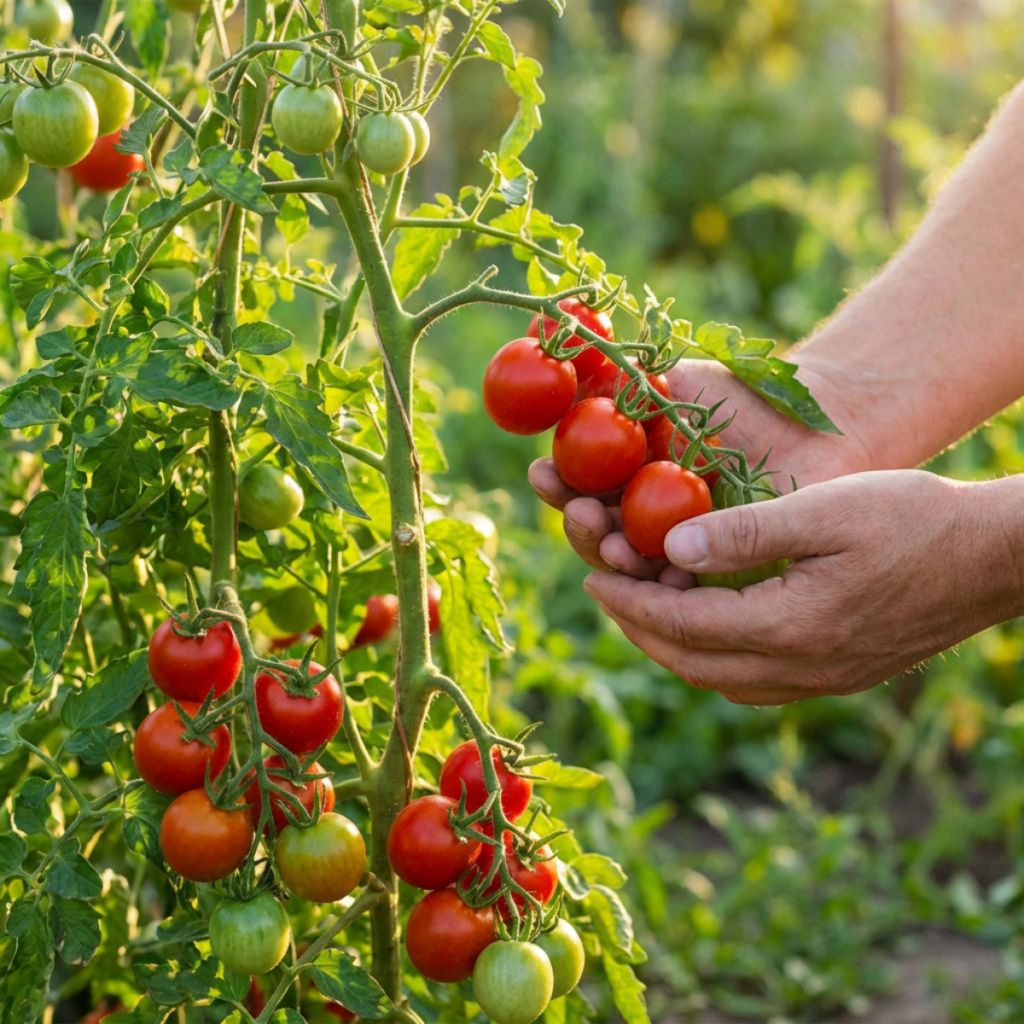

Tomato plants are one of the most rewarding crops to grow at home—but they’re also surprisingly easy to get wrong. After several growing seasons (and a few failed harvests), I’ve learned that small adjustments in watering, sunlight, and pruning can make a dramatic difference.
If you want healthier plants and more flavorful tomatoes, this guide covers exactly what matters most—without overcomplicating things.
Why Proper Tomato Plant Care Matters
Tomatoes are heavy feeders and sensitive to inconsistent care. Even small mistakes—like irregular watering or poor airflow—can lead to issues like cracked fruit, disease, or low yields.
Consistent care is key. Healthy plants come down to balancing water, light, nutrients, and structure.
1. Give Your Tomato Plants Enough Sunlight
Tomatoes thrive in full sun. Aim for at least 6–8 hours of direct sunlight daily to support strong growth and fruit production.
If your plants aren’t producing well, lack of sunlight is often the hidden cause.
Practical tip:
If you’re growing in a small space, prioritize sunlight over everything else—even soil upgrades won’t compensate for low light.
2. Water Consistently (But Don’t Overdo It)
Watering is where most people go wrong.
Tomato plants prefer consistently moist soil—not soggy, not dry.
- Too little water → wilting and poor fruit
- Too much water → root rot and disease
- Inconsistent watering → cracked tomatoes
Most plants need about 1 inch of water per week, adjusted for heat and soil conditions.
Best practices:
- Water early in the morning
- Always water at the base (not the leaves)
- Check soil moisture before watering
3. Use Nutrient-Rich, Well-Draining Soil
Tomatoes grow best in slightly acidic, nutrient-rich soil with good drainage.
Healthy soil should:
- Retain moisture without becoming compacted
- Contain organic matter like compost
- Provide balanced nutrients (N-P-K + micronutrients)
Real-world insight:
Switching from basic garden soil to compost-enriched soil was one of the biggest improvements I’ve seen in plant health.
4. Support Your Plants Early
Tomato plants need structure to grow properly.
Use:
- Stakes
- Cages
- Trellises
Supporting plants improves airflow and reduces disease risk while keeping fruit off the ground.
Install supports early—waiting too long can damage roots.
5. Prune for Better Airflow and Growth
Pruning isn’t mandatory, but it can significantly improve plant health.
Focus on:
- Removing lower leaves touching the soil
- Cutting “suckers” (extra shoots) on indeterminate varieties
- Improving airflow to prevent disease
Better airflow reduces moisture buildup and fungal issues.
6. Feed Your Plants Regularly
Tomatoes are heavy feeders, especially during fruiting.
Use:
- Compost or organic fertilizer
- High-potassium fertilizer once fruits begin to grow
Feeding every 10–14 days can improve yield and fruit quality.
7. Maintain Consistent Soil Moisture with Mulch
Adding mulch (straw, leaves, or bark) helps:
- Retain moisture
- Reduce weeds
- Prevent soil-borne diseases
It also stabilizes soil temperature, which tomatoes love.
8. Space Plants Properly
Crowded plants compete for light and airflow, increasing disease risk.
General guideline:
- 2–3 feet between plants depending on variety
9. Watch for Common Problems Early
Some early warning signs:
- Yellow leaves → overwatering or nutrient issues
- Curling leaves → inconsistent watering
- Spots on leaves → possible disease
Regular inspection makes a big difference.
10. Adapt to Your Environment
This is where most guides fall short.
There is no “perfect” schedule—your care routine should adjust based on:
- Climate
- Soil type
- Container vs. ground planting
For example:
- Pots dry faster → need more frequent watering
- Hot climates → require deeper watering and mulch
Final Thoughts: Keep It Simple and Consistent
Caring for tomato plants isn’t about doing everything perfectly—it’s about doing a few key things consistently:
- Enough sunlight
- Steady watering
- Good soil
- Proper airflow
Once you get these right, everything else becomes easier.