
A porch can feel a little unfinished until there is something growing by the door. The good news is that the best porch plants for beginners do not require a green thumb, a complicated feeding schedule, or a picture-perfect setup. A few well-chosen pots can make an entry feel warmer, more cared for, and more like home.
The simplest approach is to choose plants for the light your porch already gets, rather than trying to force a sun lover into shade or vice versa. Start with two or three containers, use pots with drainage holes, and give yourself permission to learn as you go. A thriving porch is built one easy plant at a time.
Start by noticing your porch light
Before buying anything, spend a day noticing where the sun lands. A south- or west-facing porch usually gets strong afternoon light and needs plants that can handle heat. East-facing porches tend to offer gentler morning sun. North-facing, covered, or deeply shaded porches are better for plants that prefer lower light.
Also consider how exposed your porch is. Wind dries containers faster, while a roof overhang can leave pots surprisingly dry even after a rainstorm. If you are renting or working with a small stoop, lightweight resin or plastic pots can be easier to move than heavy ceramic planters. The prettiest option is the one you can realistically water and enjoy.
10 best porch plants for beginners
1. Pothos
Pothos is a forgiving favorite for covered porches with bright, indirect light. Its heart-shaped leaves trail beautifully from hanging baskets or spill over the edge of a tall planter, bringing instant softness to an entryway. Water when the top inch or two of soil feels dry, and trim long vines if you want a fuller shape.
Keep pothos out of harsh direct afternoon sun, which can scorch the leaves. It is also best placed out of reach of curious pets and children, since the leaves are toxic if chewed.
2. Snake plant
For a clean, tailored look with very little effort, a snake plant is hard to beat. Its upright, architectural leaves make a small porch feel more intentional, especially when paired with a simple textured pot. It tolerates lower light and missed waterings far better than most houseplants.
A sheltered porch is ideal in warm weather, but bring it inside before temperatures turn chilly. The main beginner mistake is overwatering, so let the potting mix dry out thoroughly between drinks.
3. Boston fern
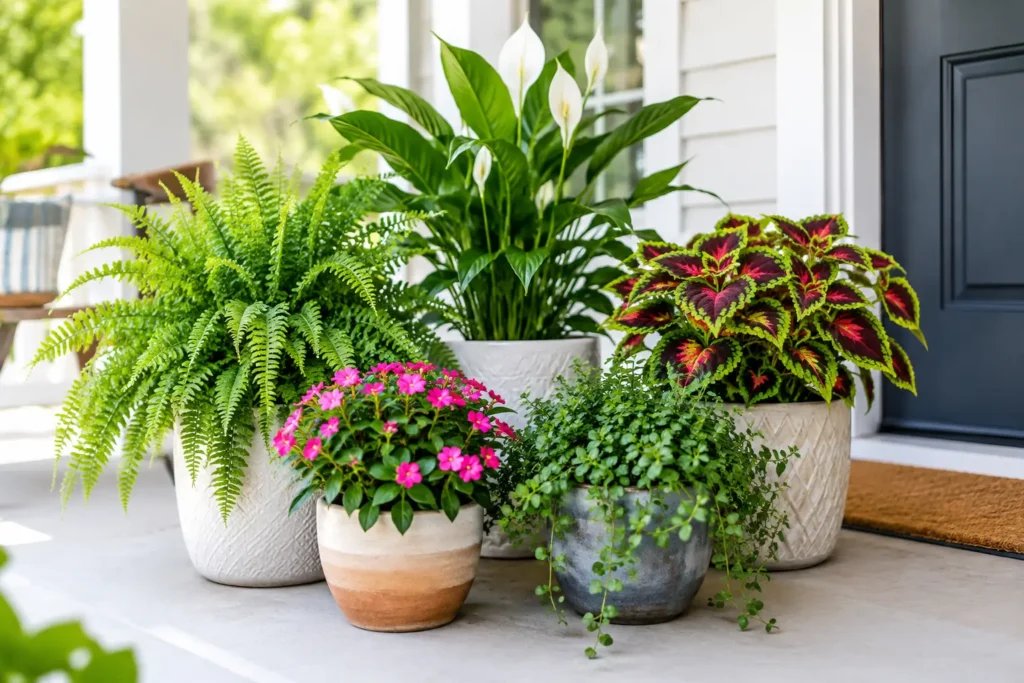
Boston ferns create that classic, welcoming front-porch look. Their full, feathery fronds are especially lovely in hanging baskets on a shaded or partly shaded porch. They enjoy humidity and consistently moist soil, making them a good choice for someone who likes a regular watering routine.
They are not quite as hands-off as snake plants or pothos. In hot, dry weather, a fern may need water every day or two. If its fronds begin looking pale or crispy, it is usually asking for more moisture and less direct sun.
4. Coleus
Coleus is the answer when you want color without waiting for flowers. Its leaves come in cheerful combinations of lime green, burgundy, coral, pink, and deep purple, so one plant can make a plain porch planter feel decorated. Many newer varieties handle sun, but always check the plant tag because some still prefer shade.
Pinch off the small flower spikes when they appear to keep the plant focused on its colorful foliage. Coleus is typically grown as an annual in much of the US, which makes it an easy, low-commitment way to experiment with porch color.
5. Petunias
If your porch gets plenty of sun, petunias offer generous color for a modest cost. They work in window boxes, rail planters, hanging baskets, and mixed pots, and their mounding or trailing growth instantly makes a space feel more abundant. Look for newer self-cleaning varieties if you do not want to remove spent blooms often.
Petunias need at least six hours of sun for their best show and prefer regular watering. They can look tired during an intense heat wave, but a deep drink and a light trim often help them bounce back.
6. Marigolds
Marigolds are cheerful, sturdy, and wonderfully uncomplicated. Their sunny yellow, orange, and gold flowers bring a friendly look to steps and porch railings, and they do well in heat and full sun. They are also an affordable choice when you need to fill several small pots.
Choose compact French marigolds for containers, or taller African marigolds for a larger statement planter. Let the soil dry slightly between waterings, and remove faded blooms now and then to encourage more flowers.
7. Geraniums
Geraniums are a porch classic for a reason. Their rounded leaves and bright flower clusters look charming in almost any home style, from cottage-inspired to clean and modern. They love sunny spots and are more drought-tolerant than many flowering annuals once established.
Avoid keeping their soil constantly wet. A simple rule is to water deeply, then wait until the top of the soil feels dry. Red geraniums are timeless, but soft pink, white, and coral varieties can create a lighter, more relaxed look.
8. Sweet potato vine
Sweet potato vine is one of the easiest ways to make a planter look lush. Its trailing leaves come in dramatic chartreuse, deep purple, bronze, and green, and it grows quickly through the warm months. Use it at the edge of a mixed container so it can cascade over the side.
It performs best with sun to partial sun and regular moisture. Because it grows enthusiastically, give it room and trim it back if it begins covering smaller plants nearby.
9. Herbs
A porch planter can be beautiful and useful at the same time. Basil, rosemary, thyme, chives, and mint all bring texture, scent, and something fresh to clip for dinner. Most culinary herbs prefer a sunny porch, and a pot near the kitchen door makes them especially easy to use.
Rosemary and thyme like drier soil, while basil appreciates more consistent watering. Mint is famously vigorous, so keep it in its own pot rather than sharing space with slower-growing herbs. A small cluster of herb pots can make even a narrow apartment entry feel personal.
10. Caladium
For a shaded porch that needs color, caladium is a lovely beginner-friendly option. Its large, heart-shaped leaves come patterned in white, green, pink, and red, adding a bright focal point without relying on blooms. It looks especially pretty in a single statement pot beside a chair or front door.
Caladium likes warmth, shade or filtered light, and evenly moist soil. It is usually grown as a seasonal plant in cooler climates, so think of it as an easy way to refresh your porch for summer.
Make beginner porch plants easier to keep alive
Most container plants fail for one of two reasons: too much water or not enough light. Drainage holes are nonnegotiable, even if you place a decorative cachepot around the nursery pot. Use fresh potting mix rather than soil from the yard, which can become dense and hold too much moisture in a container.
For watering, check the soil with your finger instead of following a strict calendar. If the top inch feels dry, water slowly until it runs from the bottom of the pot. If it still feels damp, check again tomorrow. Hanging baskets and small pots dry out faster than large containers, especially on hot or windy days.
You can keep feeding simple. A slow-release fertilizer mixed into potting soil at planting time is often enough for many foliage plants. Flowering annuals, such as petunias and geraniums, usually appreciate a water-soluble plant food every few weeks during their growing season. Follow the package directions rather than assuming more fertilizer means more flowers.
Create a porch display that feels pulled together
A polished porch does not need matching plants in matching pots. Start with a simple color story: warm terracotta with yellow and orange flowers, crisp white planters with green foliage, or black pots paired with purple leaves and pink blooms. Repeating one color in a doormat, outdoor pillow, or planter can make a small space feel thoughtfully styled.
For a fuller look, combine one upright plant, one mounding plant, and one trailing plant in a larger container. For example, geraniums can provide height, coleus can fill the middle, and sweet potato vine can spill over the edge. On a shaded porch, try a fern with caladium and pothos instead.
Do not feel pressure to fill every corner. One generous planter on each side of the door, or a single hanging basket and a pair of small herb pots, can make a stronger impression than a crowded collection that is hard to maintain.
Your porch plants do not need to be flawless to make the space feel inviting. Choose a plant that suits your light, give it a good pot and a little attention, and let your front door become one more cozy corner of your home.
Final Thoughts From Experience
After working with plants in different home settings, one of the biggest lessons is that beginners often make plant care harder than it needs to be. They choose a plant because they love how it looks, then try to make the porch fit the plant. It usually works better the other way around.
Before buying another plant, I would look at the porch itself. How many hours of direct sun does it actually receive? Does the area stay hot in the afternoon? Is it protected from rain but exposed to wind? How often will you realistically be there to water? Those details matter more than whether a plant is labeled “easy-care.”
I also would not start with ten different plants. Start with two or three that match the conditions you already have. That gives you a chance to learn how quickly your containers dry out, which areas get the most light, and how much maintenance you actually enjoy. Once you understand your porch, adding more plants becomes much easier.
One mistake I see often is treating every container the same. A small hanging basket can dry out much faster than a large floor planter, while a shaded pot may stay damp for days. Instead of watering everything on the same schedule, check the soil and adjust based on the container, weather, and plant.
And don’t overlook the pot itself. A beautiful plant in a container with poor drainage can become a frustrating project surprisingly quickly. Make drainage holes a priority, and use a quality container mix rather than garden soil.
Finally, remember that a porch does not have to look like a garden center display. A healthy plant in the right spot will always look better than a difficult plant that is struggling. Choose plants you can realistically care for, repeat a few colors or pot styles, and give the plants enough room to grow.
The goal isn’t a perfect porch. It’s a porch that feels welcoming, works with your home’s conditions, and is enjoyable to maintain. Once you get those basics right, even a few inexpensive plants can make a surprisingly big difference.
bout the Author
Fher is an architect specializing in residential design and space optimization. With hands-on experience improving how homes function and feel, he shares practical insights to help homeowners create spaces that are both beautiful and livable.