
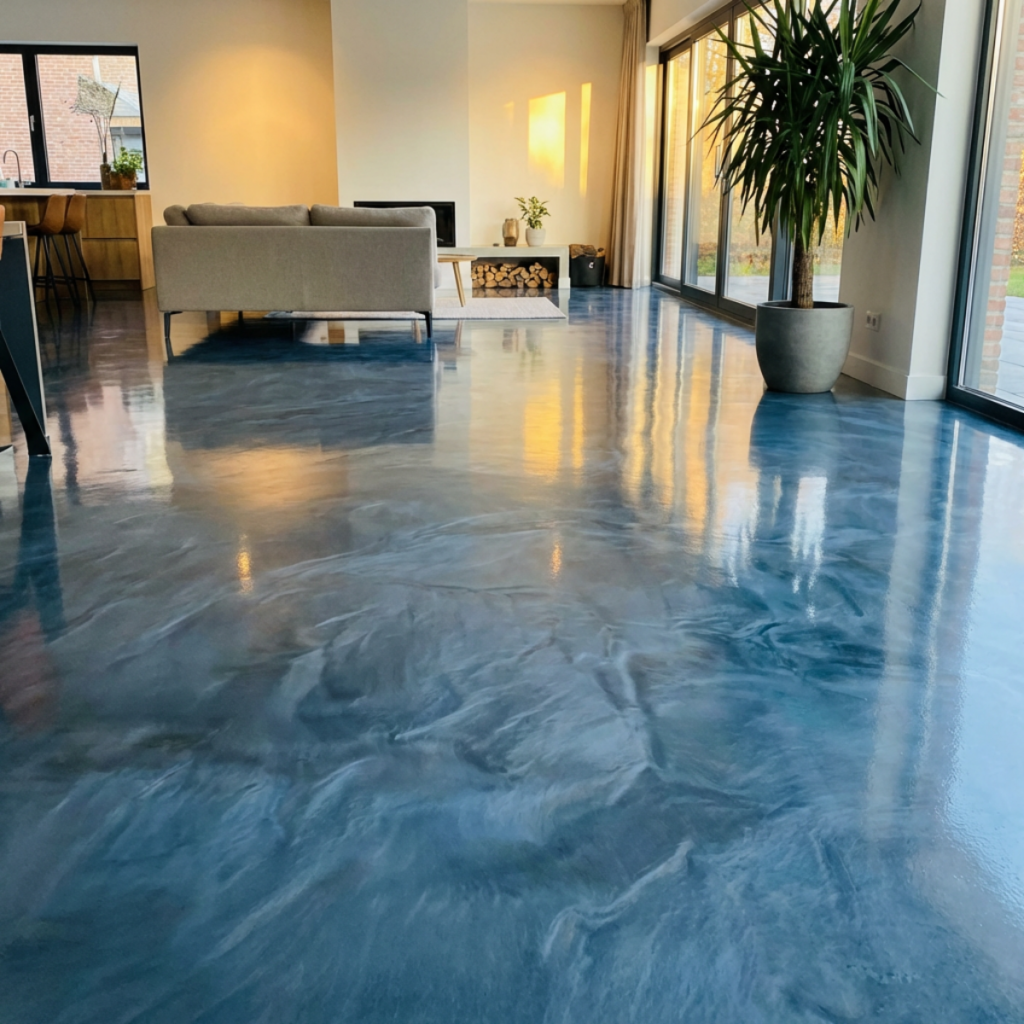

The first time I saw an epoxy floor, I thought it looked amazing — clean, shiny, almost like a showroom.
But once I started researching it (and seriously considering it for my own space), I realized something important:
👉 Epoxy flooring is not for every room.
It’s incredibly durable and practical — but only if you use it in the right place.
If you’re thinking about installing an epoxy floor, this guide will help you decide if it’s actually the right choice for your home.
What Is an Epoxy Floor (Simple Explanation)
An epoxy floor is not a traditional flooring material.
It’s actually a coating applied over concrete, created by mixing resin and a hardener that forms a strong, plastic-like surface. ()
Once it cures, it becomes:
- extremely durable
- resistant to stains and chemicals
- smooth and seamless
👉 That’s why it’s commonly used in garages, warehouses, and commercial spaces.
Why Epoxy Flooring Is So Popular
After looking into it (and testing it in a garage space), these are the biggest advantages I noticed:
1. Extremely Durable (This Is Its Biggest Strength)
Epoxy floors can handle:
- heavy impact
- high traffic
- chemicals like oil or cleaners
Some installations can last 10–20+ years with proper care. ()
👉 This is why it’s so popular in garages.
2. Easy to Clean (Huge Advantage)
Unlike concrete:
- it doesn’t absorb stains
- spills stay on the surface
👉 You can literally just sweep or mop.
3. Waterproof & Chemical Resistant
Epoxy creates a sealed surface that resists:
- water
- oil
- chemicals
👉 Perfect for messy environments.
4. Modern, Glossy Look
This surprised me.
Epoxy floors:
- reflect light
- make spaces feel brighter
- look very modern
5. Customizable Design
You can choose:
- colors
- flakes
- metallic finishes
👉 It’s more flexible than most people think.
The Downsides of Epoxy Flooring (Important)
This is where most articles sugarcoat things — so here’s the real part:
❌ Installation Is Not Easy
Epoxy flooring requires:
- proper surface preparation
- multiple layers
- curing time
👉 A bad installation = peeling or bubbles. ()
❌ Slippery When Wet
Because of its smooth finish:
- it can be slippery
- especially in kitchens or bathrooms
👉 Anti-slip coatings help, but add cost. ()
❌ Strong Smell During Installation
During installation, epoxy can release fumes:
- strong odor
- requires ventilation
👉 This can last for a few days. ()
❌ Not Comfortable for Living Areas
From experience:
- it feels hard
- it feels cold
👉 Not ideal for bedrooms or living rooms.
❌ Can Yellow Over Time
Exposure to sunlight can cause discoloration. ()
👉 Important if your space has a lot of natural light.
Where Epoxy Floors Work Best
This is the key decision.
👉 Epoxy is amazing in the RIGHT spaces:
✔ Garages
✔ Basements
✔ Workshops
✔ Laundry rooms
👉 Basically:
Spaces where durability > comfort
Where Epoxy Floors Don’t Work Well
From experience and research:
❌ Bedrooms
❌ Living rooms
❌ Cozy spaces
👉 It just doesn’t feel warm or comfortable.
How to Know If Epoxy Flooring Is Right for You
Ask yourself:
- Do I need durability or comfort?
- Is this a high-traffic or messy area?
- Am I okay with a hard surface?
👉 If durability is your priority → epoxy is a great choice
👉 If comfort matters more → look at other flooring options
Common Mistakes to Avoid
Learn from this:
❌ Installing epoxy on a bad surface
❌ Choosing it only for aesthetics
❌ Ignoring moisture issues
❌ Trying DIY without experience
👉 Most problems come from poor installation.
Final Thoughts
Epoxy flooring looks amazing — but it’s not for every space.
The biggest mistake I almost made was thinking it was a universal solution.
👉 It’s not.
It’s one of the best flooring options for durability
—but only if you use it where it makes sense.
If you’re just starting:
👉 Try epoxy in a garage or small area first before committing
That’s what I would recommend.