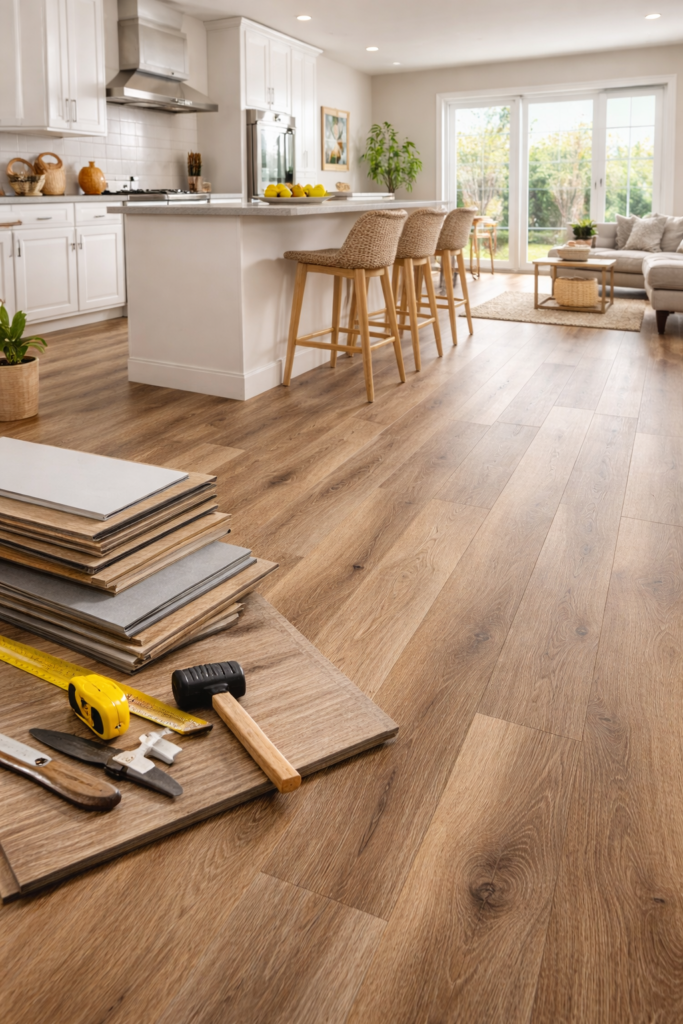

Luxury Vinyl Plank flooring — commonly known as LVP — has become one of the most popular flooring choices in modern homes.
And honestly, there’s a reason for that.
From a practical perspective, it offers:
- durability
- water resistance
- easier maintenance
- a more affordable alternative to hardwood
But after seeing how flooring performs in real homes over time, I’ve also learned something important:
Luxury vinyl flooring is not always the perfect solution people think it is.
In many cases, homeowners choose LVP based only on appearance or marketing claims, without fully understanding:
- where it works best
- where it falls short
- and how it affects the overall feeling of a space
As an architect, I’ve seen beautiful installations that completely improved functionality — and others that looked artificial, aged poorly, or simply didn’t fit the home.
In this guide, I’ll break down what actually matters when choosing luxury vinyl plank flooring, including the most common mistakes I see, where it works best, and when I personally would recommend considering other materials instead.
What Is Luxury Vinyl Plank Flooring?
Luxury Vinyl Plank flooring is a synthetic flooring material designed to imitate the appearance of hardwood.
It typically consists of multiple layers:
- wear layer
- printed design layer
- core structure
- backing layer
Modern versions can look surprisingly realistic, especially higher-end products with textured finishes and matte surfaces.
Its popularity comes from combining:
- wood-like appearance
- lower maintenance
- moisture resistance
- easier installation
But despite the name “luxury,” not all LVP products offer the same quality or long-term performance.
And this is where many homeowners make expensive mistakes.
Why Luxury Vinyl Flooring Became So Popular
Over the past few years, LVP has exploded in popularity because it solves several common homeowner frustrations.
In real homes, people often want flooring that:
- resists scratches
- handles pets and children
- survives moisture better than wood
- requires less maintenance
From a functional perspective, LVP performs well in many of these areas.
I’ve seen it work particularly well in:
- busy family homes
- basements
- rental properties
- kitchens
- laundry rooms
Especially in homes where practicality matters more than premium natural materials.
However, what many articles fail to mention is that performance depends heavily on:
- product quality
- installation quality
- room selection
- lighting conditions
- overall home design
And those details make all the difference.
What I’ve Learned About Luxury Vinyl Flooring in Real Homes
One thing I’ve consistently noticed is that luxury vinyl flooring performs best when homeowners have realistic expectations.
The people happiest with LVP usually prioritize:
- durability
- easy cleaning
- low maintenance
- functionality
Not necessarily authenticity.
Because while modern LVP can look impressive, it still behaves differently than real hardwood in several ways.
For example:
- the texture feels different underfoot
- light reflects differently
- lower-quality planks can appear repetitive
- some finishes feel artificial in natural daylight
In my experience, luxury vinyl flooring works best when integrated intentionally into the overall design of the home — not simply chosen because it’s trendy.
Pros of Luxury Vinyl Plank Flooring
1. Durability
This is one of the strongest advantages of LVP.
In high-traffic homes, quality luxury vinyl flooring can resist:
- scratches
- dents
- spills
- daily wear
This makes it especially practical for:
- families with children
- homes with pets
- busy kitchens
- utility areas
2. Easier Maintenance
Unlike hardwood, LVP does not require:
- refinishing
- sealing
- special cleaning routines
For many homeowners, this becomes a major lifestyle advantage.
In real homes, low-maintenance materials often improve long-term satisfaction more than aesthetics alone.
3. Water Resistance
This is one of the biggest reasons people choose LVP.
In areas where moisture is common, such as:
- kitchens
- basements
- laundry rooms
…luxury vinyl flooring can outperform traditional hardwood significantly.
4. More Affordable Than Hardwood
From a budget perspective, LVP offers a wood-inspired appearance without the same financial investment.
And in some projects, that tradeoff makes perfect sense.
The Problems Most People Don’t Consider
This is where things become more nuanced.
Because despite its advantages, luxury vinyl flooring also has limitations that many homeowners only discover later.
1. Not All LVP Looks Realistic
One of the biggest mistakes I see is choosing flooring based only on small showroom samples.
Under real home lighting:
- cheaper planks often look repetitive
- textures can feel artificial
- glossy finishes may appear plastic-like
This becomes especially noticeable in:
- large open spaces
- living rooms with natural light
- higher-end interiors
2. Lower-End Products Age Poorly
Quality matters enormously with LVP.
Cheaper versions often:
- separate at seams
- fade unevenly
- lose texture quickly
- develop visible wear patterns
In my experience, flooring is one area where extremely cheap options usually become more expensive long term.
3. It Does Not Add the Same Value as Hardwood
This is something many homeowners misunderstand.
Luxury vinyl flooring may improve functionality, but in most cases:
- it does not carry the same perceived value as real hardwood
- it rarely creates the same warmth or authenticity
Especially in:
- luxury homes
- historical homes
- architecturally detailed interiors
4. Poor Installation Ruins Everything
Even high-quality flooring fails with poor installation.
Common problems include:
- uneven subfloors
- visible gaps
- poor transitions
- lifting edges
And unfortunately, these are issues I frequently see in rushed renovations.
Common Luxury Vinyl Flooring Mistakes I Often See
After years observing residential projects, certain mistakes appear repeatedly.
1. Choosing Flooring Without Considering Lighting
Flooring changes dramatically depending on:
- natural light
- wall color
- room orientation
A floor that looks beautiful in a showroom can feel completely different at home.
I always recommend testing samples in the actual space before making a final decision.
2. Choosing Ultra-Glossy Finishes
Many homeowners assume glossy floors look more luxurious.
But in practice:
- they highlight dust
- create glare
- often feel artificial
In real homes, matte and low-sheen finishes usually feel much more natural and timeless.
3. Ignoring Furniture and Interior Style
Flooring should connect with the entire home — not exist separately.
One mistake I often see:
- cool-toned flooring mixed with warm interiors
- rustic flooring in ultra-modern homes
- conflicting textures throughout the space
This creates visual inconsistency.
4. Using the Same Flooring Everywhere Without Intention
Continuous flooring can work beautifully.
But sometimes homeowners install the exact same material everywhere without considering:
- room function
- lighting conditions
- transitions
- atmosphere
Good design requires intentionality.
When Luxury Vinyl Flooring Is NOT the Best Choice
This is the section most websites avoid.
But in my experience, introducing limitations is what separates useful expert advice from generic internet content.
1. High-End Luxury Homes
In homes with:
- premium architecture
- natural materials
- custom detailing
…lower-quality LVP can feel visually disconnected from the rest of the space.
Authenticity matters more in these environments.
2. Historical or Character Homes
Older homes often benefit from:
- natural wood variation
- authentic aging
- original materials
Synthetic flooring can sometimes remove part of the home’s character.
3. Spaces Designed Around Warmth and Texture
Real wood creates:
- visual warmth
- subtle imperfections
- depth
- organic texture
In some living rooms and bedrooms, that authenticity changes how the space feels emotionally.
Luxury Vinyl Flooring vs Hardwood (Real-Life Perspective)
This comparison matters because many homeowners are deciding between the two.
And honestly, neither option is universally better.
It depends entirely on priorities.
Hardwood Usually Wins In:
- authenticity
- warmth
- long-term value
- aging beautifully over time
Luxury Vinyl Usually Wins In:
- maintenance
- moisture resistance
- budget
- practicality
What I Personally Recommend
From my experience:
- hardwood works best when design quality and long-term character matter most
- LVP works best when functionality and durability are the priority
The key is understanding the tradeoff honestly.
How Flooring Changes the Feeling of a Home
One thing many people underestimate is how strongly flooring affects emotional perception.
Floors influence:
- warmth
- brightness
- acoustics
- comfort
- visual continuity
I’ve seen flooring completely transform how spacious and cohesive a home feels.
And I’ve also seen poor flooring choices make beautiful homes feel cheap or disconnected.
What Actually Works Best in Real Homes
The most successful homes I’ve worked with usually follow the same principles:
- balanced materials
- realistic expectations
- consistency
- durability aligned with lifestyle
Interestingly, the best design decisions are rarely the trendiest ones.
They’re the ones that continue working well years later.
Before Buying Anything, Do This First
This is one of the most important steps — and one most people skip entirely.
Before choosing flooring:
- measure carefully
- analyze natural light
- define how the room functions
- study furniture and wall tones
- test multiple samples in the real space
And most importantly:
- think long-term
Because flooring is not simply decoration.
It becomes part of how the home feels every single day.
Final Thoughts (From Experience)
Luxury vinyl plank flooring can absolutely be an excellent choice.
But only when chosen intentionally.
In my experience, the happiest homeowners are not the ones who blindly follow trends — they’re the ones who understand:
- what works for their lifestyle
- what fits the architecture of the home
- and what compromises make sense for their priorities
Good flooring should not only look attractive on day one.
It should continue functioning beautifully years later in real daily life.
And ultimately, that’s what good design is really about.
About the Author
Fher is an architect specializing in residential design and material selection. Through Everyday Home Style, he shares practical, experience-based insights to help homeowners create spaces that balance functionality, comfort, and timeless design.