
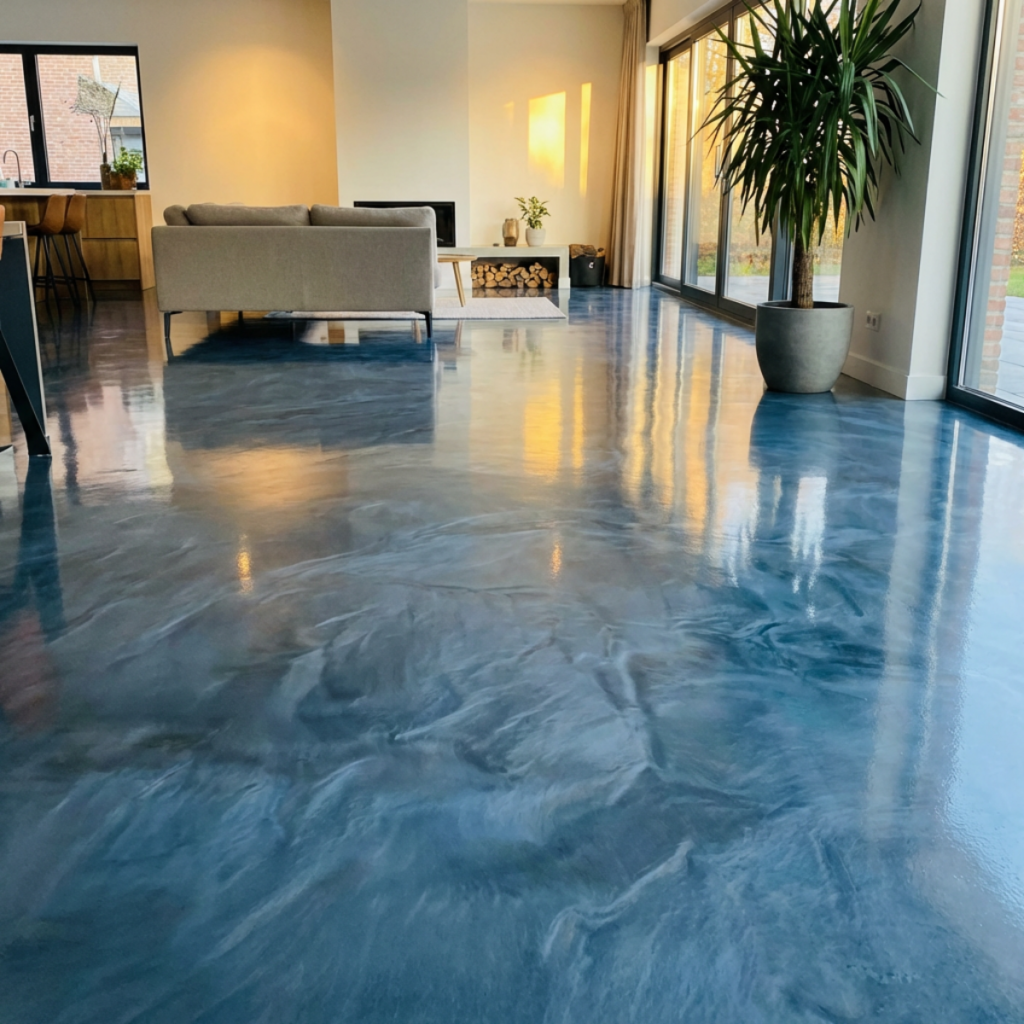

Epoxy flooring has become a popular option in modern homes — especially for garages, basements, and functional spaces.
But from my experience as an architect, it’s also one of the most misunderstood materials.
Many homeowners choose epoxy floors because they look sleek and durable, without fully understanding where they actually work best — and where they don’t.
In this guide, I’ll walk you through the real pros, cons, and practical considerations before choosing epoxy flooring.
What Is Epoxy Flooring?
Epoxy flooring is a surface created by applying a resin coating over concrete, forming a hard, durable, and seamless finish.
It’s commonly used in:
- Garages
- Basements
- Workshops
- Commercial spaces
Its appeal comes from its:
- Smooth finish
- High durability
- Modern appearance
Pros of Epoxy Flooring
1. High Durability
Epoxy floors are resistant to:
- Heavy traffic
- Stains
- Chemicals
👉 In functional areas like garages, this makes them extremely practical.
2. Easy Maintenance
The seamless surface makes cleaning simple:
- No grout lines
- No dust accumulation
- Easy to wipe
3. Modern, Clean Look
Epoxy creates a polished, contemporary finish that works well in minimalist or industrial-style spaces.
Cons of Epoxy Flooring (What Most People Don’t Consider)
1. Not Ideal for All Living Spaces
One of the most common mistakes I see is using epoxy in areas where it doesn’t belong.
From my experience:
- It can feel cold and hard in living rooms
- It lacks warmth for bedrooms
- It may feel too “industrial” for cozy spaces
2. Slippery Surface
Depending on the finish, epoxy floors can become slippery — especially when wet.
👉 This is a concern in:
- Kitchens
- Bathrooms
- Outdoor areas
3. Requires Proper Installation
Epoxy is not forgiving.
If the base surface is not prepared correctly:
- Cracks can appear
- Peeling can occur
- The finish may fail over time
👉 This is one of the biggest issues I’ve seen in real projects.
When Epoxy Flooring Is a Good (or Bad) Idea
✔️ Good Choice For:
- Garages
- Basements
- Utility rooms
- Workshops
👉 These are spaces where durability matters more than warmth.
❌ Not Recommended For:
- Living rooms
- Bedrooms
- Areas where comfort is a priority
👉 In these spaces, other materials create a better balance between aesthetics and comfort.
Common Epoxy Flooring Mistakes (From Real Experience)
1. Poor Surface Preparation
Skipping proper preparation leads to long-term failure.
2. Choosing the Wrong Finish
A glossy finish may look great — but can create glare and slipperiness.
3. Ignoring Long-Term Use
Many people choose epoxy for aesthetics without thinking about:
- Comfort
- Temperature
- Daily use
Expert Tips Before You Choose Epoxy Flooring
- Always evaluate how the space is used daily
- Consider combining epoxy with warmer materials in nearby areas
- Work with professionals for installation when possible
👉 One thing I’ve learned over time:
Materials should match the function of the space — not just its appearance.
Final Thoughts (From Experience)
Epoxy flooring can be an excellent solution — when used in the right context.
But it’s not a universal option.
From my experience, the best results come when homeowners:
- Understand the material
- Choose it intentionally
- Use it where it truly makes sense
A well-chosen floor improves both function and design.
A poor choice becomes a daily frustration.
About the Author
Fher is an architect specializing in residential design and material selection. With hands-on experience in real home projects, he helps homeowners make smarter decisions that balance aesthetics, durability, and functionality.