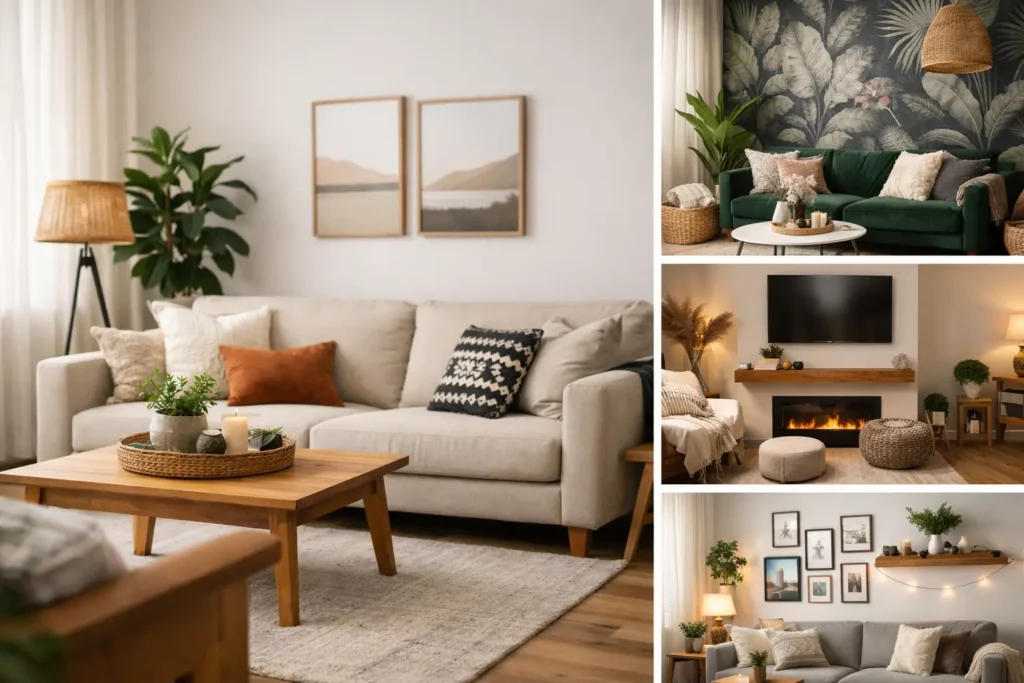

That beige carpet, overhead light, and wall color you did not choose can make a rental living room feel like a place you are merely passing through. But renter living room transformation ideas do not have to involve a renovation, a giant budget, or a tense conversation with your landlord. The most effective updates are often removable, layered, and tailored to the way you actually relax, host, and live.
Start by looking past the room’s fixed finishes. Your furniture layout, lighting, textiles, wall treatment, and storage can do far more to set the mood than the color of the walls. A home you love is built in layers, and every one of those layers can come with you when your lease ends.
1. Create a layout that makes the room feel intentional
Before buying a single pillow, reassess where everything sits. Many rental living rooms feel awkward because furniture has been pushed against every wall, leaving a large, empty strip in the middle. Pulling your sofa a few inches forward, especially when it is paired with a rug, can instantly make the room feel warmer and more purposeful.
Give the room a clear focal point. It might be a TV wall, a fireplace, a window, or even a favorite piece of art. Aim seating toward that point and make conversation easy. If you have a long, narrow apartment living room, use a console behind the sofa or a narrow bookshelf to gently define a lounge area without blocking the flow of the room.
A layout change is free, and it may reveal that your real problem was not a lack of decor. It was a room that did not have a clear job.
2. Use a generously sized rug to ground the space
A too-small rug is one of the fastest ways to make a living room look unfinished. In a rental, a large area rug also softens dated flooring, covers worn carpet, and adds an immediate dose of color and texture.
Choose a size that allows at least the front legs of your sofa and chairs to rest on it. In a compact room, that often means going larger than you expect rather than buying a small rug that floats in the center. A warm neutral, faded vintage pattern, or subtle stripe can work with changing decor and future homes.
If you are covering wall-to-wall carpet, try a low-pile rug with enough contrast to be visible. Layering a small patterned rug over a larger natural-fiber-style option can look cozy, but it works best in rooms with plenty of floor space. In a very small rental, one substantial rug will feel cleaner.
3. Make lighting feel like a choice, not an afterthought
The ceiling fixture that came with the apartment is rarely the source of a cozy evening at home. Instead of relying on one harsh overhead light, add several lower, warmer sources around the room. A floor lamp beside the sofa, a table lamp on a side table, and a small accent lamp on a shelf can completely change the atmosphere after dark.
Use warm white bulbs, generally in the 2700K range, for a relaxed living room glow. Plug-in sconces are another renter-friendly option for adding a more polished, built-in look without hardwiring. Just use cord covers or route cords neatly so the setup feels considered.
If a fixture is easy to swap and your lease permits it, save the original in a labeled box and reinstall it before moving out. Otherwise, do not underestimate what lamps can do. They create the soft pools of light that make a room feel lived in.
4. Add removable color where it has the most impact
Rental walls do not have to stay blank just because painting feels risky. Peel-and-stick wallpaper can create a beautiful accent wall behind a sofa, while removable decals offer a smaller commitment in a tight space. For a calmer result, choose a simple block print, soft botanical, narrow stripe, or subtle grasscloth look rather than a busy pattern that overwhelms the room.
Not every wall needs a treatment. One wall is usually enough, especially if the living room is short on natural light. Test a small piece first and follow the manufacturer’s removal instructions, since some products perform differently on textured walls or older paint.
For an even lower-risk approach, bring color in through curtains, art, a rug, and pillows. This route is especially smart if you move often or prefer a living room that can shift with the seasons.
5. Hang art without treating every wall the same
Bare walls can make even lovely furniture feel temporary. Art gives a rental living room personality quickly, whether it is framed family photos, landscape prints, thrifted paintings, or a large canvas that reflects your style.
Command-style picture strips and hooks can work well for lightweight pieces when used exactly as directed. For heavier art, a small nail hole is often easier to patch than renters imagine, but check your lease first. A picture ledge or large piece of art leaned on a console can deliver the same visual interest with fewer wall holes.
Think in groups rather than scattering small frames around the room. A gallery wall above the sofa, a pair of oversized prints, or one confident statement piece makes a stronger impression. Keep the frames connected by color or finish so the display feels collected, not cluttered.
6. Choose curtains that make the room look taller
Rental window treatments are often functional but forgettable. Hanging curtains high and wide can make a low ceiling feel taller and a small window look more generous. Install the rod several inches above the window frame and extend it beyond each side so the panels can sit mostly off the glass when open.
If drilling is not an option, tension rods and no-drill curtain brackets can be useful, though they have weight limits. Lightweight linen-look panels are often the safest choice for these solutions. For bedrooms that double as living spaces or rooms facing a busy street, consider lined curtains for extra privacy and softness.
Avoid choosing curtains solely because they are cheap or the exact width of the window. Full panels that lightly skim the floor tend to look much more finished.
7. Bring in storage that earns its footprint
Clutter can make a rental feel smaller and less personal, even when the decor is beautiful. The answer is not to hide everything away. It is to choose a few pieces that organize daily life while contributing to the room’s style.
An upholstered storage ottoman can hold blankets, games, or kids’ toys while serving as a coffee table. A closed cabinet can tame electronics and paperwork, while a slim bookshelf makes room for books, baskets, and meaningful objects. In a small space, look for vertical storage that uses height without taking over the floor.
Open shelves need a little editing to stay peaceful. Mix useful items with a few decorative ones, and leave some empty space. You are creating a home, not trying to fill every available inch.
8. Style the sofa with texture, not just more pillows
A standard rental sofa can look surprisingly polished with the right layers. Start with two or three pillow sizes, then add a throw blanket with visible texture such as cotton knit, linen, boucle, or a softly woven stripe. The goal is comfort with a little contrast, not a perfectly matched showroom set.
Choose a simple color story from the rug or art. For example, warm white, camel, olive, and faded blue create an easy, collected look. If your room already has a lot of beige from carpet or walls, introduce deeper tones through pillows and textiles to give the space definition.
This is also one of the easiest areas to update over time. Covers, throws, and pillow inserts are portable, practical, and far less permanent than a new sofa.
9. Use plants and natural materials to soften rental finishes
Plants have a way of making a rental feel cared for. A tall floor plant can fill an awkward empty corner, while a trailing plant on a shelf adds movement at eye level. If your light is limited, choose realistic faux greenery or a low-light option that fits your routine rather than buying a fussy plant you will resent caring for.
Natural materials help balance synthetic carpet, vinyl flooring, and standard builder finishes. Try a woven basket for throws, a wood tray on the coffee table, ceramic lamps, or a rattan accent chair. A few organic textures can make a room feel more relaxed without requiring a full furniture overhaul.
10. Build a small ritual zone that makes the room yours
The most memorable renter living room transformation ideas are not only about how a room photographs. They help the room support your everyday life. Create a small zone for something you genuinely enjoy: a reading corner with a lamp and side table, a coffee nook on a console, a puzzle station in a storage ottoman, or a shelf for records and a speaker.
This is where a rental stops feeling generic. Your home should show evidence of the life happening inside it, from the blanket you reach for during movie night to the books you are actually reading. Even a modest corner can make the whole room feel more personal.
You do not need to transform everything at once. Begin with the change that will affect your daily comfort most, then layer in the next one when your budget and energy allow. A well-loved rental is not defined by permanent upgrades. It is defined by the warmth, ease, and personality you choose to bring into it.
What I’d Prioritize First in a Rental Living Room
If you are working with a limited budget, you do not need to tackle all ten ideas at once. In most rental living rooms, I would start with the changes that have the biggest visual and practical impact without creating unnecessary expense.
First, fix the layout. Moving the sofa, repositioning a chair, or creating a clearer conversation area costs nothing and can completely change how the room feels.
Next, look at lighting. Adding two or three warm light sources is often more noticeable in the evening than adding another decorative accessory. If the room still feels flat after dark, lighting is usually a better investment than more wall decor.
Then add one substantial element that anchors the space, such as a properly sized rug, curtains, or a piece of large-scale art. These elements help the room feel intentional rather than temporarily furnished.
After that, focus on texture and personality. A few pillows, a throw, plants, books, baskets, and meaningful objects can make the room feel like yours without committing to a particular decorating style forever.
Finally, deal with storage and clutter. A beautiful living room will still feel uncomfortable if everyday items have nowhere to go. Choose storage pieces that solve a real problem rather than buying them simply because they look good.
This order matters because it keeps you from spending money on small decorative changes before fixing the things that affect the room most. In a rental, the goal is not to change everything. It is to spend your effort where you will actually notice the difference every day.
Final Thoughts From Experience
One thing I have learned about decorating rental spaces is that the best transformations rarely come from one dramatic change. They usually happen when several smaller decisions start working together.
A sofa placed in the right position feels better to use. A properly sized rug makes the seating area feel connected. Better lighting changes the mood at night. Curtains soften the windows, while a few personal objects make the room feel like it belongs to the people living there rather than to the landlord.
I also think renters sometimes focus too much on what they cannot change. You may not be able to repaint the walls, replace the flooring, or install your dream light fixture, but those limitations do not mean you have to accept a room that feels unfinished.
If I were transforming a rental living room from scratch, I would resist the temptation to buy everything at once. I would start with the layout, then lighting, then one strong anchor such as a rug or curtains. Once those pieces were working, I would add storage, texture, plants, and personal details based on what the room actually needed.
That approach tends to produce a more natural result, too. The room feels collected over time rather than decorated in a single weekend.
Most importantly, I would choose improvements that can move with me. A good rug, a favorite lamp, well-made curtains, artwork, baskets, and comfortable textiles are not temporary purchases just because the apartment is temporary. They can become part of the next home, too.
A rental does not have to be your forever home to deserve attention. The best renter-friendly living room is not necessarily the one with the most expensive furniture or the most dramatic makeover. It is the one that works well for everyday life and still feels unmistakably yours.
About the Author
Fher is an architect specializing in residential design and space optimization. With hands-on experience improving how homes function and feel, he shares practical insights to help homeowners create spaces that are both beautiful and livable.