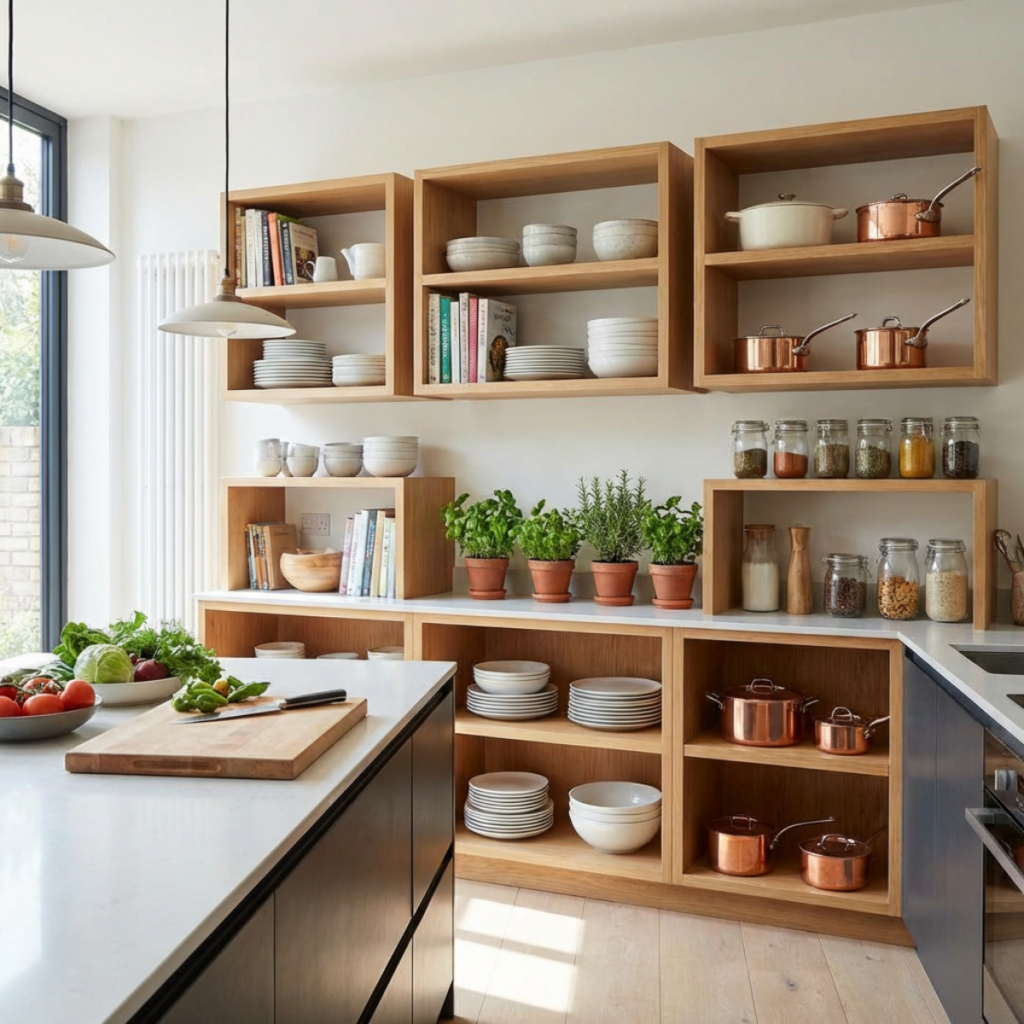

If you’re looking to improve storage and style in your home, shelves for kitchen are one of the most practical and versatile solutions. They help you organize everyday items while adding a modern, open look to your space.
In this complete guide, you’ll learn the benefits, types, and tips to choose the best kitchen shelves for your needs.
What Are Shelves for Kitchen?
Shelves for kitchen are storage units installed on walls, inside cabinets, or as freestanding systems to organize kitchen essentials. They can hold dishes, spices, cookware, and decorative items while keeping everything within easy reach.
Unlike bulky cabinets, shelves offer a more open and flexible storage solution that adapts to different kitchen layouts.
Why Shelves for Kitchen Are So Popular
Kitchen shelves have become increasingly popular because they combine functionality with design. They help create a clean, open feel while making everyday items more accessible.
Open shelving can make kitchens feel larger and more airy by reducing visual bulk from cabinets.
They are especially useful in small kitchens where maximizing space is essential.
Benefits of Shelves for Kitchen
1. Maximizes Space
Shelves make use of vertical wall space, allowing you to store more without overcrowding your kitchen.
2. Easy Access to Everyday Items
Items like plates, mugs, and spices are always within reach, making cooking more efficient.
3. Creates an Open and Airy Look
Replacing upper cabinets with shelves can make your kitchen feel brighter and more spacious.
4. Affordable Storage Solution
Shelves are generally more budget-friendly compared to full cabinetry.
5. Adds Style and Personality
You can display decorative items, plants, or cookware to personalize your kitchen design.
Types of Shelves for Kitchen
Choosing the right type depends on your space and style.
Floating Shelves
Mounted directly to the wall without visible brackets, floating shelves create a clean and modern look.
Wall-Mounted Shelves
These shelves use visible brackets and offer strong support for heavier items.
Corner Shelves
Perfect for utilizing unused corner spaces and maximizing storage in small kitchens.
Freestanding Shelving Units
Great for larger kitchens or pantries, offering flexible and movable storage options.
Wire Shelving
Metal wire shelves are durable, affordable, and ideal for storing heavy kitchen items.
Best Materials for Kitchen Shelves
Wood
Adds warmth and a natural look, perfect for modern or farmhouse kitchens.
Metal
Strong and durable, ideal for industrial-style kitchens or heavy storage.
Glass
Elegant and modern but best for lighter items.
Laminate
Affordable and easy to clean, suitable for everyday use.
How to Choose the Best Shelves for Kitchen
To get the best results, consider the following:
Space and Layout
Measure your kitchen carefully and identify where shelves will be most useful.
Weight Capacity
Ensure the shelves can support the items you plan to store.
Style and Design
Choose shelves that match your kitchen decor for a cohesive look.
Ease of Installation
Some shelves require professional installation, while others are DIY-friendly.
Shelves vs. Cabinets: Which Is Better?
Both options have advantages, and the best choice depends on your needs.
- Shelves: Better for accessibility and open design
- Cabinets: Better for hiding clutter and protecting items
Many modern kitchens combine both for the perfect balance of function and style.
Tips for Organizing Kitchen Shelves
To keep your shelves functional and visually appealing:
- Group similar items together
- Use jars or containers for dry goods
- Avoid overcrowding shelves
- Place frequently used items at eye level
- Mix functional items with decorative pieces
Keeping shelves organized is key to maintaining a clean and stylish kitchen.
Common Kitchen Shelf Mistakes I Often See
As someone with a background in architecture and residential space planning, I’ve noticed that many homeowners make the same mistakes when adding kitchen shelves.
The most common issue is installing shelves that are too deep. While deeper shelves may seem like they provide more storage, they often make items harder to reach and create visual clutter. For most kitchens, shelves between 10 and 12 inches deep offer the best balance between storage and accessibility.
Another mistake is placing heavy cookware on shelves that weren’t designed to support significant weight. Before installation, it’s important to verify both the shelf material and the wall anchoring system.
I also frequently see homeowners replacing too many upper cabinets with open shelving. While open shelves can make a kitchen feel larger, removing all enclosed storage often leads to visible clutter. In most cases, a combination of cabinets and shelves creates a more functional and visually balanced kitchen.
When Open Shelves Are Not the Best Choice
Although I often recommend open shelving, there are situations where traditional cabinets are the better solution.
In kitchens where storage is already limited, relying entirely on open shelves can quickly create visual clutter. I also find that households with young children or those who cook frequently tend to benefit from a combination of closed cabinets and open shelving rather than using shelves exclusively.
From a practical design perspective, the most successful kitchens usually balance accessibility with concealed storage. Open shelves work best when they highlight everyday essentials or decorative items, while cabinets keep less attractive items out of sight.
My Recommendation for Small Kitchens
In smaller kitchens, I generally recommend using open shelves strategically rather than throughout the entire space.
One approach that works particularly well is installing two or three floating shelves above a coffee station, prep area, or breakfast corner. This keeps frequently used items accessible while avoiding the visual heaviness that large cabinets can create in compact spaces.
When working with limited square footage, every storage decision should serve both a practical and visual purpose. Well-placed shelves can make a small kitchen feel more open without sacrificing functionality.
Final Thoughts From Experience
After evaluating many residential kitchens over the years, I’ve found that the most successful shelving solutions are the ones that balance storage, accessibility, and visual appeal.
While open shelves can dramatically improve the look and functionality of a kitchen, they work best when planned with intention. The goal isn’t simply to add more storage—it’s to create a space that supports your daily routine while maintaining a clean and organized appearance.
If you’re considering adding kitchen shelves, start with one area where improved accessibility would make the biggest difference. In many homes, a few well-placed shelves can provide more practical value than an entire wall of cabinetry.
The best kitchen storage solutions are rarely the ones with the most space—they’re the ones that make everyday tasks easier and more enjoyable.
About the Author
Fher is an architect specializing in residential design and space optimization. With hands-on experience improving how homes function and feel, he shares practical insights to help homeowners create spaces that are both beautiful and livable.

Pingback: 15 Kitchen Counter Organization Ideas - everydayhomestyle.io