
A crowded counter can make the whole kitchen feel harder to use. The best kitchen counter organization ideas are not about making your space look staged. They are about giving everyday items a home, clearing visual clutter, and making the room feel calmer the minute you walk in.
If your counters tend to collect mail, snacks, cooking oils, water bottles, and that one appliance you swear you use all the time, you are not alone. Most kitchens become catchall spaces because they work hard. The goal is not empty counters at all costs. It is creating enough breathing room so cooking, cleaning, and daily life feel easier.
Start with zones before buying anything
The most useful shift is thinking in zones instead of random objects. When items are grouped by how you use them, your counter starts working for you instead of against you.
Stand in your kitchen and notice what happens at each stretch of counter. Near the coffee maker, you probably reach for mugs, sweetener, and filters. Near the stove, you may grab oil, salt, and utensils. Near the sink, dish soap and hand soap likely compete for space. Those patterns tell you what belongs where.
This matters because one of the biggest organizing mistakes is storing things by category alone. That sounds tidy in theory, but if your tea bags are across the room from the kettle or your cutting boards are nowhere near prep space, clutter tends to creep back fast.
Kitchen counter organization ideas that actually help
Some organizing tips look beautiful but fall apart in real life. The better approach is to choose ideas that match your routine, your square footage, and your tolerance for visual stuff.
Keep only your daily-use essentials out
This is the edit that changes everything. If you use something once a week or less, it probably does not need permanent counter space.
That might mean storing the stand mixer, blender, bread machine, or oversized knife block elsewhere. It depends on how often you cook and how much cabinet space you have, but the general rule is simple: your counters should earn their keep. Save that prime real estate for the tools you reach for every day.
A small kitchen may only have room for a coffee maker and a utensil crock. A larger family kitchen might comfortably hold a toaster, fruit bowl, and cooking station. Neither is more correct. The right answer is the one that supports your actual life.
Use a tray to make small items look intentional
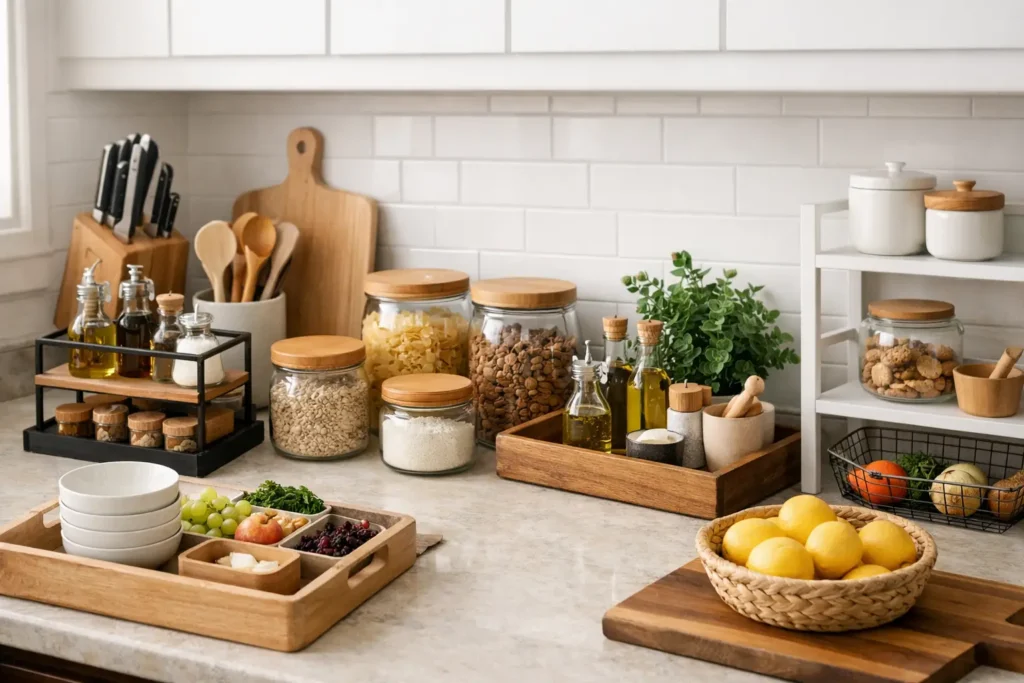
A tray is one of the easiest ways to organize a counter without making it feel rigid. It visually gathers the little things that tend to look messy on their own, like olive oil, salt, pepper, and a small plant.
This works especially well near the stove or coffee station. Instead of several loose items spreading outward over time, a tray creates a clear boundary. It also makes wiping down the counter much easier because you can lift one piece instead of moving six.
Choose a tray that suits your kitchen style, but keep the size in check. If it is too large, it becomes permission for clutter.
Create a simple coffee or breakfast station
If mornings always feel rushed, this is one of the smartest kitchen counter organization ideas to try. Group your coffee maker, mugs, pods or beans, and everyday breakfast items in one defined area.
This setup cuts down on back-and-forth movement and keeps the busiest part of the day flowing better. If you have upper cabinets above the counter, store the rest of your supplies there to support the station. If not, a canister or two can keep things neat without looking fussy.
The trade-off is that stations work best when they stay edited. Once vitamins, kids’ lunch notes, and random chargers join the coffee setup, it stops being helpful.
Swap bulky packaging for a few attractive containers
Counters often look messier because of packaging, not quantity. A bag of coffee, a half-open box of sweetener, and a family-size snack carton create visual noise fast.
You do not need to decant everything. In fact, over-decanting can become another chore. But moving a few frequent-use items into labeled jars or simple containers can make the counter feel cleaner and more cohesive. Think coffee pods, sugar packets, tea bags, or dog treats if your kitchen doubles as pet headquarters.
Stick with the items you use regularly enough to refill without hassle. Otherwise, the system can become more work than it is worth.
Make vertical space do more work
When counter space is limited, the smartest move is often upward.
Add a riser or small shelf for layers
A compact shelf can instantly double the usefulness of one section of counter. It gives you room to store mugs over canisters, spices over oils, or everyday bowls above the toaster area.
This is especially helpful in apartments or older kitchens with limited drawers. Just be careful not to overstack. If the shelf makes the area feel crowded or blocks outlets, it is solving one problem while creating another.
Use the wall if your kitchen allows it
A mounted rail, peg strip, or narrow wall shelf can pull frequently used tools off the counter without sending them deep into a drawer. This works well for cooking utensils, small cutting boards, or even a paper towel holder.
It is not the best fit for every renter or every kitchen style, but when wall space is available, it can free up more room than a counter organizer ever will. If drilling is not realistic, even leaning a slim cookbook stand or mail sorter against the backsplash can help keep surfaces clearer.
Choose organizers that match the mess
Not all clutter is the same, which is why one-size-fits-all solutions usually disappoint.
For family clutter, add a drop zone away from prep space
If your kitchen counter collects keys, school papers, sunglasses, and unopened mail, the problem may not be kitchen storage at all. It may be that your home needs a landing spot nearby.
A small basket, wall pocket, or drawer organizer placed at the edge of the kitchen can catch those non-cooking items before they spread across your prep area. This is especially helpful in open-concept homes where the kitchen ends up handling everything.
For cooking clutter, keep tools close but contained
Utensil crocks, salt cellars, and oil bottles can absolutely belong on the counter if you cook often. The key is restraint. Keep only the items you reach for constantly, and contain them to one zone.
Too many decorative canisters or oversized containers can make the kitchen feel busier, even if everything is technically organized. A smaller crock often works better because it limits what stays out.
For cleaning clutter, corral the sink area
The sink is often where good intentions go to die. Dish soap, hand soap, sponges, brushes, and scrubbers can make even a clean kitchen look chaotic.
A compact sink caddy or shallow tray can fix that quickly. Look for something that drains well and wipes clean easily. If space is tight, choose one item that hides the sponge and keeps the rest minimal. This is one spot where fewer products usually looks and functions better.
Keep your counters organized without making them boring
A well-organized kitchen should still feel warm and lived in. Clearing clutter does not mean stripping away personality.
One bowl of fruit, a small cutting board leaned against the backsplash, or a pretty canister set can add softness without turning into mess. The trick is balance. If every corner is styled, nothing feels restful. If everything is hidden, the kitchen can feel flat and overly strict.
This is where your own habits matter most. If you love a cozy look, leave room for one or two decorative pieces. If clutter stresses you out, keep styling lighter and let open space be the feature.
How to maintain kitchen counter organization ideas long term
The reset matters, but the routine matters more. Counters usually get messy in tiny increments, not all at once.
A five-minute evening reset can make a huge difference. Put away items that drifted in from other rooms, wipe surfaces, and return each zone to its baseline. That is much easier than waiting until the weekend and dealing with a full counter takeover.
It also helps to notice repeat offenders. If the same vitamins, lunch supplies, or reusable bags keep landing on the counter, the answer is not more tidying. The answer is giving those things a better home.
The nicest kitchens are rarely the ones with the most storage or the most expensive organizers. They are the ones set up with real habits in mind. When your counter supports how you cook, clean, and move through the day, the whole room feels lighter – and a lot more enjoyable to use.
Final Thoughts From Experience
One thing I have noticed over and over is that kitchen counters rarely become cluttered because people are lazy. Usually, it happens because the kitchen is doing too many jobs at once. It becomes a cooking space, a coffee station, a homework drop zone, a charging area, and sometimes even a home office.
That is why the best kitchen counter organization ideas are not about copying a picture-perfect kitchen from social media. They are about reducing friction in your everyday routine.
In smaller kitchens especially, I have found that trying to organize too much at once often backfires. The systems that actually last are usually the simplest ones: keeping only daily-use items visible, creating clear zones, and making it easier to put things away than to leave them out.
Another mistake people make is buying organizers before understanding the problem. A tray, shelf, or container can absolutely help, but only when it supports the way your household already functions. Otherwise, even expensive organization products eventually turn into more clutter.
If you want the biggest impact with the least effort, start with just one section of counter. Clear it completely, decide what truly belongs there, and build around your real habits instead of an ideal version of your kitchen. That small reset often changes the entire feel of the room.
At the end of the day, a well-organized kitchen is not the one that looks untouched. It is the one that feels easier to cook in, easier to clean, and calmer to live with every single day.
About the Author
Fher is an architect specializing in residential design and space optimization. With hands-on experience improving how homes function and feel, he shares practical insights to help homeowners create spaces that are both beautiful and livable.