
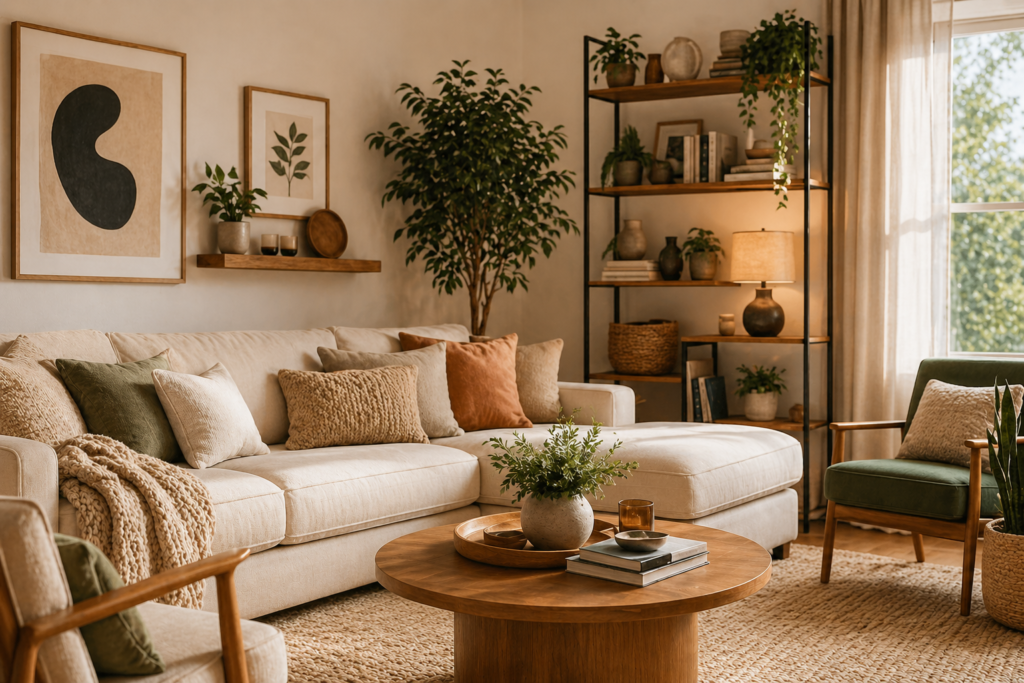

Your living room is more than just a place to sit—it’s where life happens. It’s where you unwind after a long day, host friends, and create everyday moments that matter. That’s why getting your living room decor right is essential.
After years of working in home design and helping clients refresh their spaces on different budgets, I’ve learned one key truth: a well-decorated living room doesn’t depend on expensive furniture—it depends on thoughtful choices.
In this guide, you’ll find practical, realistic, and stylish living room decor ideas that actually work in real homes—not just in magazines.
Why Living Room Decor Matters
A well-designed living room can completely change how your home feels. It affects your comfort, your mood, how spacious your home appears, and even the impression you give to guests.
The goal isn’t perfection—it’s creating a space that feels natural, functional, and personal.
1. Start with a Clear Style Direction
Before buying anything, define your style. This helps you avoid unnecessary purchases and creates a cohesive look.
Some popular styles include modern, minimalist, boho, Scandinavian, and industrial. You don’t have to stick to just one—most well-designed homes blend styles successfully.
The key is consistency, especially in your color palette and materials.
2. Choose the Right Color Palette
Color plays a crucial role in living room decor.
A simple and effective rule is:
- 60% dominant color (walls and large furniture)
- 30% secondary color (rugs and textiles)
- 10% accent color (decor and accessories)
Neutral tones like beige, cream, and soft gray are timeless and flexible. You can always introduce bolder colors through cushions, art, or decorative objects.
3. Invest in the Right Sofa
The sofa is the centerpiece of your living room.
Look for comfort, durability, and a neutral tone that allows flexibility over time. A well-chosen sofa can last for years and adapt to different decor styles.
Avoid overly trendy colors that may feel outdated quickly.
4. Layer Your Lighting
Lighting is one of the most underestimated elements in home design.
Use a combination of:
- Ambient lighting (ceiling lights)
- Task lighting (floor or table lamps)
- Accent lighting (decorative lights)
Warm lighting creates a cozy and inviting atmosphere, while relying only on overhead lights can make the space feel flat.
5. Use Rugs to Define the Space
A rug helps anchor your furniture and visually organize your living room.
Make sure the rug is large enough so that at least the front legs of your furniture sit on it. Small rugs can make the room feel disconnected and smaller than it actually is.
6. Add Texture for Warmth
Texture adds depth and comfort to your space.
Incorporate elements like throw blankets, cushions, wood finishes, woven materials, and soft fabrics. Even in minimalist spaces, texture prevents the room from feeling cold or sterile.
7. Decorate Walls with Purpose
Avoid leaving walls completely empty, but also avoid filling them randomly.
Good options include large artwork, gallery walls, mirrors, or floating shelves. Always hang artwork at eye level to maintain balance and proportion.
8. Bring in Natural Elements
Natural materials make any living room feel more inviting.
Add plants, wooden accents, or ceramic decor. Even a few small touches can make a noticeable difference in how your space feels.
9. Keep It Functional
A beautiful living room must also be practical.
Make sure there is enough seating, easy movement, and accessible surfaces. Add functional pieces like coffee tables, side tables, and storage solutions to improve usability.
10. Personalize Your Space
Your living room should reflect who you are.
Incorporate books, personal photos, travel items, or meaningful decor. The goal is to create a space that feels authentic without becoming cluttered.
11. Tips for Small Living Rooms
If your living room is small, focus on maximizing space.
Use light colors, mirrors, and furniture with visible legs to create a sense of openness. Avoid oversized furniture and keep the layout simple.
Decluttering can often make a bigger impact than buying new items.
12. Budget-Friendly Living Room Decor Ideas
You don’t need a large budget to improve your living room.
Simple changes like rearranging furniture, updating cushion covers, adding lighting, or incorporating thrifted decor can make a big difference.
A well-designed space is more about intention than cost.
How to Decorate a Living Room Without Starting Over
One of the biggest misconceptions about decorating is believing that you need to replace everything to achieve a fresh look.
In reality, the most successful living room updates often come from improving what you already have. Before buying new furniture, take a closer look at your current space. Rearranging seating, updating pillows, adding a larger rug, or improving lighting can completely change how a room feels.
I often recommend starting with the elements that have the biggest visual impact. A new sofa can be expensive, but replacing outdated throw pillows, introducing layered lighting, or adding a large piece of artwork can create a similar sense of transformation for a fraction of the cost.
This approach not only saves money but also helps you create a space that feels intentional rather than rushed.
Common Living Room Decor Mistakes to Avoid
Avoid buying everything at once, ignoring lighting, prioritizing style over comfort, using rugs that are too small, or overcrowding surfaces with decor.
Correcting these mistakes can instantly improve your space.
Frequently Asked Questions
What is the easiest way to update a living room?
The easiest way to refresh a living room is by updating textiles and lighting. New throw pillows, a cozy blanket, an area rug, or additional lamps can dramatically change the look and feel of the space without requiring major renovations.
How can I decorate my living room on a budget?
Focus on affordable updates that create visual impact. Rearranging furniture, adding plants, improving lighting, shopping secondhand, and incorporating decorative accessories are all budget-friendly ways to refresh a living room.
What colors work best in a living room?
Neutral colors such as beige, cream, taupe, and soft gray remain popular because they create a versatile foundation. Accent colors can then be introduced through artwork, cushions, and decorative accessories.
How do I make a small living room look bigger?
Use light colors, mirrors, multifunctional furniture, and an uncluttered layout. Choosing furniture with visible legs and maximizing natural light can also make a small room feel more open.
How much decor is too much in a living room?
A good rule is to leave some empty space. Overdecorating can make a room feel cluttered and smaller than it actually is. Focus on a few meaningful pieces rather than filling every available surface.
What living room decor trends are timeless?
Layered lighting, natural materials, quality seating, neutral color palettes, indoor plants, and personal decorative accents continue to remain relevant regardless of changing design trends.
Final Thoughts From Experience
One thing I have learned after working with homeowners and redesigning living spaces is that the most beautiful living rooms are rarely the most expensive ones.
The rooms people enjoy the most usually have something else in common: they feel comfortable, personal, and lived in. While trends come and go every year, the fundamentals of good design remain surprisingly consistent. Thoughtful furniture placement, balanced lighting, natural textures, and meaningful decor tend to have a greater impact than the latest design fad.
I also encourage homeowners to be patient with the process. Some of the most inviting living rooms develop gradually over time rather than appearing fully finished overnight. Living in a space helps you understand what works, what feels missing, and which improvements will actually enhance your daily routine.
If you’re unsure where to begin, focus first on comfort and functionality. Once those foundations are in place, decorative details become much easier to choose. A well-designed living room should not only look good in photos—it should make everyday life feel more enjoyable.
Ultimately, the best living room decor is the kind that reflects how you live, what you value, and what makes you feel at home.

Pingback: How to Find Your Decorating Style - everydayhomestyle.io
Pingback: 12 Small Living Room Layout Ideas That Work - everydayhomestyle.io
Pingback: My Recommendations For Layout Ideas For Small Living Rooms That Actually Work (I promise you'll love them) - everydayhomestyle.io
Pingback: How to Style Open Shelves Without Clutter - everydayhomestyle.io
Pingback: 11 Entryway Ideas for Small Spaces - everydayhomestyle.io
Pingback: My Recomendation For Renter Friendly Wall Decor Ideas - everydayhomestyle.io