
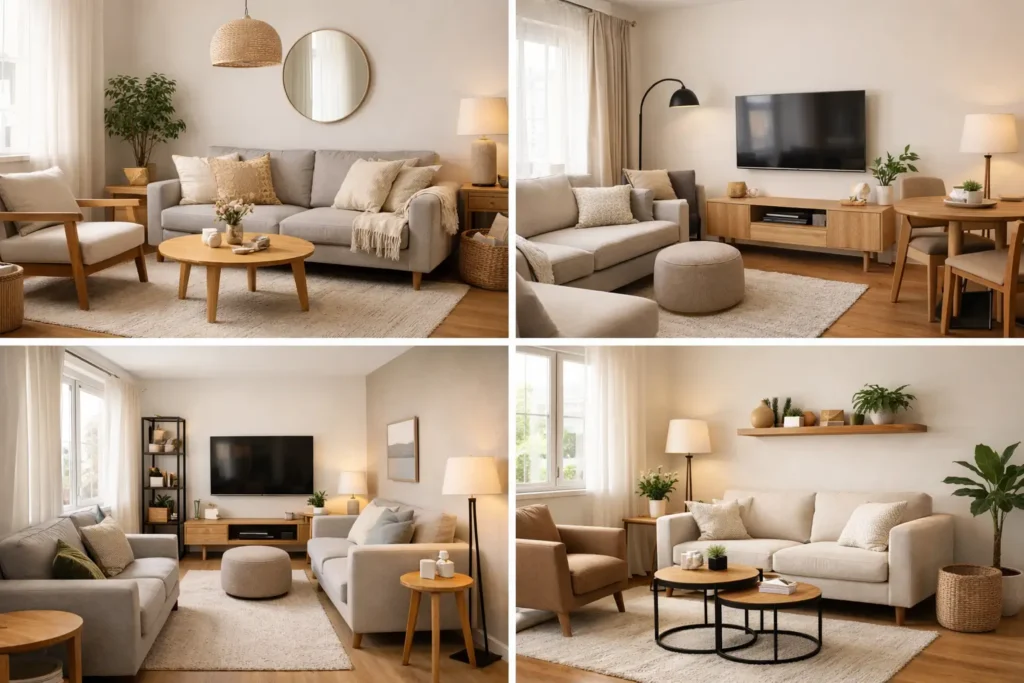

When a living room feels crowded, the problem usually is not the square footage alone. It is the layout. The right small living room layout ideas can make a space feel easier to walk through, more comfortable to use, and much more pulled together without asking you to buy all new furniture.
That is good news if you are working with an apartment living room, a narrow family room, or a multipurpose space that has to handle everything from movie nights to toy storage. A small room can still feel warm, stylish, and functional. It just needs a layout that respects how you actually live.
Start with the room’s real job
Before moving a single piece of furniture, decide what your living room needs to do most often. For some homes, it is a conversation space. For others, it is the TV room, the reading corner, the play area, or all three. That matters, because one of the most common small-space mistakes is trying to force a room into a picture-perfect setup that does not fit daily life.
If you always watch TV in this room, place seating so it supports that use first. If you rarely turn the TV on and mostly host friends, a more social arrangement makes sense. When a room has multiple functions, choose one primary use and let the secondary needs work around it. That keeps the layout from feeling scattered.
1. Float the sofa when the walls are working against you
Many people push every piece of furniture against the wall to make a room feel larger. Sometimes that helps, but often it just creates a big empty middle and awkward dead zones around the edges. In a small living room, a sofa floated a few inches from the wall, or even centered in the room, can actually create better balance.
This works especially well in open-plan spaces where the back of the sofa can define the living area. Add a narrow console table behind it if you need a place for lamps, drinks, or baskets. The trade-off is that floating furniture needs enough clearance to walk around comfortably, so this idea works best when the room is not extremely tight.
2. Use an area rug to anchor the layout
One of the easiest small living room layout ideas is also one of the most overlooked. A properly sized rug helps the furniture read as one intentional zone instead of a collection of separate pieces.
In most small living rooms, the rug should be large enough for at least the front legs of the sofa and chairs to sit on it. A rug that is too small can make the room feel chopped up. If your room is long and narrow, a rug can visually widen the seating area and make the whole arrangement feel less like a hallway.
3. Choose one clear focal point
A small room feels calmer when the eye knows where to land. That focal point might be a TV, fireplace, picture window, or even a bookcase. Once that is set, arrange the main seating around it instead of trying to compete with several features at once.
If your TV and fireplace are on different walls, you may need to decide which one wins. That can feel frustrating, but trying to center furniture on both often creates a layout that satisfies neither. In real homes, function usually needs to lead.
4. Try two chairs instead of a loveseat
A loveseat sounds like the obvious small-space solution, but it is not always the most flexible one. In some layouts, two slim chairs take up about the same footprint while giving you more freedom to angle seating, open sightlines, and adjust the room over time.
This is especially useful in square living rooms where one full sofa plus two chairs creates a more balanced setup than sofa plus loveseat. Chairs with open arms or exposed legs also look lighter, which helps the room breathe.
5. Put the biggest piece in the best spot first
When laying out a small living room, start with the largest essential piece, usually the sofa. Give it the strongest wall or the most logical position in relation to the focal point. Then build around it.
This sounds simple, but it prevents a very common issue: filling the room with small items first and discovering there is no good place left for the one piece you use every day. Once the sofa is in place, bring in a coffee table or ottoman, then side seating, then storage and accents. Working in that order keeps the room from becoming overfurnished.
6. Leave a real walkway
Even a beautifully decorated room will feel cramped if people have to zigzag around furniture. Good layout is not just about where things fit. It is about how the room flows.
Aim to leave a clear walking path through the room, especially between the entry point and the seating area. In many homes, that means shifting the coffee table slightly off center, choosing a smaller side table, or skipping extra accent furniture that is more decorative than useful. You do not need huge gaps, but you do want the room to feel easy to move through.
7. Use corners on purpose
Corners can either save a small room or waste precious space. A corner chair with a floor lamp can create a cozy reading spot. A corner sectional can maximize seating when the room shape supports it. A corner cabinet or narrow shelving unit can add storage without taking over the main layout.
The key is avoiding the kind of corner use that feels accidental. If a small chair is shoved into a corner with no table, no lamp, and no clear purpose, it tends to read as leftover furniture. Every piece should earn its place.
8. Swap the coffee table if it blocks the room
Traditional coffee tables are not always the best answer in tight spaces. If yours interrupts traffic flow or forces seating too far apart, try a smaller round table, a pair of nesting tables, or an upholstered ottoman.
Round pieces are especially helpful in compact layouts because they soften the room and remove sharp corners from walking paths. An ottoman can also double as extra seating or hidden storage, which is a smart move when every piece needs to work harder.
Small living room layout ideas for TV rooms
TV rooms often come with their own layout frustrations, especially when the television dominates one wall and the room is too small for a full sectional. In that case, keep the setup simple. A sofa facing the TV, one smaller chair off to the side, and a compact table or ottoman usually works better than trying to cram in matching furniture.
If the TV wall also needs storage, go vertical instead of wide. Tall shelving, a streamlined media console, or wall-mounted storage can help keep the floor area more open. Visually light furniture matters here. Bulky recliners may be comfortable, but they can quickly make a small room feel full.
Small living room layout ideas for awkward spaces
Not every living room is a neat rectangle. Some have off-center windows, radiators, multiple doorways, or strange little alcoves. In those rooms, symmetry is less important than function.
An awkward room often benefits from breaking the “everything centered” rule. You may need to place the sofa slightly off center, use asymmetrical side tables, or let one chair sit at an angle. That is okay. A room that works well will always feel better than one that follows a formula but fights the architecture.
If you have a long narrow space, create a tighter conversation zone at one end rather than spreading furniture across the full length of the room. If you have a pass-through layout, keep the center or one side more open so the room does not feel like an obstacle course.
9. Let storage support the layout
Clutter changes how a room feels just as much as furniture placement does. A smart layout gets much easier when blankets, toys, remotes, and cords have a home.
Look for storage that blends into the arrangement. Think a lift-top ottoman, a narrow console behind the sofa, a media unit with closed cabinets, or baskets tucked under a bench. In a small living room, hidden storage often works better than open shelving if you want the room to feel calm instead of visually busy.
10. Keep furniture in scale with the room
Small does not always mean tiny, but it does mean thoughtful scale. Oversized arms, extra-deep cushions, and heavy bases can eat up more room than you realize. On the other hand, furniture that is too petite can make the space feel temporary or uncomfortable.
The sweet spot is usually a few well-proportioned pieces with cleaner lines. One apartment-size sofa and one comfortable chair often work better than four smaller seats packed into the room. At Everyday Home Style, this is one of those changes that makes a space feel better almost instantly.
11. Use lighting to define the arrangement
A small living room layout does not end with furniture. Lighting helps each part of the room feel intentional. A floor lamp by a chair turns it into a reading corner. Table lamps on either side of a sofa create balance. A single overhead light rarely does enough on its own.
This matters even more in rooms with limited square footage because dim corners can make the layout feel unfinished. Light the areas you want people to use, and the room will naturally feel more organized.
12. Edit more than you add
When a room feels off, the first instinct is often to buy another piece. Sometimes the better answer is to remove one. Take out the extra side table, the oversized chair, or the decor stand that is stealing floor space but not adding much function.
Small living rooms benefit from a little breathing room. You do not need a bare space, but you do need enough openness for the best parts of the room to stand out.
A good layout should make your living room feel easier to live in, not just nicer to look at. If you can walk through it comfortably, sit down with ease, and enjoy the space without constantly shifting things around, you are probably much closer than you think to a home you love.
Final Thoughts From Experience
After working with small living rooms over the years, one thing becomes clear very quickly: the best layouts are rarely the ones that look the most perfect in photos. They are the ones that make everyday life feel easier.
A small living room does not need to hold less personality just because it has less square footage. In fact, smaller spaces often feel more inviting when the layout is thoughtful. The homes that work best are usually the ones where people can move comfortably, reach what they need easily, and use the room naturally without constantly adjusting furniture or fighting clutter.
One mistake I see often is trying to fit too much into the room in the hope of making it more functional. In reality, the opposite is usually true. A few well-placed pieces almost always outperform a crowded layout filled with furniture that technically fits but makes the space harder to live in.
Another thing worth remembering is that layout problems are not always solved by buying something new. Sometimes the biggest improvement comes from repositioning the sofa, removing one unnecessary chair, changing the rug size, or creating a clearer walking path. Small adjustments can completely change how a room feels.
If you are redesigning a small living room, focus first on comfort, flow, and daily habits before aesthetics. Once the room functions well, the style side becomes much easier. A home that feels calm, usable, and intentional will always look more beautiful than one designed only for appearances.
At the end of the day, the goal is not to make a small living room look bigger just for the sake of it. The goal is to make it feel better to live in.
About the Author
Fher is an architect specializing in residential design and space optimization. With hands-on experience improving how homes function and feel, he shares practical insights to help homeowners create spaces that are both beautiful and livable.


Pingback: Budget Friendly Living Room Makeover Ideas - everydayhomestyle.io
Pingback: 11 Common Decorating Mistakes to Avoid - everydayhomestyle.io
Pingback: 12 Best Indoor Plants for Low Light - everydayhomestyle.io