
That under-sink cabinet usually starts the same way – one spray bottle, a few extra sponges, maybe a trash bag roll – and somehow turns into a crowded, dripping, hard-to-clean mess. If you have been wondering how to organize under sink spaces without buying a dozen fancy products, the good news is you do not need a perfect Pinterest setup. You just need a system that works around pipes, prevents waste, and makes everyday cleanup easier.
The best under-sink organization is less about cramming in more and more about making the space easier to use. This cabinet holds awkward shapes, tall bottles, and often a few surprise leaks, so the goal is simple: keep only what belongs there, make everything visible, and choose storage that can handle real life.
Before you organize under sink cabinets, clear everything out
Start by emptying the whole cabinet. Yes, all of it. This part matters because under-sink clutter tends to build in layers, and it is hard to see what is actually living there until the space is empty.
As you pull things out, group similar items together. Cleaning sprays go in one pile, dishwasher items in another, extra sponges and scrubbers together, trash bags together, and anything that clearly belongs somewhere else gets moved out. This is also the moment to toss dried-up products, duplicate tools you never reach for, and half-used items you forgot you had.
Give the cabinet a quick wipe-down before anything goes back in. If you notice moisture, peeling material, or a musty smell, deal with that first. There is no point creating a tidy system on top of an active leak or damp surface.
Decide what should actually live under the sink
One reason this cabinet gets so chaotic is that it becomes a catch-all for anything cleaning-related. In reality, under the sink works best for products you use often and need close by. Think dish soap refills, dishwasher tabs, sponges, trash bags, gloves, and a few go-to cleaners.
It is usually not the best place for bulk backstock, rarely used specialty products, or anything sensitive to moisture. If you buy in larger quantities, keep only a small working supply under the sink and move the rest to a laundry room, hall closet, or shelf in another dry spot. This one shift can free up more room than any organizer ever will.
If the cabinet is in a bathroom, the same rule applies. Daily-use items such as toilet cleaner, extra hand soap, and a small supply of personal care products make sense there. Hair tools, medicine, or overflow beauty products may not.
How to organize under sink with the right storage pieces
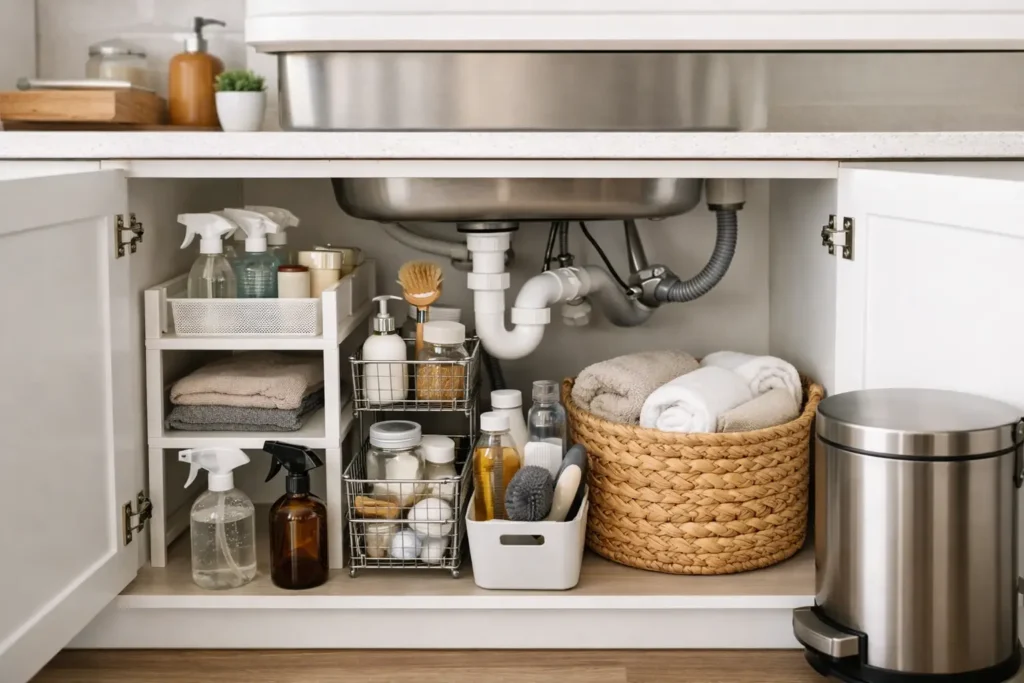
The tricky part of under-sink storage is the plumbing. A standard basket often wastes half the cabinet because pipes cut through the center. Instead of trying to force one large container into the space, use smaller, flexible pieces that fit around the layout you already have.
Clear bins are helpful if you want to see what you own at a glance. Small open-top baskets work well if you prefer a softer look and do not mind pulling them out. Turntables can be useful for short bottles or smaller supplies, especially in bathroom cabinets, but they are not always the best option for tall cleaners that tip easily.
Stackable drawers can make great use of vertical space, but only if they fit under the pipe and slide smoothly. This is one of those it-depends situations. In some cabinets, a two-tier drawer system is a game changer. In others, the hardware gets in the way and simple bins work better.
A slim caddy for spray bottles is often more practical than lining bottles shoulder to shoulder. When you can lift one handled bin out and set it on the counter while you clean, the whole setup feels easier to live with.
Use the cabinet doors and vertical space wisely
When floor space is limited, the inside of the doors can help. Adhesive hooks or small door-mounted bins are useful for lightweight items like gloves, microfiber cloths, small brushes, or trash bags. Just avoid overloading the doors, especially in older cabinets.
Vertical space matters too. If your pipes leave open room on one side, add a short shelf riser to create an upper level for smaller items. This works especially well for dish pods, sponges, and backup soap. Without some kind of height strategy, you end up with one deep layer that hides half your supplies.
That said, do not add storage just because the internet says you should. If a shelf makes it harder to grab a tall bottle or clean around a drip tray, skip it. Good organization should reduce friction, not create a prettier version of frustration.
Create simple zones that match your routine
The easiest way to keep this space tidy is to assign rough zones. You do not need a label maker to make it work, although labels can help if multiple people use the cabinet.
One side can hold everyday cleaning products. Another can hold dishwashing or bathroom restock items. A small front section can be reserved for quick-grab essentials like sponges, tabs, or extra liners. Keep the things you use most often in the easiest-to-reach spots, ideally front and center.
This sounds basic, but it makes a real difference. When every category has a home, you stop tossing things in wherever they fit. You also know when you are running low instead of discovering it after you have already started cleaning.
Protect the space from drips, spills, and damage
A neat under-sink cabinet still needs to handle the less glamorous side of home life. Bottles leak. Pipes sweat. Soap drips. That is why protection matters as much as appearance.
A washable liner or shallow tray on the cabinet base can save the surface from stains and moisture. Trays are especially useful under cleaning products because they contain small spills and make wipe-downs faster. If you have ever lifted a bottle and found a sticky ring underneath, you already know why this helps.
It is also smart to leave a little breathing room around plumbing. Packing the cabinet too tightly can make leaks harder to spot and repairs more annoying than they already are. A little empty space is not wasted space if it keeps the area functional.
Budget-friendly ways to organize under sink spaces
You do not need a full set of matching acrylic organizers to make this cabinet work better. In many homes, a few affordable basics are enough. A pair of bins, a tray, and a small riser can completely change the space.
Repurposed containers can work too, as long as they are sturdy and easy to clean. Small plastic baskets, leftover pantry bins, or even a handled tote from another room can do the job. The key is not whether everything matches. It is whether you can reach what you need quickly and put it back without thinking.
If you are trying to keep costs low, measure first and buy second. Under-sink cabinets vary a lot, and one wrong purchase can eat up your budget fast. It is better to start with two well-fitting pieces than a full set that does not work around the pipes.
Common mistakes that make under-sink storage harder
The biggest mistake is storing too much. This cabinet is one of the easiest places to overfill because it is hidden behind doors. But when bottles are packed too tightly, you cannot see what you have, and things get ignored until they expire, leak, or duplicate.
Another common issue is choosing storage that is too deep or too tall. It may look efficient at first, but if you have to unload half the cabinet to reach one item in the back, the setup will not last. Convenience is what keeps a space organized, not good intentions.
It is also easy to forget maintenance. Even the best system needs a quick reset now and then. Once a month, take 5 minutes to wipe the shelf, toss empties, and return things to their zones. That small habit keeps the cabinet from sliding back into chaos.
A realistic under-sink setup that stays organized
If you want a practical formula, keep it simple: one bin for cleaning products, one for backups, one tray for bottles that may drip, and one small section for daily essentials. Add a door hook or narrow bin only if you need more function. That is often enough for a kitchen sink cabinet, and a bathroom version can be even simpler.
This is where Everyday Home Style readers tend to do best – not by chasing a showroom-perfect cabinet, but by creating a space that feels calm and useful on an ordinary Tuesday. The right system should make your home easier to care for, not give you another area to manage.
A tidy under-sink cabinet will never be the flashiest part of your home, but it can be one of the most satisfying. When everything is easy to find, easy to clean around, and easy to put away, the whole room feels a little lighter.
Best Practices From Experience
After organizing kitchens and storage areas over the years, one thing becomes clear: the most successful systems are rarely the most elaborate. They are the ones that fit everyday habits.
A few simple practices make a big difference:
- Keep only current, frequently used supplies under the sink and store bulk items elsewhere.
- Choose organizers that are easy to remove and clean instead of permanent systems that are difficult to maintain.
- Leave some empty space around plumbing so leaks are easier to spot and repairs are less frustrating.
- Use trays under products that tend to drip or leak. They protect cabinet surfaces and make cleanup much easier.
- Reevaluate the space every few months. Household routines change, and storage should adapt with them.
- Avoid buying organizers before measuring. Pipes, disposal units, and cabinet dimensions vary more than most people expect.
One mistake I often see is people trying to maximize every inch of storage. In practice, a little breathing room makes the cabinet easier to use and easier to maintain. A space that works well day after day is far more valuable than one that simply looks perfect in a photo.
Final Thoughts From Experience
In my experience, learning how to organize under sink spaces is less about buying the right organizers and more about creating a system you can maintain without thinking about it. The setups that last are usually the simplest ones.
I have found that people often focus on making this cabinet look perfect when the real goal should be making everyday tasks easier. If you can grab what you need, see what you already have, clean around spills quickly, and put everything back in seconds, then the system is doing its job.
You also do not have to organize everything at once. Even adding one tray, one bin, and creating a few simple zones can completely change how the space functions. Small improvements tend to be easier to maintain than complete overhauls.
Most importantly, do not judge your storage against showroom kitchens or perfectly staged photos online. Real homes need practical solutions, not picture-perfect ones. A well-organized under-sink cabinet should save time, reduce frustration, and make everyday cleaning feel easier.
That, more than anything, is what good organization is really about.
About the Author
Fher is an architect specializing in residential design and space optimization. With hands-on experience improving how homes function and feel, he shares practical insights to help homeowners create spaces that are both beautiful and livable.