
Your balcony can have the prettiest view in the building and still feel hard to use when every coffee, phone call, or quiet moment feels on display. The best balcony privacy screen ideas do more than block a neighbor’s sightline. They add softness, define your outdoor room, and make even a narrow apartment balcony feel like a place you actually want to linger.
Before choosing a material, look at where the unwanted view is coming from. Is it a railing directly across from another unit, a side wall shared with a neighbor, or an upper-floor window looking down? A screen only needs to cover that specific angle, which can save money and keep your balcony from feeling closed in.
Start With Safety and Building Rules
A privacy upgrade should never create a balcony safety problem. Check your lease, HOA guidelines, or building rules before attaching anything to railings, walls, or ceilings. Many properties allow temporary screens but prohibit drilling, items that extend beyond the railing, or anything that could become loose in high wind.
Also consider drainage, sprinkler access, and visibility. Avoid tightly packing the floor with planters if water needs a clear path to drain. If you live in a windy area or on a high floor, choose lightweight materials with secure attachment points rather than heavy panels that can catch gusts like a sail.
12 Balcony Privacy Screen Ideas for a More Private Retreat
1. Wrap the Railing in Outdoor Fabric
An outdoor privacy fabric panel is one of the quickest, most budget-friendly fixes for an exposed railing. It creates instant coverage at seated height and comes in solids, stripes, and woven textures that can make a plain balcony feel more finished.
Choose UV-resistant fabric with reinforced grommets, then secure it with weather-resistant ties. A warm taupe, soft sage, or charcoal panel tends to look calmer than a busy pattern, especially in a small space. The trade-off is that fabric may fade over time and needs to be removed or checked after storms.
2. Use Bamboo or Reed Fencing for Natural Texture
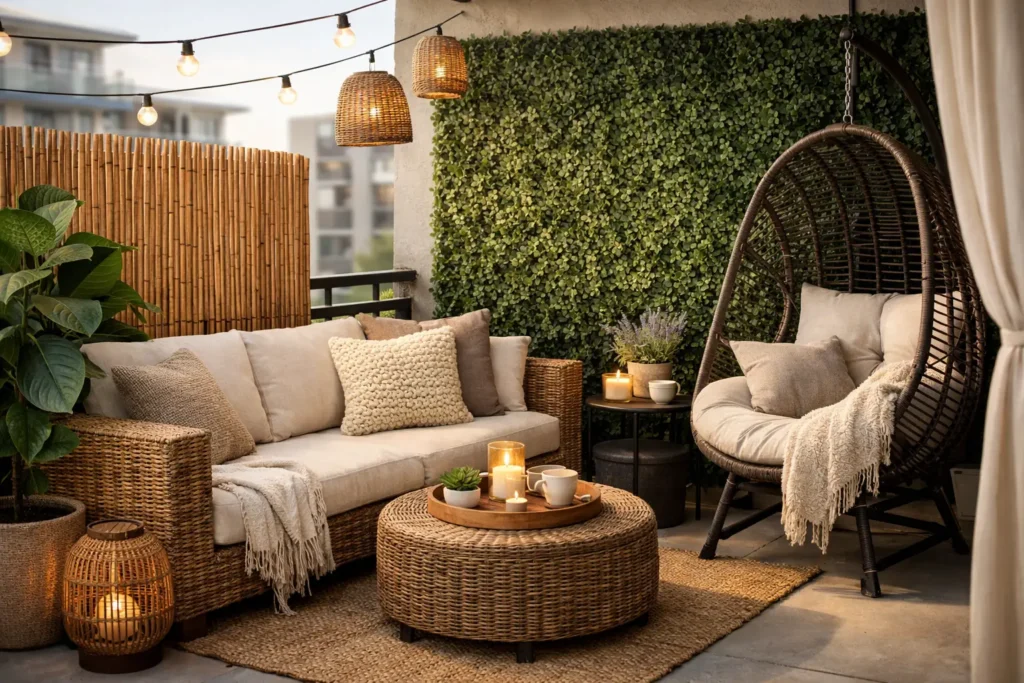
Rolled bamboo, reed, or willow fencing brings a relaxed, patio-like feel to metal railings. It is especially lovely if you lean toward warm wood tones, woven furniture, or a plant-filled balcony.
Because natural materials can weather unevenly, this option works best in covered areas or climates with milder rain exposure. Make sure the roll is attached at the top, middle, and bottom so it stays flat and does not rattle in the wind.
3. Create a Green Wall With Trellises and Vines
A freestanding trellis lets you add privacy without turning your balcony into a solid box. Place one along the side where you need coverage, then let climbing plants, faux greenery, or a mix of both soften the view.
Real climbers are beautiful, but they take patience, sunlight, and regular watering. For a faster result, weave faux ivy through a weather-safe trellis and add a few real potted plants at the base. You get the layered, leafy look without waiting for a vine to fill in.
4. Line Up Tall Planters
Tall, narrow planters can act like a living screen while still leaving room for a chair and small table. Choose slim rectangular planters for a railing edge, or use matching upright pots to create a more flexible arrangement.
Ornamental grasses, compact evergreens, bamboo varieties suited to containers, and tall flowering plants can all provide coverage. Be realistic about weight, though. Wet soil and large pots are heavy, so use lightweight planters and confirm your balcony’s load limits before creating a full row.
5. Hang Outdoor Curtains
Outdoor curtains make a balcony feel instantly softer and more room-like. They are a great choice for a covered balcony with an existing curtain rod, ceiling hook, or tension-mounted setup approved by your landlord.
Use curtains to block a side view rather than closing every edge. When pulled back, they frame the space and let in light; when closed, they create a quiet little cocoon. Look for mildew-resistant panels and use tiebacks so the fabric does not whip around on breezy days.
6. Try a Freestanding Folding Screen
A folding outdoor screen is ideal when you need privacy only sometimes. You can angle it beside a lounge chair, use it to hide a storage corner, or fold it away when guests come over.
Look for materials made for outdoor use, such as treated wood, resin wicker, metal, or weather-safe composite. This is one of the most renter-friendly balcony privacy screen ideas because it requires no installation, but it should be weighted or brought inside during strong winds.
7. Add Lattice Panels for a Classic Look
Lattice has a familiar garden feel and provides partial privacy without blocking all air movement. A wood-look vinyl lattice panel can be secured to a railing or set inside a simple freestanding frame.
Leave a little breathing room around the panel rather than covering every inch. The open pattern prevents the balcony from feeling dark, and you can dress it up with string lights, small planters, or a few climbing stems. Keep electrical cords rated for outdoor use and away from standing water.
8. Use Faux Boxwood Panels for Full Coverage
Faux boxwood panels are useful when the view is especially close and you want immediate, dense coverage. They create a clean green backdrop for a bistro set, outdoor rug, and lanterns, even if your balcony gets limited sun.
The key is choosing panels with variation in the leaves so they do not look overly plastic. Secure each panel at several points and check it seasonally. Sun and wind can make lower-quality greenery brittle over time.
9. Layer a Shade Sail on a Sunny Balcony
If privacy comes from above as much as from the side, a small shade sail can help. It adds shade from overlooking windows while making the balcony feel more intentional and comfortable in the afternoon.
This option depends heavily on installation rules and anchor points. Never attach a sail to an unstable railing, and skip it if your building does not allow overhead fixtures. A simple patio umbrella may be the safer, more flexible choice.
10. Build a Screen Around a Seating Zone
You do not need to screen the whole balcony to make it feel private. Position two narrow panels in an L-shape around the chair or dining spot you use most. Add a small outdoor rug and one or two planters, and that corner will feel defined even if the rest of the balcony stays open.
This approach is especially helpful for long, skinny balconies. It creates a destination instead of making the entire footprint feel crowded.
11. Combine a Railing Screen With String Lights
A simple privacy screen can look a little flat on its own. Warm outdoor string lights layered along the top edge can make it feel more welcoming after sunset, while a few battery-operated lanterns add glow near the floor.
Keep the lighting subtle. The goal is a cozy evening atmosphere, not a bright patio that shines into your neighbors’ windows. If your balcony has no outlet, battery-powered options can still create plenty of charm.
12. Use a Large Outdoor Umbrella as a Flexible Screen
A cantilever or tilting outdoor umbrella can block a neighboring view, harsh sun, and light rain in one move. It is a practical choice for renters who cannot attach anything permanently, provided there is enough floor space for a stable base.
Measure carefully before buying. On a compact balcony, an umbrella that is too large can make the space feel awkward and leave no room to move around. A smaller tilting model often gives you more control.
How to Choose the Right Privacy Solution
For a rental, start with removable options: fabric railing covers, folding screens, planters, and umbrellas. They give you a visible transformation without risking a security deposit. For a home you own, a sturdier trellis, lattice system, or custom screen may be worth the effort if the balcony is part of your everyday routine.
Think about light, too. A dense faux-green wall can be perfect when a neighbor is only a few feet away, but it may make a shaded balcony feel dimmer. If you love growing herbs or flowers, use an open lattice or partial screen so your plants still get the sun they need.
Finally, match the screen to the feeling you want. Bamboo and woven fabric read warm and relaxed. Black metal and clean slatted panels feel more modern. Greenery feels lush and cozy. The most stylish choice is usually the one that echoes the materials already in your outdoor furniture rather than introducing a completely different look.
A little privacy can change how often you use your balcony. Start with the view that bothers you most, add one layer of comfort, and let your small outdoor space become a quiet extension of the home you love.
Common Balcony Privacy Mistakes to Avoid
The most effective privacy screens solve a specific problem instead of covering every inch of the balcony. One mistake many people make is choosing the tallest or densest option available, only to discover that it blocks natural light and makes the space feel smaller.
Another common issue is overlooking wind exposure. Lightweight fabrics, faux greenery, and folding screens may work beautifully on a sheltered balcony but require extra care on higher floors where strong gusts are common.
Finally, avoid mixing too many materials in a small space. Combining bamboo, lattice, artificial greenery, bright fabrics, and oversized planters can quickly make a compact balcony feel cluttered. Choosing one primary privacy solution and layering in a few complementary accessories usually creates a cleaner, more relaxing result.
Final Thoughts From Experience
After looking at dozens of balcony layouts over the years, one thing stands out: the most comfortable outdoor spaces aren’t always the largest or the most expensive. They’re the ones designed around how people actually use them.
It’s tempting to focus on creating complete privacy, but that isn’t always necessary. In many cases, blocking just one uncomfortable sightline is enough to make a balcony feel noticeably more relaxing while still keeping the space bright and open.
If you’re starting from scratch, resist the urge to buy everything at once. Add one privacy solution first, spend a few days using the space, then decide what it still needs. You may find that a simple fabric screen, a couple of tall planters, or a lightweight trellis solves the problem without making the balcony feel crowded.
The best balcony privacy screen ideas are the ones that balance comfort, light, airflow, and style. When those elements work together, even a small apartment balcony can become a place you’ll naturally use every day—for morning coffee, quiet evenings, or simply enjoying a few peaceful minutes outdoors.
About the Author
Fher is an architect specializing in residential design and space optimization. With hands-on experience improving how homes function and feel, he shares practical insights to help homeowners create spaces that are both beautiful and livable.