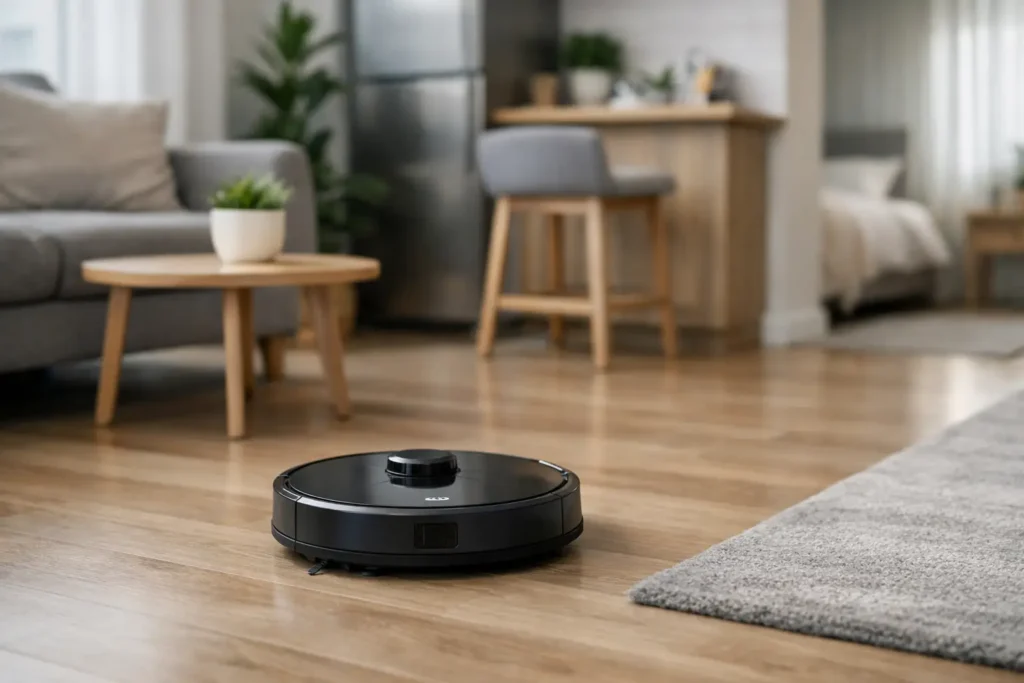

The crumb trail between the kitchen and sofa, the dust collecting under a low media console, the pet hair that somehow appears five minutes after you sweep – apartment mess has a way of showing up in the most visible places. A thoughtful robot vacuum review for apartments starts with the realities of small-space living: tight pathways, mixed flooring, close neighbors, and not much room to store another appliance.
The right robot vacuum can make your home feel consistently fresher without turning cleaning day into a whole event. But the most expensive model is not automatically the best one for a compact home. The features that matter most depend on your floor plan, your furniture, and whether your apartment needs a quick daily reset or deeper help with pets and rugs.
What Matters Most in a Robot Vacuum for an Apartment
Apartment shoppers can usually skip the oversized features designed for very large homes and focus on the details that affect everyday use. A vacuum that moves smoothly around chair legs and returns reliably to its dock will likely serve you better than one packed with settings you never touch.
Start with height. Many robot vacuums are roughly 3 to 4 inches tall, but a small difference can determine whether yours cleans beneath the bed, couch, or console table where dust likes to settle. Measure the clearance under the furniture you want it to reach before ordering. If the vacuum cannot fit, it may still be worthwhile, but you will need a backup plan for those hidden edges.
Noise also deserves more attention in apartments. Even a relatively quiet robot vacuum is noticeable in an open-plan living room, especially on hard floors. Look for adjustable suction levels or scheduled cleaning, so you can run a gentler daily cycle while working from home and save the stronger setting for when you are out.
Mapping Is Worth It in Most Small Spaces
A basic random-navigation robot vacuum can work in a studio with very little furniture. It bounces around, changes direction when it hits an obstacle, and eventually covers much of the room. The trade-off is that cleaning can take longer, miss spots, and feel a little chaotic when you are trying to relax at home.
For most apartments, smart mapping is the feature worth paying for. Models that use laser navigation, cameras, or sensors create a map of your home and clean in a more orderly pattern. Once the map is set up, you can often choose specific rooms, create no-go zones, and send the vacuum to clean only the kitchen after dinner.
That room-by-room control is especially useful when you live in a smaller home where every area does double duty. You may not want the vacuum circling around your bedroom during a video call, but you may love sending it through the entryway after a rainy day or a busy weekend.
Be realistic about obstacle avoidance
Advanced obstacle avoidance sounds like a dream if your floors are rarely perfectly clear. Some higher-end models can identify common objects such as shoes, cords, pet bowls, and charging cables. This can reduce the pre-cleaning tidy-up, but it does not eliminate it.
Small items, lightweight phone chargers, loose rug fringe, and pet accidents can still create trouble. A five-minute floor reset remains the kindest thing you can do for your robot vacuum. Think of it as keeping the path open for a tiny cleaning assistant, not as proof that the assistant is not helping.
Choose Suction Power for Your Actual Floors
Hardwood, laminate, vinyl, and tile are common in apartments, and most robot vacuums perform well on these surfaces. What separates a good choice from a frustrating one is how it handles the transitions: a low area rug in the living room, tile in the bathroom, and a narrow mat at the front door.
If your apartment has mostly hard flooring, prioritize a model with a good edge brush, adjustable suction, and a main brush designed not to scatter debris. Fine dust and hair often collect along baseboards and beneath cabinets, so edge performance matters more than dramatic suction claims.
For rugs, look for automatic carpet boost or a dedicated higher-power setting. Low-pile rugs are usually easy for robot vacuums. Thick, plush rugs can be harder to climb and may reduce cleaning performance. If your vacuum constantly bunches a lightweight rug or gets stuck on tassels, use a rug pad, tuck the fringe under, or set a no-go zone around it.
Pet households should pay attention to brush design and bin capacity. A rubber roller tends to be easier to clear than a bristle-heavy brush when long hair is involved. If your dog or cat sheds generously, a larger dustbin or self-emptying dock can make the experience much more hands-off.
Is a Self-Emptying Dock Helpful in an Apartment?
A self-emptying dock is one of those features that can feel luxurious until you realize how often it saves you from dealing with a dusty little bin. It is particularly helpful for pet hair, frequent cleaning, allergies, or homes with more than one person tracking in everyday debris.
Still, it is not an automatic yes for apartment living. Docks take up more visual and floor space than a standard charging base. They also make a louder noise for a brief period while transferring debris. In a studio or a one-bedroom where the dock sits near the sofa or bed, that sound may be more noticeable than you expect.
A standard dock is often the better fit if you have a small household, mostly hard floors, and do not mind emptying the bin every few runs. Place it against an open wall with a clear approach path, ideally near an outlet but away from the most prominent part of the room. A simple woven basket or nearby cabinet can help the area feel more intentional without blocking the vacuum’s route.
Mopping Features Have a Few Apartment-Specific Trade-Offs
A vacuum-and-mop combo can be appealing when your kitchen, bathroom, and entry all have hard floors. For light maintenance, these machines can keep dust and small footprints from building up between deeper cleans. They are best thought of as a refresh, not a replacement for occasionally mopping by hand.
The most useful combo models can recognize carpet, lift their mop pads, or avoid rugs altogether. Without that feature, you will need to remove the mop attachment before cleaning carpeted spaces or carefully create no-mop zones in the app.
Also consider where you will manage the water tank, pads, and cleaning solution. In a compact apartment, a machine that requires frequent pad washing may create more laundry and counter clutter than you want. A simple vacuum-only model can be the calmer, more practical choice if your floors do not need frequent wet cleaning.
A Quick Apartment Robot Vacuum Checklist
Before choosing a model, compare your options against the conditions in your own home:
- Measure furniture clearance and narrow spaces around dining chairs, beds, and sofas.
- Decide whether smart mapping will save you time or feel unnecessary for your layout.
- Match the vacuum to your mix of hard floors, rugs, thresholds, and pet hair.
- Consider whether a self-emptying dock has a sensible place to live.
- Check the return policy, replacement brush costs, filter availability, and app reviews.
Those last details can make a difference over time. A reasonably priced vacuum with easy-to-find filters and a dependable app may be a better value than a feature-packed model with costly maintenance or frustrating connection issues.
The Best Fit Is the One You Will Actually Run
The goal is not to have a robot vacuum that performs a dramatic deep clean once a month. It is to make the small, repetitive tasks easier, so your apartment feels more comfortable on an ordinary Wednesday night. Run it a few times a week in high-traffic areas, empty it before the bin is packed, and give its brushes a quick check now and then.
A well-chosen robot vacuum will not make a small home look less lived-in. It simply keeps everyday life from piling up on the floor, leaving more room to enjoy the cozy, personal space you have created.
Common Robot Vacuum Mistakes Apartment Owners Make
One mistake I see people make when choosing a robot vacuum is focusing almost entirely on suction power. More suction sounds better, but in an apartment, the vacuum also has to fit under furniture, navigate tight spaces, handle floor transitions, and return to its dock without constant intervention.
Another common mistake is buying the largest dock available without first deciding where it will go. A self-emptying dock can be convenient, but if it takes over a corner of your living room or blocks a walkway, the convenience starts to feel less useful. Measure the space around the dock, not just the dock itself.
It is also easy to underestimate rugs. A robot vacuum may handle a low-pile rug perfectly but struggle with thick edges, loose fibers, or tassels. If you have several rugs, check their height and construction before choosing a model. In some apartments, a simpler vacuum that handles the floors reliably is a better choice than a more advanced model that constantly gets stuck.
Finally, do not assume obstacle avoidance means you never need to tidy the floor. Cords, socks, small toys, and lightweight objects can still cause problems. A quick pickup before running the vacuum is often faster than stopping it later because something became tangled in the brush.
The best robot vacuum for an apartment is usually the one that works with your habits rather than asking you to change them completely.
Final Thoughts From Experience
After looking at robot vacuums from the perspective of everyday apartment living, I would not start with the brand name or the longest list of features. I would start with the apartment itself.
Measure the lowest furniture you want the vacuum to reach. Look at the rugs and floor transitions. Think about where the charging dock can realistically sit. Then consider how often you are willing to empty a bin, clean brushes, wash mop pads, or deal with an app.
That approach can save you from paying for features that sound impressive but do not solve an actual problem in your home.
For a mostly hard-floor apartment, I would put reliable navigation, good edge cleaning, manageable noise, and easy maintenance near the top of the list. If pets are part of the household, brush design and dustbin capacity become much more important. And if storage space is limited, I would think twice before choosing a large self-emptying or vacuum-and-mop system unless the extra convenience genuinely justifies the footprint.
One practical habit makes a bigger difference than many premium features: run the vacuum regularly instead of waiting until the apartment looks dirty. A short, scheduled cleaning can keep crumbs, dust, and pet hair from becoming a larger job later.
That is really where a robot vacuum earns its place in an apartment. It does not need to replace your regular cleaning routine. It simply takes care of the repetitive floor maintenance that is easy to put off.
If a model fits your space, works with your flooring, and is simple enough that you actually use it several times a week, that is usually a better choice than a more expensive machine that spends most of its time parked in a corner.
About the Author
Fher is an architect specializing in residential design and space optimization. With hands-on experience improving how homes function and feel, he shares practical insights to help homeowners create spaces that are both beautiful and livable.