
That empty wedge beside the sofa or strange sliver at the end of a hallway can make an otherwise lovely room feel unfinished. Learning how to decorate awkward corners is less about filling every inch and more about giving that overlooked spot a clear job. A corner can hold a quiet moment, solve a storage problem, soften a room’s hard lines, or simply make the whole space feel more considered.
The best choice depends on the corner’s size, nearby traffic, natural light, and what the room needs most. Before buying anything, stand in the space and notice how you move around it. A beautiful floor lamp is not the answer if it catches your hip every time you walk past.
Start by deciding what the corner needs to do
Awkward corners usually feel awkward because they have no purpose. Rather than shopping for a random decorative piece, choose one role for the space: seating, storage, lighting, display, or greenery. That simple decision keeps a small area from looking cluttered.
In a living room, an empty corner may need height to balance a low sofa. In a bedroom, it might be the perfect home for the chair where laundry tends to land. In a narrow entryway, function matters more than visual drama, so a slim catchall spot may be the better answer.
Also consider sightlines. A corner visible from the room’s main entrance has more impact and can handle a stronger statement. A tucked-away corner near a door or behind a chair may only need one thoughtful piece.
8 ideas for how to decorate awkward corners
1. Create a reading corner you will actually use
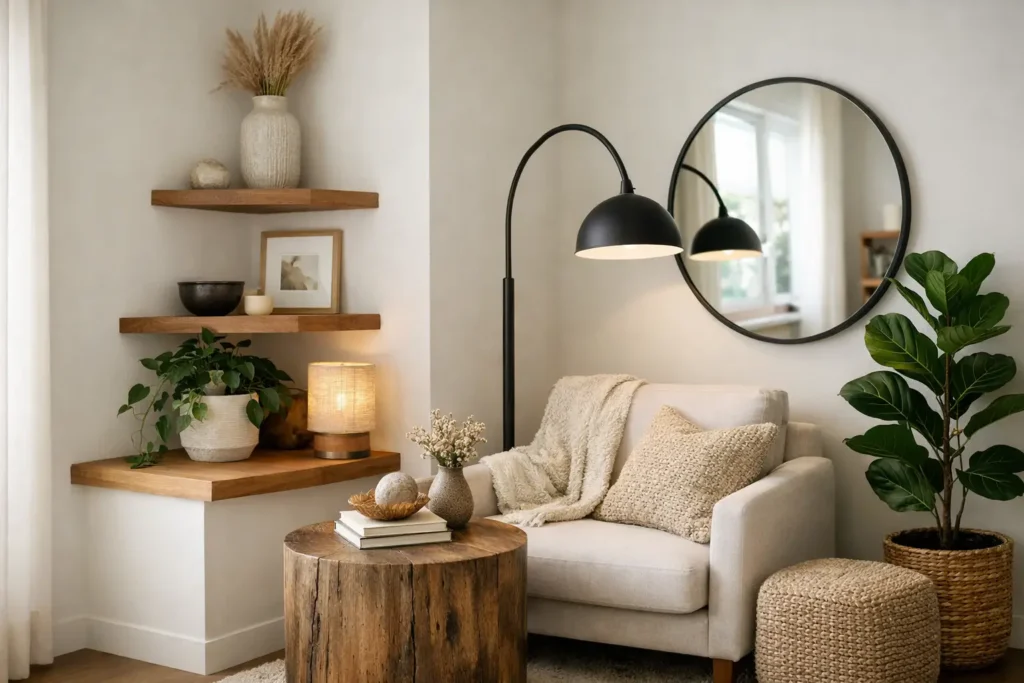
A comfortable chair, a small table, and a lamp can turn a bare corner into a personal retreat. Choose a chair with a compact footprint or open legs if the room is small. A petite drink table is often more useful than a bulky side table, especially if you only need space for a book, glasses, or a cup of tea.
Add softness with a throw and one pillow, but do not overbuild it. If the chair is squeezed into a tight corner with a large basket, oversized lamp, and several accessories, it will feel more like furniture storage than an inviting place to sit.
2. Use a tall plant to add life and height
A floor plant is one of the easiest ways to make an empty corner feel intentional, particularly in living rooms, bedrooms, and sunny kitchens. It introduces an organic shape that breaks up the boxy lines of furniture and walls.
Match the plant to the light, not just the look. A bird of paradise or fiddle-leaf fig needs bright conditions, while a snake plant or ZZ plant is more forgiving in a dimmer spot. If plant care is not part of your routine, a quality faux tree can still bring warmth without becoming another chore.
Choose a planter that relates to the room. A woven basket planter feels relaxed and cozy; ceramic or matte black adds a cleaner, more modern note. Leave a little breathing room around it so the corner still feels airy.
3. Add vertical storage where floor space is limited
When an awkward corner needs to work harder, look up. A narrow bookcase, corner shelving unit, or wall-mounted shelves can provide useful storage without taking over the room. This is especially helpful in apartments, kids’ rooms, and kitchens where every square foot counts.
Keep open shelves edited. Stack a few books horizontally and vertically, then add a framed photo, small bowl, or trailing plant. The goal is to create a collected look, not to relocate every spare item in the house.
For renters, a leaning ladder shelf can offer a similar vertical effect without a major installation. Just make sure it is stable and does not crowd a walkway.
4. Make a mini drop zone in an entry or hallway
The narrow corner near a front door often collects bags, shoes, and mail because it is asking for a system. A slim console, wall hooks, or a small bench can give those everyday items a proper landing place.
If there is not enough width for furniture, try a vertical approach: hooks above a small basket or umbrella stand. A mirror can brighten a dark entry and make a tight corner feel more open, while also giving you a practical last look before heading out.
Keep this area simple. A drop zone works best when it is easy to reset, not when it is styled so heavily that there is nowhere to put your keys.
5. Build a plant-and-art moment
Some corners do not need storage or seating. They just need personality. Pairing one large piece of art with a medium-height plant or sculptural stool creates an easy focal point without requiring a full gallery wall.
Lean oversized art against the wall for a casual, layered feel if you are renting or prefer not to hang something heavy. In homes with young children or pets, securely hanging the artwork is the safer choice. A single substantial piece often looks more polished in a corner than several small frames competing for attention.
6. Let lighting solve the problem
Corners can seem empty simply because they are dark. A floor lamp adds warmth at eye level and gives a room a softer evening glow than an overhead fixture alone. Look for a lamp with an upward-facing shade if you want to brighten the walls and ceiling, or a directional shade for a reading chair.
A lamp also works well in a corner that is too narrow for furniture. Choose a slim base and place it just off the traffic path. For a cozy layered look, use a warm bulb rather than a stark, cool-white one.
7. Try a petite desk or creative station
That unused bedroom or living room corner can become a useful work spot with a narrow desk, wall-mounted work surface, or small writing table. This is a smart option for homes where a full office is not realistic.
Keep the setup visually calm by choosing furniture that blends with the room rather than office furniture that feels disconnected. A small lamp, closed box for supplies, and comfortable chair may be all you need. If the desk faces a wall, add a favorite print or a small pinboard to make it feel less temporary.
8. Style a corner with one sculptural piece
Not every corner has to be productive. A large ceramic vase with branches, a pedestal with a meaningful object, or a small accent table can make a quiet corner feel finished. This approach is particularly effective in formal dining rooms, open living spaces, and landings where extra furniture would feel unnecessary.
Scale is what makes it work. One taller, more substantial item has presence. Several tiny accessories tend to disappear and can make the corner look accidental. If you choose branches, keep them loose and natural rather than perfectly symmetrical.
Avoid the mistakes that make corners feel more crowded
The most common mistake is treating an empty corner as an invitation to add more stuff. A corner filled with a chair, basket, plant, lamp, and stack of decor can make the entire room feel smaller. Choose a main element first, then add only what supports it.
Watch proportions, too. A tiny plant in a huge living room corner will look lost, while a deep armchair can overwhelm a compact apartment bedroom. Painter’s tape on the floor is a helpful, no-cost way to test a furniture footprint before you bring something home.
Finally, leave some corners empty on purpose. Rooms need visual pauses just as much as they need focal points. If a corner has a doorway, heating vent, outlet cluster, or busy traffic pattern, a simple wall color and clear floor may be the most attractive choice.
A well-styled corner does not need to look staged or expensive. Start with what would make your daily routine easier or your room feel a little more welcoming, then build from there. Often, the space that once bothered you becomes the detail that makes your home feel more like yours.
How to Choose the Right Corner Solution
One thing I have learned is that the best decorating solution is rarely the most creative one. It is usually the one that fits how the room is actually used.
Before adding furniture or decor, ask yourself a few simple questions:
Do people walk through this area several times a day? Does the corner receive enough natural light for plants? Is this room already visually busy? Would this space benefit more from storage than decoration? Will this piece still make sense six months from now?
If most of your answers point toward function, prioritize storage, lighting, or seating. If the room already works well but feels unfinished, a decorative solution like artwork, greenery, or a sculptural object is often enough.
Making this decision first prevents expensive decorating mistakes and creates rooms that feel balanced instead of overcrowded.
Final Thoughts
One decorating mistake I see again and again is treating every empty corner as a problem that needs to be filled. In reality, the best-designed homes are not the ones with the most furniture—they are the ones where every piece has a clear reason for being there.
When I evaluate an awkward corner, I try to think about how it could improve daily life before thinking about how it should look. Sometimes that means adding a comfortable reading chair. Other times, the smartest choice is simply placing a floor lamp that makes the room feel warmer every evening. And occasionally, leaving the corner empty is the right decision because it allows the rest of the space to breathe.
If you are unsure where to begin, start with one meaningful addition instead of several small decorative items. Live with it for a few weeks and notice how the room feels. It is much easier to build a space gradually than to undo a corner that has become crowded with pieces that never really belonged there.
The goal is not to eliminate every awkward corner. It is to make each part of your home feel intentional, comfortable, and supportive of the way you actually live.
About the Author
Fher is an architect specializing in residential design and space optimization. With hands-on experience improving how homes function and feel, he shares practical insights to help homeowners create spaces that are both beautiful and livable.