
You know the feeling – you love the warmth of farmhouse wood tones, the clean lines of modern furniture, and maybe a little vintage charm too. Then you try putting them in one room and suddenly it looks less collected and more confused. If you are wondering how to mix decor styles without making your space feel chaotic, the good news is that it is much more about balance than following strict design rules.
The most inviting homes rarely stick to one style perfectly. Real rooms tend to feel better when they reflect real life, and real life is layered. A home with some contrast feels personal. A home with too much contrast feels accidental. That middle ground is where the magic happens.
How to mix decor styles and make them feel intentional
The biggest mistake people make is combining favorite pieces without giving them a common thread. You do not need matching furniture sets or one-word labels for your home style, but you do need connection. That connection usually comes from color, shape, finish, or mood.
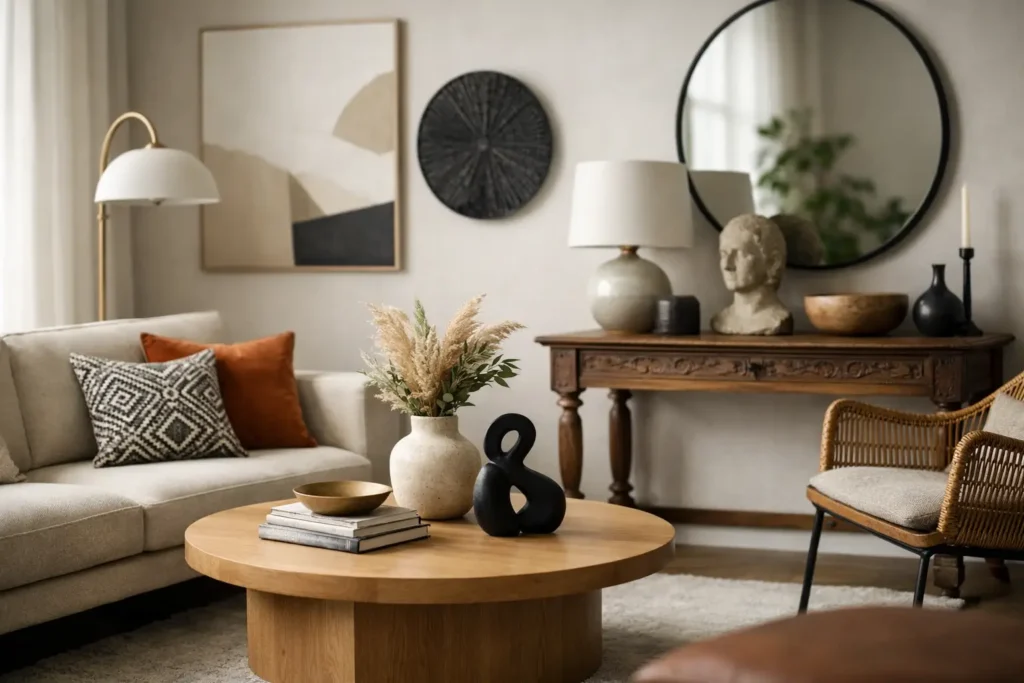
Think of your room as telling one story with a few different voices. A rustic coffee table can work with a sleek sofa if they share similar tones or if the room repeats natural textures elsewhere. A traditional lamp can sit beside a modern bed if the scale feels right and the colors relate. The room does not need everything to match. It does need everything to make sense together.
This is why mixing styles works best when you decide what should lead. Instead of treating every style equally, choose one as the main direction and let the others support it. That keeps the room grounded.
Start with one dominant style
If you try to give equal weight to modern, boho, coastal, and traditional all at once, the room can start to feel busy fast. A better approach is choosing one style to cover about 70 percent of the room, then letting another style fill the remaining 30 percent. That ratio is not a hard rule, but it is a very helpful one.
For example, if your living room furniture is mostly modern, you can warm it up with vintage accents, woven baskets, soft linen curtains, and an older wood side table. The room still reads modern first, but it has more personality. On the other hand, if your space leans traditional with classic case goods and curved silhouettes, adding a few modern light fixtures or abstract art can make it feel fresher instead of formal.
When people feel stuck, it often helps to ask a simpler question: what do you want the room to feel like first? Calm, cozy, airy, tailored, relaxed? That answer usually points you toward the style that should lead.
Use color to connect different decor styles
Color is often the easiest bridge between different looks. It can make pieces from totally different eras feel like they belong in the same room. If the shapes vary, the color palette can steady everything.
That does not mean every item needs to be beige, white, or perfectly coordinated. It means the room should have a repeatable palette. Maybe that is warm whites, camel, black, and olive. Maybe it is soft blues, weathered wood, cream, and brass. Once those colors show up in multiple places, style differences feel less jarring.
This is especially useful if you are decorating on a budget and working with what you already own. You may not be replacing a hand-me-down table or older dresser anytime soon. But paint, textiles, and accessories can help tie those pieces into the rest of the room.
If a room feels all over the place, color is usually one of the first things worth editing. Too many wood tones, too many bright accents, or a mix of warm and cool finishes with no repetition can make a space feel unsettled.
Repeat finishes and materials
Beyond color, materials create rhythm. If you mix one black metal piece, one brass piece, one chrome piece, one driftwood finish, and one glossy white item all in the same small area, the room may feel scattered. But if you repeat black in a lamp, curtain rod, and frame, it starts to feel intentional. The same goes for wood tones, woven textures, glass, and stone.
This is where many mixed-style rooms either settle beautifully or miss the mark. Repetition creates familiarity, and familiarity helps the eye relax.
Pay attention to shape, scale, and visual weight
A lot of people focus only on style labels, but shape and proportion matter just as much. A chunky farmhouse table can work with modern chairs if the scale feels balanced. A curvy vintage mirror can look amazing above a streamlined console if one does not visually overpower the other.
When mixing decor styles, ask yourself whether the room has a balance of visual weight. Heavy furniture paired with heavy drapes, dark finishes, and oversized accessories can make a room feel crowded. Very delicate pieces throughout can make it feel flat or unfinished. Most rooms need a mix, but they also need breathing room.
One easy fix is to spread statement moments around the room instead of clustering them. If you already have a dramatic carved wood bed, maybe the nightstands should be simpler. If your dining chairs have a lot of texture or shape, the table can be more understated.
Let one piece be the tension point
Every well-mixed room has a little tension. That is the part that keeps it from feeling too predictable. Maybe it is a clean-lined sofa in a traditional room or an antique cabinet in a modern kitchen. The trick is to let one or two pieces create contrast rather than making every item compete for that role.
If everything is interesting in a loud way, nothing stands out. A mixed room needs quiet pieces too.
Blend old and new for a lived-in look
One of the easiest ways to learn how to mix decor styles is to start by blending old and new. This tends to feel natural because it mirrors how people actually live. Few homes are furnished all at once, and that layered feeling often looks better than a showroom-perfect setup.
A new sofa can sit comfortably beside a vintage trunk. A sleek kitchen can feel warmer with old cutting boards, classic stools, or a timeworn runner. Fresh bedding can work with an inherited dresser if the styling around it brings everything into the same mood.
The trade-off is that older pieces often have more ornament, color variation, or visual weight. Newer pieces usually feel cleaner and simpler. If your room starts leaning too fussy, add restraint with cleaner lines. If it starts feeling cold, bring in age, patina, or softness.
This is also a smart way to decorate without overspending. Mixing styles often means mixing price points too, and that can make a home feel richer, not cheaper, when it is done thoughtfully.
Edit the accessories before you blame the furniture
Sometimes the furniture is not the problem. The accessories are. Too many small decorative objects in different finishes and themes can make a room feel disconnected, even if the larger pieces actually work well together.
If your space feels messy, remove half the styling and look again. Keep the items that repeat your palette, support the room’s mood, or add meaningful texture. A stack of books, a ceramic vase, and one framed piece of art often do more than a shelf crowded with trendy extras.
This matters even more in small spaces. In apartments, starter homes, and multipurpose rooms, visual clutter builds quickly. A clean edit helps your mix of styles feel curated rather than cramped.
Know when to stop adding
There is a point where more personality stops helping. If you have already brought in different materials, layered textiles, mixed silhouettes, and added meaningful accents, the room may simply need time. Living with it for a week often tells you more than another shopping trip will.
Homes that feel stylish usually are not packed with ideas in every corner. They feel considered. That comes from confidence, not volume.
A simple formula for mixing decor styles at home
If you want a practical way to approach your next room, keep this formula in mind. Choose one dominant style, one supporting style, and one unifying color palette. Then repeat two or three materials throughout the room and make sure at least one piece adds contrast.
For example, you might build a cozy modern bedroom with a simple upholstered bed, then layer in traditional nightstands, soft linen bedding, warm wood tones, and vintage-inspired lighting. Or you might create a classic living room with tailored seating, then add modern art and a sculptural coffee table to lighten the look.
That kind of structure gives you freedom without turning the room into a guessing game.
At Everyday Home Style, we believe the best spaces are the ones that feel like you actually live there. Not perfectly themed. Not copied from one catalog. Just warm, functional, and full of pieces that make sense together. If your room feels a little mixed, that is not a flaw. It may be the start of a home with real character – and that is usually the part people remember most.
Common Mistakes When Mixing Decor Styles
After a room starts coming together, most problems do not come from the furniture itself. They come from trying to force too many ideas into the same space.
One of the most common mistakes is treating every style equally. A room rarely needs modern, farmhouse, coastal, boho, and traditional pieces all competing for attention. Giving one style the lead and letting the others play supporting roles almost always creates a calmer result.
Another mistake is changing too many finishes at once. Three wood tones can feel layered and intentional. Six different wood tones, mixed metals, and several unrelated colors often make a room feel restless. Repetition matters more than perfection.
People also tend to buy accessories too quickly. It is easy to assume something is missing when a room feels unfinished, but sometimes what it actually needs is time. Living in the space for a few weeks usually reveals what is truly lacking and what was simply unfamiliar.
Perhaps the biggest mistake is believing that every room needs to fit neatly into one decorating category. Some of the most memorable homes combine influences naturally because they reflect the people living there rather than a single design trend.
Final Thoughts From Experience
One thing I have noticed after studying hundreds of beautifully designed homes is that the rooms people remember most are rarely the ones that follow one style perfectly. They are the ones that feel comfortable, layered, and lived in.
A space does not need to prove that it is modern, farmhouse, traditional, or coastal. It simply needs to feel cohesive and support the way you actually live. In fact, many rooms start to look more expensive and more personal once you stop trying to make everything match.
When a room feels off, I have found that the answer is usually not buying more things. It is editing, repeating colors and materials, and giving the space time to evolve. The homes that feel effortless almost never come together in a weekend. They are built gradually, piece by piece.
At Everyday Home Style, we believe decorating should feel less like following rules and more like creating a home that reflects your life. If you love a mix of old and new, clean lines and warm textures, or classic pieces with modern touches, you do not need permission to combine them. You simply need enough consistency to make the room feel intentional.
And if you are still unsure whether two styles can work together, remember this: people rarely walk into a room and admire how closely it follows a label. They remember how the room made them feel.
About the Author
Fher is an architect specializing in residential design and space optimization. With hands-on experience improving how homes function and feel, he shares practical insights to help homeowners create spaces that are both beautiful and livable.