
A full-size island can be lovely, but in a narrow galley kitchen or a busy apartment layout, it can quickly become the thing you have to squeeze around. The best small kitchen island alternatives give you the extra surface, storage, or gathering spot you want while keeping the room easy to use. The right choice depends on what your kitchen is missing most – and how much floor space you can truly spare.
Start with the space you need to protect
Before bringing in any new piece, measure the walkways in your kitchen. Aim for about 36 inches of clear space around a work area, and closer to 42 inches where someone will regularly pass behind a cook. If that is not possible, a fixed island may make the room feel more frustrating instead of more functional.
Also think beyond the idea of an island. Do you need a place to chop vegetables, a home for small appliances, a casual breakfast perch, or simply somewhere to put groceries when you walk in the door? A smaller, more targeted solution often looks intentional and works harder for your everyday routine.
9 best small kitchen island alternatives
1. A slim rolling cart
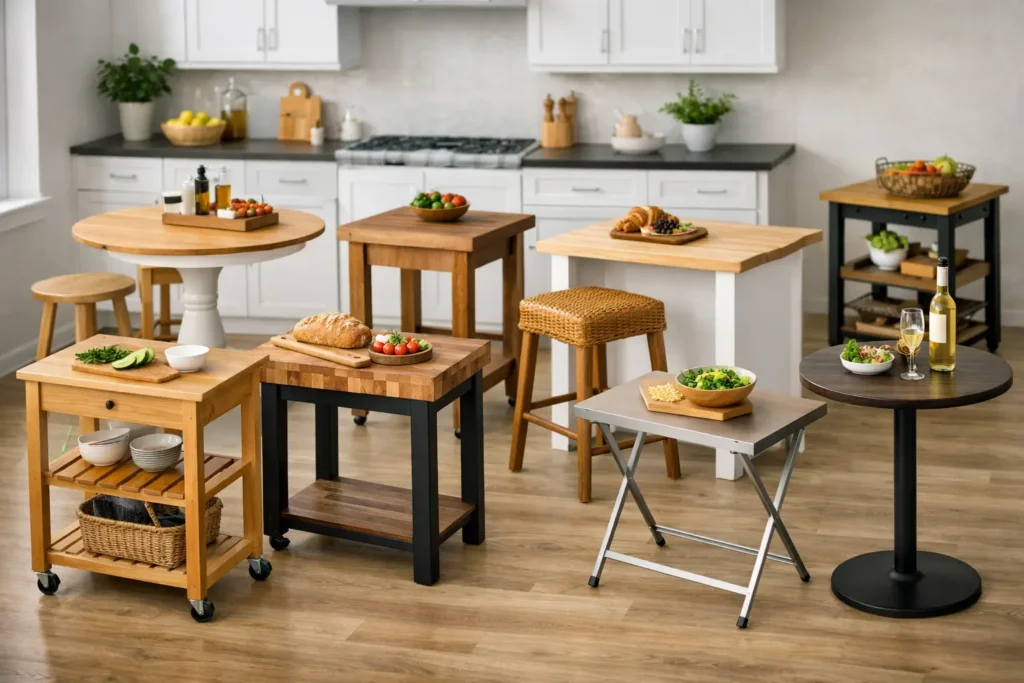
A rolling cart is one of the most flexible options for a small kitchen. It can serve as a prep station while you cook, then tuck beside a wall, into a pantry, or even into an adjacent dining area when you need open floor space. Look for locking wheels, a solid top, and at least one shelf or drawer so it earns its footprint.
Wood-topped carts bring warmth to white or gray kitchens, while a simple metal version can feel clean and airy in a rental. Keep the top mostly clear when it is parked. A small tray with a fruit bowl or a crock of wooden utensils is plenty to make it feel styled rather than overfilled.
2. A narrow console table
A console table is especially useful in kitchens with one long empty wall. Choose one around 12 to 18 inches deep so it adds a landing zone without jutting into the room. It will not replace a deep work surface, but it is ideal for coffee supplies, a microwave, cookbooks, or serving dishes during family dinners.
Open-leg designs keep a compact kitchen visually lighter. Add two baskets underneath for linens, snacks, or reusable bags, and you have storage that feels more like furniture than a kitchen utility station. This is a smart choice if your kitchen opens into a living or dining space and you want the room to feel cohesive.
3. A drop-leaf table
When you want a small island and a dining table in one piece, a drop-leaf table is hard to beat. Leave one leaf up for weekday meal prep or a quick breakfast, then raise both sides when friends visit. With the leaves down, it can sit neatly against a wall.
Choose a sturdy table with a wipeable finish, especially if it will handle chopping boards, schoolwork, and everyday meals. Pair it with stools that slide fully underneath or folding chairs you can hang nearby. It is an easy way to make a small kitchen feel more welcoming without committing to permanent cabinetry.
4. A butcher block on legs
A compact butcher block offers the useful part of an island: a durable surface made for food prep. Many styles are just 24 to 30 inches wide, which is enough for rolling dough, sorting ingredients, or setting out lunch plates without overwhelming the room.
The trade-off is that it offers less concealed storage than a cabinet-style island. Make up for that with a lower shelf and a couple of matching bins, or choose a model with a shallow drawer for knives and towels. Oil a natural wood top as directed to help it stay beautiful through everyday use.
5. A bar-height table or pub table
A small bar-height table can create the social feeling of an island in a kitchen that has no room for one. It gives you a spot to sip coffee, help with homework, or keep a cook company without putting chairs directly in the main work zone. Round tables are particularly forgiving in tight layouts because there are no corners to navigate.
This option works best when prep space is not your biggest concern. If you are short on storage and counter room, a cart or butcher block will be more useful. But if your kitchen needs a little life and a better connection to the people in it, a pub table can be the charming answer.
6. A storage bench with a movable tray
For an eat-in kitchen, a storage bench can do double duty. Place it along a wall or beneath a window to add seating and hide table linens, pet supplies, or rarely used serving pieces. Add a sturdy removable tray on top when you need a temporary spot for drinks or ingredients.
This is not the best choice for serious food prep, but it is wonderful for softening a kitchen that feels all hard surfaces and cabinets. A washable cushion and a pair of pillows can turn an overlooked corner into a cozy morning spot while keeping practical storage close at hand.
7. A freestanding pantry cabinet
Sometimes an island sounds appealing because the kitchen is simply running out of places to put things. In that case, a shallow freestanding pantry cabinet may solve the real problem better. It can hold dry goods, small appliances, or extra dishes while freeing your existing counters from clutter.
Choose a cabinet that is no deeper than necessary, especially near a doorway. Glass-front upper doors can keep a taller piece from feeling too heavy, while closed lower storage hides the less-pretty essentials. For renters, a freestanding pantry creates a built-in look without changing the kitchen itself.
8. A folding worktable
A folding worktable is a quiet hero for very small kitchens. Set it up when you are batch cooking, baking, or hosting, then fold it down and store it in a closet, behind a door, or against the wall. Some designs have a slim shelf beneath the top, giving you a little extra usefulness while it is open.
The key is choosing a table that feels stable, not flimsy. Check the weight capacity and make sure its height is comfortable for chopping. This is a practical fit for apartment dwellers who need their kitchen to change with the day, rather than stay arranged for one purpose all the time.
9. A wall-mounted folding table
A wall-mounted folding table gives you surface area with almost no permanent visual bulk. When folded up, it can be a compact ledge for a vase or a framed print. When lowered, it becomes a breakfast table, baking station, or laptop spot.
Because installation requires securely anchoring it to wall studs or appropriate hardware, this may not suit every rental. It is also better for lighter tasks than heavy-duty prep. Still, for a tiny kitchen where every inch matters, the payoff can be surprisingly big.
How to make an alternative feel intentional
The difference between a helpful extra piece and a kitchen that feels crowded is usually styling and scale. Choose a finish that relates to something already in the room: repeat the cabinet hardware color, pick wood that echoes your dining chairs, or bring in a painted piece that complements the backsplash. One connecting detail makes a freestanding item feel like it belongs.
Resist the urge to use every shelf as open storage. Leave a little breathing room, and use matching baskets or bins for the practical items that tend to look messy. If your alternative has wheels, move it where it helps most: beside the refrigerator for unloading groceries, near the stove for prep, or along a wall when guests arrive.
The best choice for your kitchen layout
For a one-wall or galley kitchen, slim carts, console tables, and wall-mounted tables protect the walkway best. In a small square kitchen, a round pub table or compact butcher block can create a useful center without sharp corners. If your main issue is cabinet overflow, choose a pantry cabinet or storage bench instead of forcing in another countertop.
Your kitchen does not need a traditional island to feel functional, pulled together, and ready for real life. Pick the piece that solves one daily annoyance beautifully, then let it make room for the meals, conversations, and small rituals that help your home feel like yours.
Final Thoughts From Experience
A small kitchen does not become more functional simply because you add another piece of furniture. In fact, one of the most common mistakes with a small kitchen is trying to recreate a full-size island without having the space to support it.
The better approach is to start with the task you are trying to solve. If you regularly run out of prep space, a slim rolling cart or compact butcher block will probably give you more value than a storage cabinet. If clutter is the real problem, adding another work surface may only give you another place to pile things. A freestanding pantry can make a much bigger difference.
I also think flexibility matters more than people sometimes expect. In a tight kitchen, being able to move a cart out of the way when you are cooking, cleaning, or having guests can be more useful than having a beautiful piece that stays in the middle of the room all the time.
Before buying anything, measure the floor space with the appliance doors, cabinet drawers, and major walking paths fully open. A piece that looks small in a product photo can feel surprisingly large once you are standing between it and the counter with a refrigerator door open behind you.
And don’t feel pressured to make your kitchen look like a larger kitchen. The best small kitchen island alternative is the one that makes your particular space easier to use. Sometimes that means a rolling cart. Sometimes it means a folding table that disappears when you don’t need it. And sometimes the smartest choice is not adding another piece at all.
In a small kitchen, every inch has a job. The goal is not to fill the room. It is to make the space work better for the way you actually live in it.
About the Author
Fher is an architect specializing in residential design and space optimization. With hands-on experience improving how homes function and feel, he shares practical insights to help homeowners create spaces that are both beautiful and livable.