
Living with pets changes the way you experience your home—sometimes in the best ways, sometimes in the messiest ones.
If you have a dog that runs through the house after a walk or a cat that treats your sofa like a personal playground, you already know: designing a home that works for both humans and pets is not optional—it’s essential.
The good news? You don’t have to choose between a stylish home and a pet-friendly one.
After years of trial, error, and a lot of cleaning, I’ve realized that the best spaces are those designed intentionally. Small decisions—like choosing the right fabric or creating a dedicated pet corner—can completely change how your home feels and functions.
In this guide, you’ll discover practical, realistic, and aesthetically pleasing pet-friendly home ideas that actually work in real life.
Why a Pet-Friendly Home Matters More Than You Think
A pet-friendly home is not just about convenience—it directly impacts your pet’s well-being.
Pets interact with your home differently than you do. They run, scratch, chew, observe, and rest in ways that require thoughtful design. For example, access to natural light and window views can improve their mood and reduce anxiety.
At the same time, your home should still feel like your space—not a compromise.
The goal is balance:
- Comfort for your pets
- Practicality for daily life
- Aesthetic consistency
When done right, your home becomes a place where both you and your pets thrive.
1. Choose Durable and Pet-Friendly Materials
Let’s start with the foundation: materials.
This is one of the most important decisions you’ll make because it affects everything—cleaning, durability, and long-term maintenance.
What actually works:
- Flooring: Vinyl, tile, and laminate are durable and easy to clean
- Fabrics: Microfiber, leather, or tightly woven textiles
- Rugs: Washable or low-pile options
Durable, scratch-resistant materials help prevent damage from claws and daily wear while keeping your home looking polished.
What to avoid:
- Delicate fabrics like silk or linen
- High-pile carpets (they trap hair and odors)
- Soft woods that scratch easily
Real-life tip: If you’re unsure, always prioritize “easy to clean” over “looks good in photos.” You’ll thank yourself later.
2. Create a Dedicated Space for Your Pet
One of the simplest ways to reduce chaos at home is to give your pet their own space.
This doesn’t mean building something complicated—it can be as simple as a well-designed corner.
Ideas that actually work:
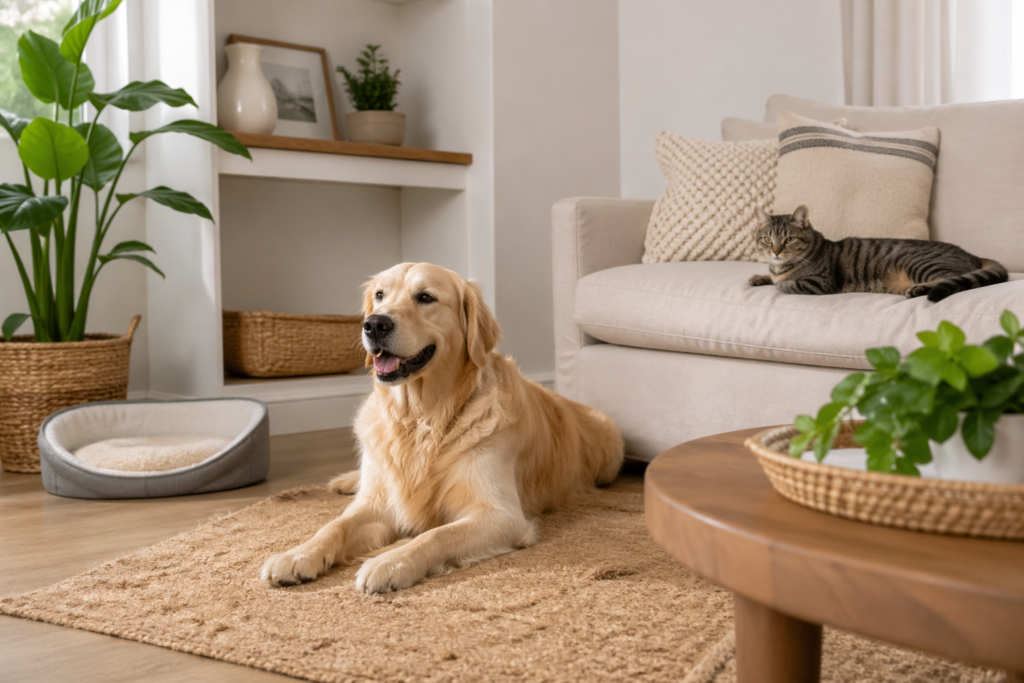
- A cozy bed in a quiet area
- A feeding station in a consistent spot
- A small basket for toys
Designating a specific area for rest, food, and play helps pets feel secure and reduces stress in the home.
It also keeps your space more organized—which, if you have pets, is half the battle.
3. Design for Movement and Freedom
Pets need space. And not just physical space—but safe, intentional movement.
Smart layout ideas:
- Open areas for dogs to move freely
- Clear pathways (no fragile decor in high-traffic zones)
- Vertical space for cats (shelves or perches)
Cats, in particular, benefit from vertical exploration like wall shelves or window perches, while dogs need room to move comfortably.
If your home feels cramped to you, it feels even more restrictive to your pet.
Pro tip: Try observing your pet for a day. Their movement patterns will tell you exactly what needs to change.
4. Make Cleaning Effortless (Not a Constant Battle)
Let’s be honest—no matter how well-trained your pet is, mess is part of the deal.
That’s why a truly pet-friendly home is designed for easy cleaning.
Practical solutions:
- Washable covers for sofas and cushions
- Storage for toys and pet supplies
- A vacuum-friendly layout
Removable and washable fabrics are essential for maintaining a clean home without constant stress.
Bonus idea:
If you have the space, a small cleaning station (even in a laundry area) can make a huge difference after walks or muddy days.
5. Focus on Comfort and Emotional Well-Being
This is the part most people overlook.
A pet-friendly home isn’t just functional—it should also support your pet’s emotional health.
Small changes that matter:
- Access to natural light
- Calm, neutral color palettes
- Cozy resting areas
Overstimulating environments (too many bright colors or visual clutter) can increase stress in pets, especially dogs.
Creating a calm, predictable environment helps reduce anxiety and encourages better behavior.
How to Balance Pet Needs with Home Design
One of the biggest misconceptions about pet-friendly decorating is thinking that every pet item has to be visible.
In reality, the most successful pet-friendly homes integrate pet needs into the overall design rather than treating them as separate elements. Storage baskets can hold toys while complementing your decor. Built-in feeding stations can blend into kitchen cabinetry. Pet beds can coordinate with your home’s color palette instead of standing out.
Whenever possible, choose pet products that match your existing design style. A modern home can incorporate sleek pet furniture, while a cozy farmhouse space may benefit from woven baskets and natural materials.
The goal is not to hide the fact that you have pets. It’s to create a home where pet-friendly features feel intentional rather than temporary.
Bonus Ideas to Elevate Your Pet-Friendly Home
If you want to go a step further, here are a few upgrades that combine design and functionality:
Built-in solutions
- Hidden litter boxes
- Integrated pet beds in furniture
- Storage cabinets for pet supplies
Stylish + functional features
- Dog washing stations
- Bench seating near windows
- Decorative baskets for toys
More homeowners are integrating pet-focused features into their interiors, treating pets as part of the family—not an afterthought.
Common Pet-Friendly Home Design Mistakes to Avoid
Even well-designed homes can fail pets if these mistakes are present:
- Choosing furniture before considering pet behavior.
- Buying light fabrics that stain easily.
- Ignoring storage for pet supplies.
- Using fragile decor in high-traffic pet areas.
- Prioritizing appearance over durability
Design isn’t just visual—it’s functional. And with pets, function always comes first.
Budget-Friendly Pet-Friendly Home Ideas
You don’t need a full renovation to improve your space.
Simple, affordable changes:
- Add washable rugs
- Use throws to protect furniture
- Create a DIY pet corner
- Rearrange furniture for better flow
Even small adjustments can dramatically improve both your home and your pet’s daily experience.
Final Thoughts From Experience
Living with pets has taught me that a successful home is not one that stays perfectly clean all the time. It’s one that works well for the people and animals who live there.
Over the years, I’ve found that the most practical pet-friendly upgrades are often the simplest ones. Choosing durable materials, creating dedicated pet zones, and making cleaning easier can have a much bigger impact than expensive renovations or trendy products.
I also believe that pet-friendly design should never feel like a compromise. With thoughtful planning, it’s entirely possible to create a home that feels stylish, welcoming, and functional while still meeting your pet’s needs. In fact, many of the design choices that improve life for pets—better organization, durable materials, and comfortable spaces—also make everyday life easier for homeowners.
If you’re not sure where to start, focus on one area at a time. Observe how your pet uses the space, identify the biggest source of frustration, and solve that problem first. Small improvements often lead to the biggest long-term results.
At the end of the day, the best pet-friendly home isn’t the one that looks perfect in photos. It’s the one where both you and your pets feel comfortable, safe, and truly at home.
And at the end of the day, that’s what really matters.
FAQ: Pet-Friendly Home Ideas
Frequently Asked Questions
What is a pet-friendly home?
A home designed to accommodate pets safely and comfortably while maintaining functionality and style.
What flooring is best for pets?
Vinyl, tile, and laminate are the most practical options due to durability and easy cleaning.
How do I keep my home clean with pets?
Use washable materials, maintain a cleaning routine, and design spaces that minimize mess.
Can a home be stylish and pet-friendly?
Yes—by choosing durable materials, smart layouts, and intentional decor.
Frequently Asked Questions
What are the most pet-friendly materials for furniture?
Microfiber, leather, performance fabrics, and tightly woven textiles are among the most durable options for homes with pets. They resist hair buildup, are easier to clean, and generally hold up better to daily wear.
How can I protect my furniture from pets?
Using washable throws, furniture covers, designated pet beds, and regular grooming can significantly reduce damage and help keep furniture looking newer for longer.
What colors work best in a pet-friendly home?
Medium-tone colors often work best because they hide pet hair, dirt, and minor stains more effectively than very light or very dark surfaces. Matching furniture colors to your pet’s fur can also reduce the appearance of shedding.
How do I make a small home more pet-friendly?
Focus on efficient storage, multifunctional furniture, and clear pathways. Vertical solutions such as wall-mounted shelves and cat perches can help maximize space without creating clutter.
Are indoor plants safe in a pet-friendly home?
Some plants are pet-safe, while others can be toxic to dogs and cats. Always research plants before bringing them into your home and choose pet-friendly varieties whenever possible.
Is a pet-friendly home more expensive to create?
Not necessarily. Many effective pet-friendly upgrades, such as washable rugs, storage baskets, and furniture rearrangement, are affordable and can significantly improve your home’s functionality.
About the Author
Fher is an architect specializing in residential design and space optimization. With hands-on experience improving how homes function and feel, he shares practical insights to help homeowners create spaces that are both beautiful and livable.