
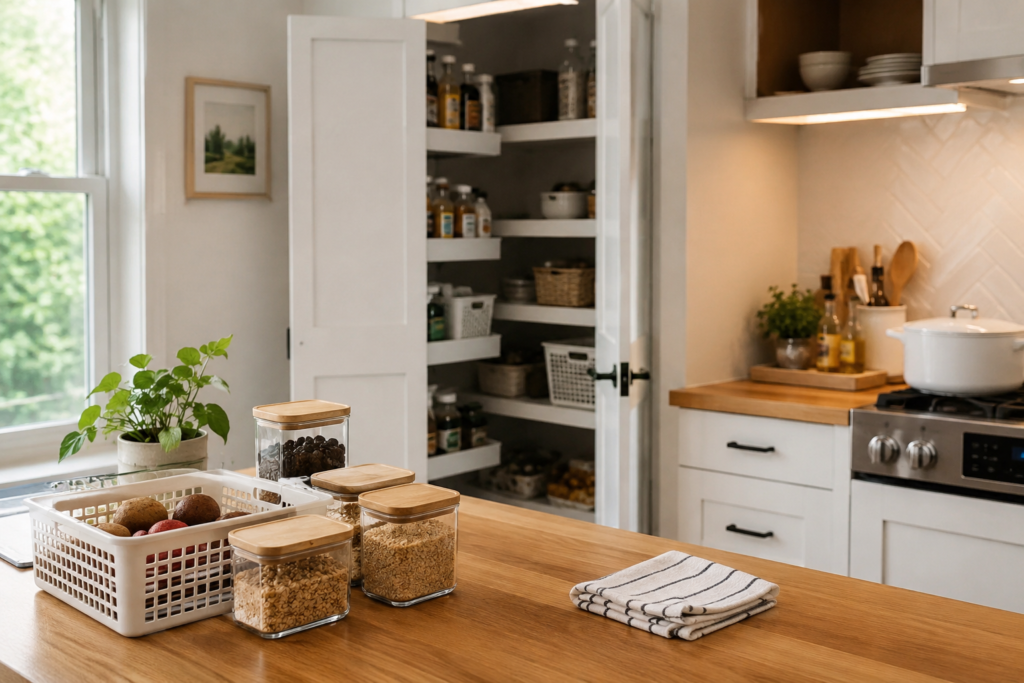

A well-organized kitchen is not just about aesthetics. It directly affects how efficiently you cook, clean, shop, and even how much stress you feel daily. Yet one of the biggest mistakes I often see homeowners make is assuming kitchen organization starts with buying containers, labels, or storage gadgets. In reality, organization starts with understanding how the kitchen functions.
From a design perspective, the most successful kitchens are not necessarily the largest or the most expensive. They are the ones that support real-life routines. A beautifully designed kitchen can still feel chaotic if the layout and storage do not align with how the household actually lives.
In my experience working with residential spaces, homeowners usually struggle with kitchen organization for one simple reason: they try to organize objects before defining systems. That approach almost always leads to clutter returning within weeks.
If you are wondering, “Where Do I Start When Organizing My Kitchen?”, the answer is simpler — and more strategic — than most people think. The goal is not perfection. The goal is functionality, sustainability, and ease of use.
Start by Understanding How Your Kitchen Actually Works
Before removing a single item from a drawer, take time to observe how your kitchen operates day to day.
Ask yourself:
- Where do you naturally prepare food?
- Which cabinets do you open most frequently?
- What items constantly end up on the counter?
- Which areas feel frustrating or inefficient?
One mistake I often see is homeowners organizing based on Pinterest inspiration instead of their own habits. A kitchen used by a family of five should not be organized the same way as a kitchen used by someone who rarely cooks.
From an architectural standpoint, kitchens work best when they follow activity zones. These zones typically include:
- Food preparation
- Cooking
- Cleaning
- Storage
- Serving
- Beverage or coffee station
Instead of organizing by category alone, organize according to use frequency and proximity.
For example:
- Pots and pans should live near the stove
- Knives and prep tools should stay near prep surfaces
- Everyday dishes should be close to the dishwasher or sink
- Coffee supplies should stay together in one dedicated area
This sounds obvious, but many kitchens fail because storage locations ignore workflow.
Declutter Before You Organize
This is the stage most people try to skip.
You cannot organize excess effectively. You can only hide it temporarily.
Take everything out section by section rather than emptying the entire kitchen at once. Working in smaller zones prevents overwhelm and helps you make more intentional decisions.
As you declutter, create four categories:
- Keep
- Donate
- Relocate
- Discard
In my experience, homeowners usually keep far more duplicates than they realize. Multiple spatulas, expired spices, chipped mugs, unused gadgets, and mismatched containers quietly consume valuable space.
A practical rule I often recommend:
If an item has not been used in the last year and does not serve a clear seasonal or sentimental purpose, it is probably taking up functional real estate unnecessarily.
Professional kitchens operate efficiently because every tool has a purpose. Residential kitchens benefit from the same mindset.
Prioritize Function Over Visual Perfection
Social media has created unrealistic expectations around kitchen organization. Perfectly labeled jars and uniform containers may look appealing, but they are not always practical.
From a design perspective, functionality should always lead aesthetics — not the other way around.
For example:
- Clear bins can improve visibility in deep cabinets
- Drawer dividers reduce visual clutter and wasted space
- Vertical organizers help maximize baking sheet storage
- Turntables work well in corner cabinets or pantry shelves
However, overcomplicated systems often fail because they require too much maintenance.
One mistake I often see is homeowners decanting every pantry item into decorative containers. While this can work for some households, it also creates extra steps and maintenance. If a system feels exhausting to maintain, it usually will not last.
A sustainable organization system should feel intuitive.
Organize Based on Frequency of Use
Not everything deserves prime kitchen space.
This is one of the most important professional principles in kitchen planning.
Your most frequently used items should be the easiest to access. Seasonal or occasional items should move to higher shelves or secondary storage areas.
Here is a practical hierarchy I use frequently:
Prime Zone
Easy-to-reach areas between waist and eye level.
Best for:
- Everyday dishes
- Frequently used cookware
- Cooking oils and spices
- Daily appliances
Secondary Zone
Upper cabinets and lower deep storage.
Best for:
- Mixing bowls
- Specialty cookware
- Bulk ingredients
- Extra serving ware
Long-Term Storage Zone
High shelves, garage storage, or less accessible areas.
Best for:
- Holiday dishes
- Rarely used appliances
- Seasonal entertaining items
When kitchens feel cluttered, it is often because rarely used items occupy premium locations.
Create Dedicated Kitchen Zones
One of the most effective organizational strategies is zoning.
Rather than scattering similar items throughout the kitchen, consolidate them into functional stations.
Coffee or Beverage Station
Keep:
- Mugs
- Coffee beans
- Filters
- Sweeteners
- Tea supplies
Together in one location.
This reduces unnecessary movement and keeps countertops calmer.
Baking Zone
Store:
- Measuring cups
- Mixing bowls
- Baking sheets
- Flour and sugar
- Baking tools
Near each other.
Meal Prep Zone
This area should include:
- Cutting boards
- Knives
- Prep bowls
- Trash access
- Frequently used utensils
In my experience, zoning dramatically improves kitchen efficiency because it reduces visual and physical friction.
Use Vertical Space Strategically
Many homeowners underestimate how much storage potential exists vertically.
From a design perspective, vertical organization is especially important in smaller kitchens where square footage is limited.
Effective vertical solutions include:
- Shelf risers
- Cabinet door organizers
- Magnetic knife strips
- Wall-mounted rails
- Stackable bins
- Hanging hooks
However, there is an important balance.
One mistake I often see is overloading walls with visible storage. While open storage can increase accessibility, too much visual exposure can make kitchens feel cluttered and chaotic.
Good organization should reduce visual noise, not amplify it.
The Pantry Should Support Visibility
Pantries fail when items disappear visually.
If you cannot see what you own, you tend to overbuy, waste food, and create clutter.
The best pantry systems prioritize:
- Visibility
- Accessibility
- Categorization
Group items by use:
- Snacks
- Breakfast foods
- Canned goods
- Cooking staples
- Baking ingredients
In my experience, shallow storage works better than deep storage whenever possible. Deep shelves often become “black holes” where products expire unnoticed.
Labeling can help, but labeling alone will not solve a dysfunctional layout.
Common Mistakes When Organizing a Kitchen
1. Buying Organizers Before Decluttering
Why it happens:
People assume storage products will solve clutter problems.
Why it fails:
You end up organizing unnecessary items rather than reducing them.
How to fix it:
Declutter first. Measure second. Buy organizers last.
2. Creating Systems That Are Too Complicated
Why it happens:
People try to replicate highly curated social media kitchens.
Why it fails:
Complex systems require too much effort to maintain consistently.
How to fix it:
Simplify. The best systems are intuitive enough for every household member to follow easily.
3. Ignoring Workflow
Why it happens:
Organization is approached visually instead of functionally.
Why it fails:
Daily tasks become inefficient and frustrating.
How to fix it:
Organize according to movement patterns and kitchen activities.
4. Overusing Open Storage
Why it happens:
Open shelving looks attractive online.
Why it fails:
It requires constant maintenance and visual discipline.
How to fix it:
Use open storage selectively for attractive, frequently used items only.
When Kitchen Organization Works — And When It Doesn’t
When It Works
Kitchen organization works best when:
- Systems match real habits
- Storage reflects daily use
- Maintenance feels manageable
- Everyone in the household understands the system
A successful kitchen does not require perfection. It requires consistency.
When It Doesn’t
Even expensive organizational systems fail when:
- The kitchen contains too much inventory
- Storage locations fight natural routines
- Aesthetic goals overpower practicality
- Homeowners copy systems that do not fit their lifestyle
From a professional standpoint, organization is deeply personal. There is no universal perfect kitchen layout.
The best organized kitchens are the ones designed around real behavior, not aspirational behavior.
Practical Tips for Organizing Your Kitchen Efficiently
Empty One Area at a Time
Avoid pulling everything out at once. Complete one cabinet or drawer before moving on.
Keep Countertops Selective
Countertops should support function, not become storage overflow.
Only keep daily-use items visible.
Use Clear Containers Sparingly
Use them where visibility genuinely improves usability, such as dry pantry goods.
Reevaluate Every Few Months
Kitchens evolve over time. Seasonal habits, appliances, and routines change.
A system that worked two years ago may no longer support your current lifestyle.
Store Heavy Items Lower
This is both safer and more ergonomic.
Heavy cookware stored overhead increases strain and accident risk.
Avoid “Just in Case” Storage
One mistake I often see is dedicating valuable space to items used once every few years.
Prime kitchen space should support daily life.
Final Thoughts From Experience
If you are asking yourself, “Where Do I Start When Organizing My Kitchen?”, start with observation — not products.
In my experience, the most effective kitchens are not necessarily minimalist or magazine-perfect. They are thoughtful. They reduce friction. They support routines naturally. And they make daily life easier without requiring constant maintenance.
From a design perspective, organization should never feel performative. It should quietly improve how a home functions.
A kitchen is one of the hardest-working spaces in any house. When organized intentionally, it becomes more than a storage area for cookware and groceries. It becomes a space that supports calm, efficiency, and better everyday living.
The real goal is not creating a kitchen that looks organized for one afternoon. The goal is creating a kitchen that continues to work well six months later.
About the Author
Fher is an architect specializing in residential design and space optimization. With hands-on experience improving how homes function and feel, he shares practical insights to help homeowners create spaces that are both beautiful and livable.



Pingback: How to Style Open Shelves Without Clutter - everydayhomestyle.io
Pingback: 9 Best Small Kitchen Island Alternatives - everydayhomestyle.io
Pingback: The Best Storage Ideas for Studio Apartments That Actually Save Space - everydayhomestyle.io