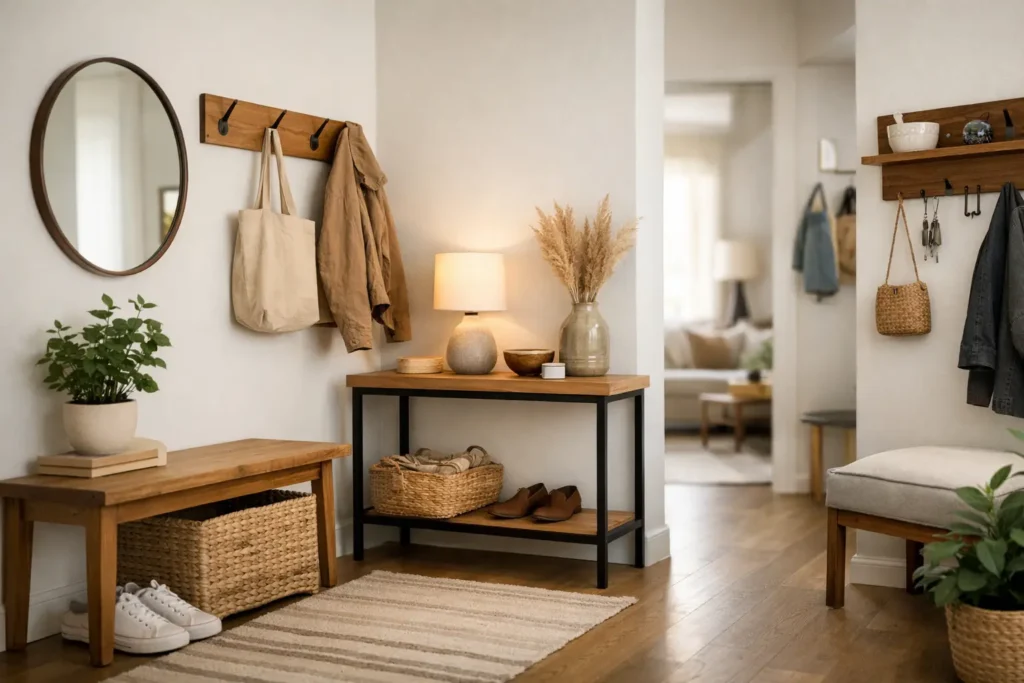

That awkward patch of wall by the front door can make your whole home feel more chaotic than it really is. The best entryway ideas for small spaces do not start with buying more furniture. They start with one simple goal – giving every daily drop zone item a place so your home feels calmer the second you walk in.
A small entryway has to work harder than a large foyer ever will. It might need to catch shoes, keys, bags, coats, mail, dog leashes, and the random things that somehow follow you in from the car. The good news is that you do not need a grand entrance to create a welcoming one. With the right mix of storage, scale, and styling, even a narrow apartment doorway or tiny corner by the front door can feel polished and useful.
What makes small entryways feel better fast
In most homes, the problem is not just lack of square footage. It is lack of intention. When an entryway has no clear landing spot for essentials, clutter spreads into the living room, kitchen, or hallway. A compact setup works best when it handles the real habits of your household instead of forcing a picture-perfect look.
That means thinking about what actually lands there every day. If your family kicks off shoes immediately, closed storage or a shoe tray matters more than decorative baskets. If you are always looking for keys, a wall hook or bowl needs to be the first thing you see. Pretty matters, but function should lead.
Entryway ideas for small spaces that actually work
1. Use the wall before you use the floor
When floor space is limited, your walls become the star. A row of hooks, a narrow shelf, or a small wall-mounted organizer can do more than a bulky table ever could. This is especially helpful in apartment entryways, hallway entries, or front doors that open directly into the living room.
Wall storage keeps the footprint light and the path clear. It also makes cleaning easier since nothing has to be worked around on the floor. If you have kids, place a lower hook or basket within reach so the system is easier to keep up with.
2. Choose a slim console if you have even a few inches to spare
Not every small entryway can fit furniture, but many can handle something surprisingly narrow. A console table that is 8 to 12 inches deep can hold a lamp, catchall tray, and small basket without blocking circulation. The trick is measuring the walkway, not guessing.
Look for open-leg designs if you want the space to feel airy. If you need more hidden storage, a compact table with one drawer can be worth the extra visual weight. It depends on whether your bigger issue is clutter or cramped sightlines.
3. Add a bench only if it earns its spot
A bench sounds like a must-have, but in a tiny entry, it only works if it solves more than one problem. The best version is a narrow bench with built-in storage for shoes, bags, or seasonal accessories. If it gives you seating and helps control mess, it is doing its job.
If a bench makes the space feel squeezed, skip it. A small stool, tucked basket, or even a padded shoe cabinet can give you the same function in a more compact form.
4. Let mirrors do double duty
A mirror in the entryway is not just for a last-second check before heading out. It reflects light, helps bounce brightness into darker corners, and can make a narrow area feel more open. In small homes, that visual lift matters.
A round mirror softens a wall full of hooks and angles. A taller vertical mirror can make ceilings feel higher. If you are working with a rental and do not want to hang a heavy piece, a leaner mirror can still create that expanded feeling without much commitment.
Small-space storage that does not look heavy
5. Hide the shoe mess strategically
Shoes are often the first thing that makes an entryway look cluttered. A shoe cabinet with a slim profile is one of the smartest upgrades for small spaces because it keeps pairs organized without sticking too far into the room. Many are surprisingly shallow and still hold quite a bit.
If you do not have room for a cabinet, try a boot tray, lidded basket, or low shelf under a console. Open storage is easier for daily use, but it only looks tidy if the household can keep up with it. If that sounds unrealistic, closed storage is usually the better choice.
6. Create one drop zone for the tiny stuff
Keys, sunglasses, lip balm, receipts, and mail create visual noise fast. A tray, bowl, or small divided organizer gives these items a home and keeps the top of your entry table from becoming a junk pile. This sounds basic, but it is one of the most effective habits you can build.
Keep the drop zone limited on purpose. If the container is too large, it invites clutter. A small tray gently forces editing, which is exactly what a compact entryway needs.
7. Use baskets where life is messy
Baskets are especially helpful in family homes because they make quick cleanups feel realistic. One basket for scarves and hats, one for dog gear, or one for grab-and-go accessories can instantly cut down on loose items. They also soften the look of a hard-working area.
The key is not to overfill them. A few well-placed baskets feel cozy and collected. Too many can start to look like storage overflow.
Style choices that help a tiny entryway feel finished
8. Keep the color palette simple
When a small entryway is visually busy, it often feels smaller than it is. A simple palette with two or three main tones creates a calmer first impression. That does not mean everything has to be white or beige. Warm wood, black accents, soft greens, and muted blues can still feel cozy and layered.
If your front door area opens directly into another room, repeating colors from that nearby space helps everything feel connected. That little move can make your home feel more thoughtfully designed without adding anything extra.
9. Bring in one softer, welcoming detail
Tiny entryways still deserve personality. A washable runner, a small piece of art, a pretty lamp, or a vase with seasonal stems can make the area feel less like a utility zone and more like part of your home. This is where warmth comes in.
You do not need many decorative items. In fact, one or two meaningful details usually look better than several small accessories fighting for space. A small entry feels best when it is edited, not empty.
10. Use lighting to make the space feel intentional
If your entryway is dim, even a well-organized setup can feel drab. A small table lamp, rechargeable sconce, or brighter overhead bulb can completely change the mood. Light makes a compact area feel cleaner, friendlier, and more finished.
This matters even more in homes where the entry opens into the main living space. A warm layer of light helps the transition feel softer at night and gives the whole room a more welcoming tone.
The smartest layout tip for entryway ideas for small spaces
11. Build around your real routine
The most successful entryway ideas for small spaces are not the prettiest ones on paper. They are the ones that match how you actually live. If you always carry a tote bag, make sure there is a hook for it. If junk mail piles up instantly, place a small recycling bin nearby. If guests use this door rarely but your family uses it constantly, design for family life first.
This is where many entryway makeovers go wrong. People choose pieces that look good in photos but do not support daily habits. A beautiful bench that becomes a laundry pile is not helping. A plain hook rail that keeps coats off the sofa absolutely is.
It can also help to think seasonally. In summer, your entry may only need sunglasses and sandals. In winter, it may need space for boots, coats, and umbrellas. Flexible storage, like removable baskets or adjustable hooks, gives you room to shift without starting over.
A small entryway does not need to impress anyone with size. It just needs to welcome you home, hold the basics, and make the next part of your day easier. If you focus on that, even the tiniest doorway can become one of the hardest-working and nicest-feeling spots in your home.
Final Thoughts From Experience
After looking at hundreds of small entryway setups over the years, one pattern shows up almost every time: the homes that feel the most organized are not necessarily the ones with the most storage. They are the ones where the storage matches the family’s daily habits.
Many people spend time searching for the perfect console table, bench, or storage cabinet, but the bigger question is whether those pieces actually support the way the household functions. A beautiful entryway will still feel cluttered if there is no convenient place for keys, shoes, bags, and everyday essentials. On the other hand, even a very small entry can feel calm and organized when every item has a designated home.
If you are improving a small entryway, start with function before decoration. Identify the items that land there every day, create a simple system to contain them, and live with that setup for a week or two before adding decorative touches. In my experience, this approach leads to better long-term results than trying to recreate a picture-perfect entryway from social media.
The best entryway ideas for small spaces are usually the simplest ones. A few well-chosen storage solutions, a clear drop zone, good lighting, and a layout that supports your real routine will make a bigger difference than expensive furniture or trendy accessories. When an entryway works well, it sets the tone for the entire home — making the space feel more welcoming, organized, and easier to live in every single day.
About the Author
Fher is an architect specializing in residential design and space optimization. With hands-on experience improving how homes function and feel, he shares practical insights to help homeowners create spaces that are both beautiful and livable.

Pingback: 12 Best Indoor Plants for Low Light - everydayhomestyle.io
Pingback: Apartment Decorating Guide for Beginners - everydayhomestyle.io