
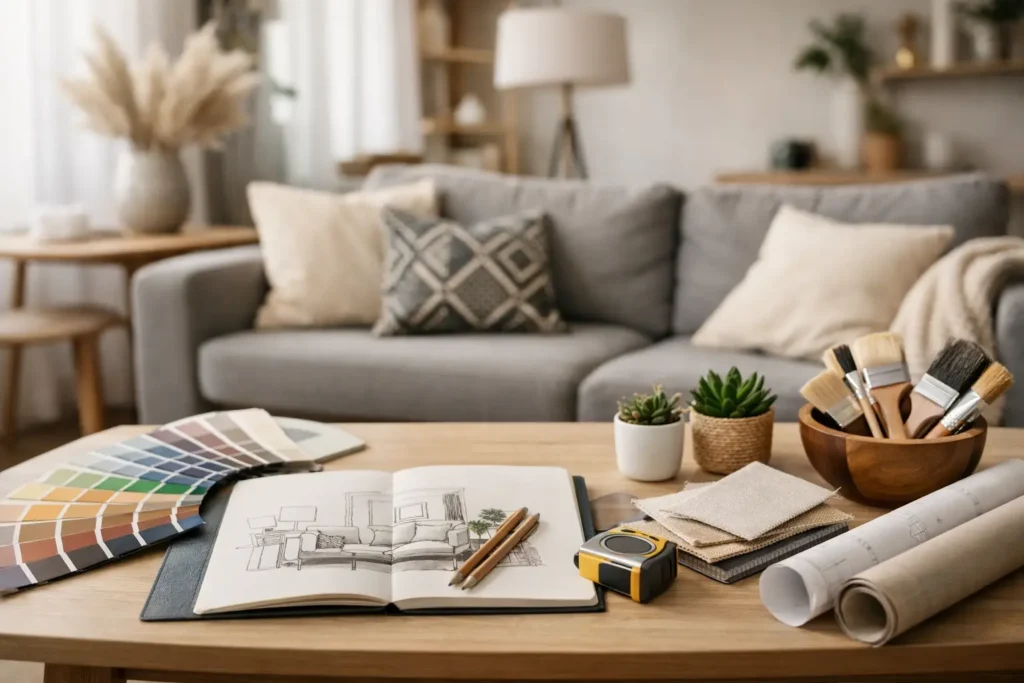

That blank apartment can get expensive fast if you start buying things just because they look cute online. A better approach is slower, simpler, and much more forgiving. This apartment decorating guide for beginners is built for real life – small rooms, rental rules, mixed budgets, and the very normal fear of getting it wrong.
The good news is you do not need a perfect design style or a big budget to make your place feel pulled together. You need a plan, a few smart choices, and enough patience to let the apartment come together over time.
Apartment decorating guide for beginners: start before you shop
Most decorating mistakes happen before the first throw pillow even lands on the couch. People buy decor without knowing how they want the room to function, and then the space feels cluttered, random, or unfinished.
Start by looking at how you actually live at home. Do you eat at the coffee table? Work from the couch? Need storage by the entryway because bags and shoes pile up there? Those details matter more than choosing a trendy color palette.
Walk through your apartment room by room and write down three things for each space: what is working, what is not working, and how you want the room to feel. Cozy and calm? Bright and energizing? Minimal but warm? This gives you a filter for every decorating decision that comes next.
If your apartment is small, be especially honest about function. A beautiful side chair that becomes a laundry drop zone is not really helping. In beginner decorating, useful pieces usually earn their place faster than purely decorative ones.
Build the room from the biggest pieces first
When you are starting from scratch, begin with the furniture and foundational items that visually anchor the room. In a living room, that usually means the sofa, rug, curtains, lighting, and coffee table. In a bedroom, it is the bed, bedding, nightstands, and window treatments.
This is where many beginners get stuck. Accessories feel easier to buy, so they end up with candles, baskets, and wall art before they even have the right rug size. The result is a room full of details without a real backbone.
A larger piece does not have to be expensive, but it should work hard. A sofa should fit the room and your lifestyle. A rug should be large enough to connect the furniture instead of floating awkwardly in the middle. Curtains should add softness and height, not look like an afterthought.
If your budget is tight, spend more carefully on the items you touch and use every day. Save on trend-driven accents you may want to swap later. That trade-off usually gives you a home that feels better, not just one that photographs better.
Get scale right early
Scale is one of the fastest ways to make an apartment feel polished. Tiny rugs, short curtains, and undersized art can make a room feel unsettled, even when the colors are pretty.
Go a little bigger than your first instinct in key areas. Hang curtains higher than the window frame to create height. Choose wall art that has enough presence to balance the furniture below it. If you are between rug sizes, the larger option is often the safer bet.
Choose a simple style direction, not a rigid label
You do not need to declare that your apartment is modern farmhouse, coastal, or midcentury before you can decorate. In fact, trying too hard to fit one label often makes a space feel forced.
Instead, choose a style direction based on a few repeated elements. Maybe you like light wood, soft neutrals, black accents, and cozy textures. Maybe you prefer warmer colors, vintage-inspired shapes, and layered patterns. That is enough to create consistency.
A beginner-friendly trick is to pick a loose palette of two or three main colors plus one accent. This keeps shopping easier and helps rooms relate to each other, especially in a smaller apartment where spaces are visible all at once.
It also helps to notice what you do not like. If glossy finishes, neon colors, or ultra-minimal rooms do not feel like you, that clarity can save money. Decorating gets easier when you stop trying to make your home look like someone else’s.
Make small spaces feel intentional
Apartment decorating is often really about apartment editing. The room may not need more things. It may need better placement, better storage, and fewer visual distractions.
Leave breathing room around furniture when you can. Let a tabletop have one styled moment instead of six small objects scattered across it. Use baskets, cabinets, and lidded boxes to hide the everyday items that make a room feel busy.
Mirrors can help bounce light, but they are not magic. If a room lacks warmth, a mirror alone will not fix it. The same goes for clear acrylic furniture, which can lighten the visual weight of a room but may not always be the coziest choice. It depends on whether your bigger problem is crowding, darkness, or lack of personality.
Use zones in open layouts
A lot of apartments have one main space doing the work of three rooms. If your living room is also your dining room and office, define each area visually.
A rug can anchor the seating area. A narrow console or bookshelf can create separation without blocking light. Different lamps can signal different functions and make the room feel layered instead of flat. Even small zoning moves help the apartment feel more organized and less like everything is happening in one pile.
Add warmth with layers that are easy to change
Once the basics are in place, this is where your apartment starts feeling personal. Soft layers make even builder-grade rooms feel more inviting.
Think about texture before you think about more stuff. A woven basket, linen-look curtains, a knit throw, wood frames, and a soft area rug can do more for a room than a shelf full of tiny decor. Texture creates depth, especially if your palette is neutral.
Lighting matters just as much. Overhead apartment lighting is rarely flattering, so bring in table lamps, floor lamps, or battery-operated sconces if you cannot hardwire anything. Warm bulbs immediately make a room feel calmer and more lived in.
Plants can help too, but only if you will care for them. If you know you forget to water everything, choose a few convincing faux stems instead of turning plant care into another unfinished chore.
Decorate the walls without overfilling them
Blank walls can make an apartment feel temporary, but covering every surface can swing too far the other way. Aim for a few intentional moments instead of nonstop wall decor.
Hang art where it supports the room. Over the sofa, bed, or entry console are natural starting points. Leaning framed art on a dresser or shelf can also soften a room without requiring many holes in the wall.
For renters, removable options can be helpful, but not every product works equally well on every paint finish. Test in a hidden area first. The last thing you want is a decorating upgrade that turns into a move-out repair.
Personal pieces go a long way here. Family photos, travel prints, thrifted art, or your favorite black-and-white images often make a home feel warmer than generic wall sets bought all at once.
Follow a beginner budget that actually works
A realistic apartment decorating guide for beginners should talk about pacing, because most homes do not come together in one weekend. Trying to finish everything immediately is usually what leads to overspending and regret buys.
Break your budget into stages. First, cover what you need to live comfortably. Then improve what feels unfinished. Then add beauty and personality in smaller layers.
It helps to keep a running list on your phone of pieces you are still looking for. That way, when you shop in person or browse online, you are less likely to be distracted by random decor that does not serve the space.
Mixing price points is also smart. A budget-friendly lamp can sit next to a nicer mirror. An affordable couch can look elevated with better pillows and a proper rug. Rooms feel collected when everything is not from the same place at the same time.
Common beginner mistakes to skip
The most common mistake is decorating too quickly. The second is choosing items in isolation instead of thinking about the room as a whole. A third is ignoring comfort in favor of appearance.
There are smaller mistakes too. Pushing all the furniture against the wall is not always the best use of space. Buying a rug that is too small can make even a nice room look off. Choosing decor before solving storage can leave a home feeling pretty but frustrating.
And then there is comparison. If your apartment does not look like a professionally styled feed, that does not mean you are bad at decorating. Real homes are built in layers. They hold daily life, not just pretty corners.
Let your apartment reflect your actual life
The nicest apartments are not always the biggest or the most expensive. They are the ones that feel considered. A candle by the chair where you read, a tray that makes the coffee table feel tidy, bedside lighting that makes the room softer at night – those choices add up.
At Everyday Home Style, we believe a home you love starts with paying attention to how you want to live there. That means your apartment does not need to be finished to feel good. It just needs to start feeling more like you, one practical and personal choice at a time.
Give yourself room to learn your taste as you go. The best spaces are rarely rushed, and your apartment will feel more welcoming when it grows with you instead of being forced all at once.
Frequently Asked Questions
What should I decorate first in an apartment?
Start with the large, functional pieces first. Focus on furniture, rugs, lighting, and curtains before buying decorative accessories. A room needs a strong foundation before smaller details can make sense.
How can I decorate an apartment on a small budget?
Decorate in stages instead of trying to finish everything at once. Prioritize comfort and function first, then add personality over time. Mixing affordable pieces with a few higher-quality items often creates a more collected and expensive-looking result.
How do I make a small apartment feel bigger?
Keep furniture scaled appropriately, leave some open space around pieces, and use lighting, mirrors, and smart storage to reduce visual clutter. In many cases, removing unnecessary items makes a room feel larger than adding more decor.
How long does it take to decorate an apartment?
Most homes come together gradually. Many people continue refining their spaces for months or even years. Decorating is less about finishing quickly and more about creating a home that evolves with your lifestyle.
Do I need to choose one decorating style?
No. Most well-designed homes combine influences rather than strictly following one label. Repeating colors, materials, and textures creates cohesion without forcing your apartment into a specific style category.
Final Thoughts From Experience
One thing I have noticed over the years is that the apartments people love most are rarely the ones that were decorated the fastest. They are the ones that evolved slowly.
A common pattern I have seen is that beginners often feel pressure to “finish” a room immediately. They buy matching sets, fill every empty wall, and try to recreate what they see online. A few months later, they realize the space still does not feel like home because it was designed around a picture rather than around daily life.
In practice, the best decorating decisions usually come after living in a space for a while.
You learn where you naturally drink your morning coffee. You discover which corner needs a reading lamp, where clutter tends to collect, and which furniture pieces you actually use every day. Those observations matter far more than following a trend.
If I could give one piece of advice to someone decorating their first apartment, it would be this: do not rush to make everything perfect.
Buy fewer things, but choose them carefully. Prioritize comfort before decoration. Invest in pieces that make daily life easier, and allow your home to tell your story over time.
Some of my favorite rooms have never been the most expensive or the most professionally styled. They were simply thoughtful spaces built gradually, with furniture, lighting, and personal touches that reflected the people living there.
A beautiful apartment is not about reaching some finished version that exists on social media. It is about creating a home that supports your routines, feels comfortable at the end of the day, and becomes more personal with every season you live there.
And that process does not have to happen all at once.
About the Author
Fher is an architect specializing in residential design and space optimization. With hands-on experience improving how homes function and feel, he shares practical insights to help homeowners create spaces that are both beautiful and livable.

Pingback: A Guide to Choosing Area Rugs for Every Room - everydayhomestyle.io