
If your Pinterest saves are starting to feel a little too polished, a little too beige, and not quite like real life, you are not imagining it. The biggest home decor trends 2026 are moving away from showroom-perfect spaces and toward rooms that feel warmer, more personal, and easier to actually live in.
That shift is good news for anyone decorating on a budget, working with a small home, or simply trying to make everyday spaces feel more inviting. You do not need a full renovation to keep up. In most cases, the changes showing up for 2026 are less about buying all new furniture and more about choosing materials, colors, and layouts that support real routines.
What home decor trends 2026 are really about
The clearest theme for the year is livable style. Homes are being asked to do a lot – they are places to rest, work, gather, cook, and recharge. Because of that, the most relevant trends are not the flashiest ones. They are the ones that make a room feel calmer, softer, and more useful.
You will still see inspiration from high-end interiors, but the look is less formal than it was a few years ago. Instead of matching sets and ultra-minimal rooms, expect more layering, more natural texture, and more pieces that look collected over time. Think less “perfect reveal” and more “this home has a story.”
1. Warm neutrals are replacing cool minimalism
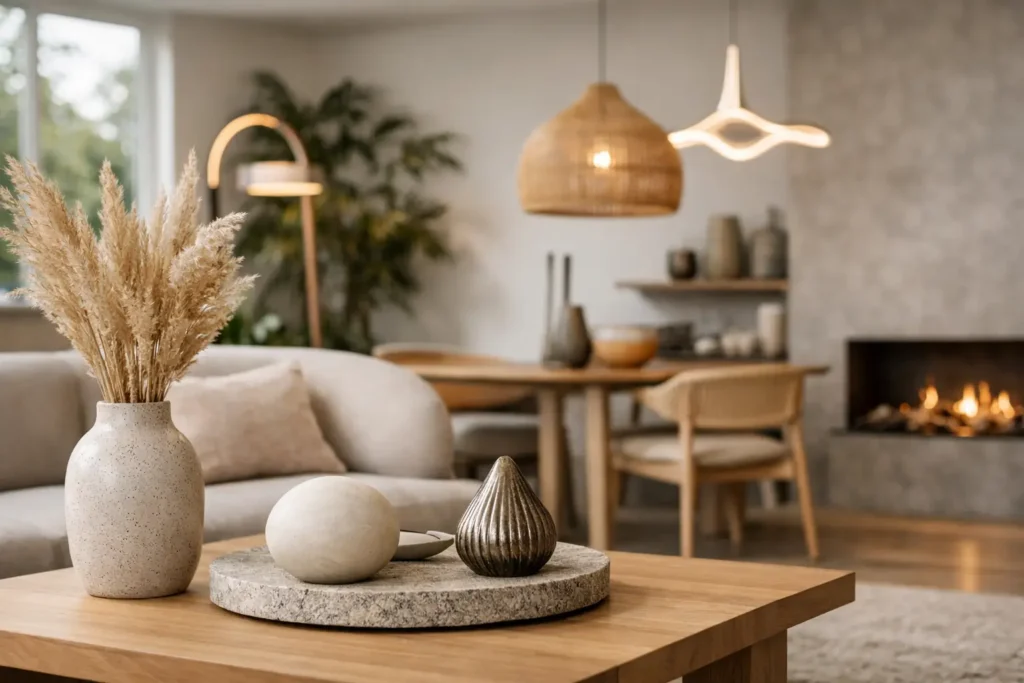
Bright white and icy gray are no longer the default backdrop for every room. In 2026, neutrals are getting warmer and a little richer. Soft taupe, mushroom, oat, sand, camel, and creamy off-white all bring in warmth without feeling dark or heavy.
This is one of the easiest trends to try because it works in almost any home. A warm neutral wall color can make builder-grade spaces feel more finished. A rug in sandy beige or a linen curtain in a light flax tone can soften a room without forcing a dramatic color commitment.
The trade-off is that warm neutrals need contrast. If everything is the exact same tone, the room can fall flat. Add wood, black accents, aged brass, or deeper textile colors to keep the space grounded.
2. Earth colors are becoming more usable
Color is coming back, but in a quieter, more approachable way. Rather than bold jewel-box rooms everywhere, the colors leading home decor trends 2026 are rooted in nature. Clay, olive, rust, muted blue, dusty green, terracotta, and brown-red shades all feel current.
What makes these colors practical is that they are easier to live with than trendier bright shades. An olive accent chair or rust pillow set can warm up a neutral room without taking it over. In kitchens, muted green cabinetry and earthy tile are especially appealing because they feel fresh while still classic.
If you are color-shy, start small. Textiles, lampshades, artwork, and painted side tables are low-risk ways to test a palette before bringing it to larger surfaces.
3. Character beats perfection
One reason many homes started to feel interchangeable is that everyone was shopping the same look. In 2026, there is more appreciation for pieces with personality – vintage finds, handmade decor, inherited furniture, and slightly imperfect materials.
This does not mean every room needs to look eclectic. It means homes are feeling more relaxed about mixing old and new. A modern sofa can sit next to a thrifted wood coffee table. A simple bedroom can include a vintage lamp or a framed landscape that feels personal instead of generic.
For everyday homes, this is a welcome trend because it opens the door to slower decorating. You do not have to finish a room in one shopping trip. In fact, the best spaces often look better when they evolve.
4. Softer shapes are still staying strong
Curved furniture and rounded silhouettes are not disappearing, but they are settling into a more balanced role. Instead of every piece trying to make a statement, 2026 uses softer lines to make rooms feel easier on the eye.
You might see this in a rounded mirror, a gently curved accent chair, an arched floor lamp, or a dining table with softened corners. These shapes help a room feel more inviting, especially in small spaces where too many sharp edges can feel rigid.
That said, a room full of curves can start to feel a little theme-heavy. The nicest results usually come from mixing soft forms with a few clean-lined basics.
5. Texture is doing more work than pattern
Pattern has not disappeared, but texture is leading. Boucle, linen, nubby weaves, slub cotton, natural wood grain, limewash finishes, ribbed glass, and woven materials are all helping rooms feel layered without looking busy.
This matters if you love a calm home but do not want it to look plain. Texture adds depth in subtle ways. A plain cream sofa looks more interesting in a textured fabric. A simple dining table gains warmth with woven seat cushions and ceramic tableware.
For renters, this is also one of the most flexible trends. You can bring in texture through curtains, throw blankets, baskets, lamps, and area rugs without changing anything permanent.
6. Smaller, cozier rooms are winning over open-concept everything
Not every home can be reworked architecturally, but the mood is shifting away from oversized, undefined spaces. People want corners with purpose. Even in open layouts, there is more interest in creating zones for reading, dining, hobbies, or quiet time.
This trend shows up in furniture placement as much as decor. A pair of chairs and a small lamp can turn an awkward corner into a useful retreat. A rug under the dining table can help that part of the room feel intentional. A narrow console behind the sofa can visually separate one area from another.
For families and apartment dwellers, this is especially helpful. You do not need more square footage to make a home feel better organized. You often just need clearer function.
7. Decorative lighting is becoming less optional
Lighting keeps moving from afterthought to focal point. In 2026, statement lighting is not only about chandeliers in formal spaces. It is about choosing fixtures and lamps that add style, shape, and warmth throughout the home.
Table lamps with pleated shades, sculptural sconces, portable lamps, and textured pendants are all part of the picture. The goal is not to make every light dramatic. It is to avoid relying on one harsh overhead fixture to do everything.
This is one of the smartest updates you can make if your home feels unfinished. Better lighting changes the mood fast, and it often makes existing decor look more expensive than it is.
8. Kitchens are getting warmer and less sterile
The all-white kitchen is no longer the only version of “timeless.” Home decor trends 2026 are bringing more warmth into kitchens through wood tones, mixed materials, colorful lower cabinets, and lived-in styling.
That can mean walnut stools against painted cabinets, a stone-look counter paired with warm brass hardware, or open shelving that holds everyday pieces with real texture. Even small upgrades like switching cabinet pulls or adding a washable runner can push a kitchen in this direction.
The main thing to watch is maintenance. Some warm, layered kitchens look beautiful in photos but feel cluttered quickly in everyday life. If you prefer a cleaner look, choose just one or two warmer elements and keep surfaces mostly clear.
9. Outdoor spaces are being treated like real rooms
Backyards, patios, balconies, and porches are continuing to matter more. The difference now is that outdoor styling is becoming more thoughtful and more comfortable. It is less about one seasonal setup and more about creating an extension of the home.
Even a tiny balcony can benefit from a small rug, a compact bistro table, outdoor pillows, and soft lighting. Larger patios are leaning into lounge-like layouts with layered textiles, planters, and furniture that feels more like indoor living.
This trend works best when it matches your habits. If you actually eat outside, prioritize dining. If you want a quiet coffee spot, focus on seating and shade. A beautiful setup is only useful if it supports how you live.
10. Trend-proof decorating is becoming the smartest trend of all
Maybe the most useful shift in 2026 is that people are getting more selective. Instead of chasing every new look, they are asking better questions. Will this color still feel good in six months? Does this piece fit my routine? Can I mix it with what I already own?
That mindset creates better homes. It also saves money. A trend is most helpful when it gives you direction, not pressure. If warm earthy colors make your home feel cozy, try them. If you love lighter spaces, keep them and add texture instead. If you are decorating around kids, pets, or a tight budget, practicality is not a compromise. It is good design.
Common Home Decor Trend Mistakes to Avoid in 2026
Following trends can be fun, but some updates age faster than others. One mistake people often make is trying to recreate every look they see online instead of choosing ideas that fit the way they actually live.
Another common issue is buying everything at once. Rooms that feel warm and personal usually develop over time. Mixing older pieces with a few thoughtful additions often creates a more inviting space than replacing everything with matching furniture.
It is also easy to go too far with one trend. Too much boucle, too many curves, or too many earthy colors can make a room feel overly themed. Balance usually creates a more timeless result.
Finally, remember that practicality matters. A trend should make your home feel better, not harder to maintain. Before bringing in something new, ask yourself whether it works with your lifestyle, your family, and your daily routines.
How to use home decor trends 2026 without starting over
The easiest way to approach trends is one layer at a time. Start with the room that feels the most unfinished or least comfortable. Then choose one update that matches both your style and your budget.
Maybe that is repainting a too-cool wall color in a warmer neutral. Maybe it is replacing flat throw pillows with textured ones, moving furniture to create a reading corner, or swapping a stark light fixture for something softer. Small changes often have the biggest effect when they solve the right problem.
At Everyday Home Style, we love this kind of decorating because it feels real. Your home does not need to copy every trend forecast to feel current. It just needs details that make daily life look better and feel easier.
The best rooms in 2026 will not be the ones that follow every trend perfectly. They will be the ones that feel welcoming the minute you walk in, and still work beautifully on an ordinary Tuesday.
Final Thoughts From Experience
One thing I have noticed after studying home design trends year after year is that the ideas that last are rarely the most dramatic ones. Trends come and go, but homes that feel comfortable, functional, and personal tend to age much better than spaces designed only for photos.
In my experience, people are happiest with rooms that support everyday life rather than chasing perfection. A home does not need to look like a showroom to feel beautiful. In fact, some of the most welcoming spaces are the ones that mix old and new pieces, embrace imperfections, and evolve slowly over time.
That is one reason I like where home decor trends 2026 are headed. There is less pressure to replace everything and more emphasis on creating rooms that reflect how people actually live. Small updates, warm materials, and thoughtful choices often have a bigger impact than expensive renovations.
If there is one lesson worth remembering, it is this: trends should inspire you, not dictate every decision. Choose ideas that fit your lifestyle, your budget, and the atmosphere you want to create. A home that works beautifully on an ordinary Tuesday will always feel more timeless than one designed only to follow the latest trend.
About the Author
Fher is an architect specializing in residential design and space optimization. With hands-on experience improving how homes function and feel, he shares practical insights to help homeowners create spaces that are both beautiful and livable.