
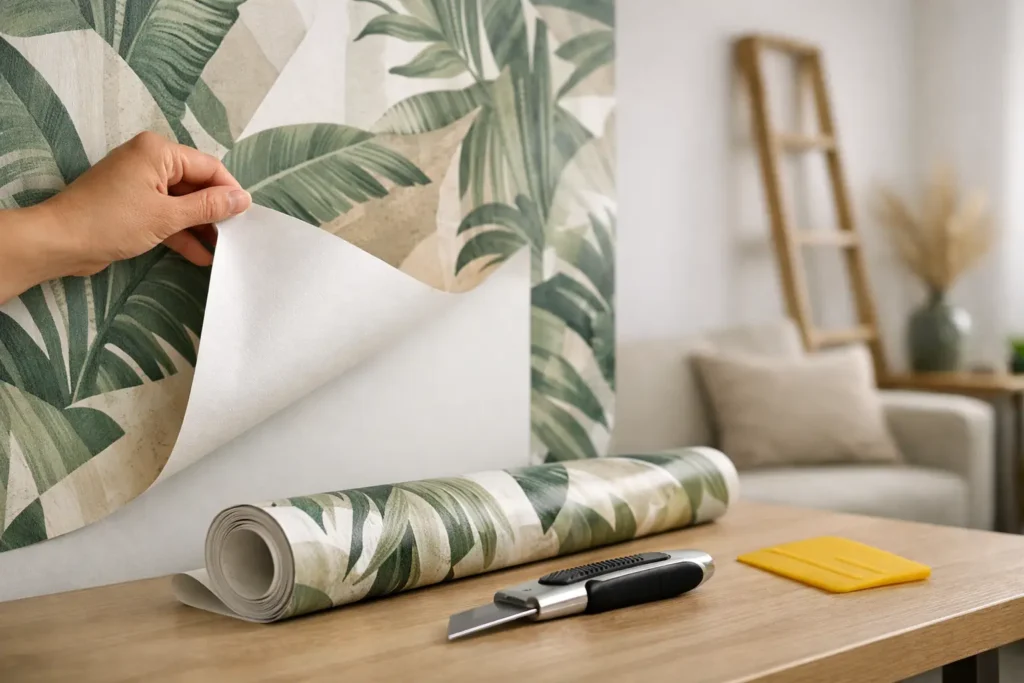

That awkward blank wall in the entryway, the dated powder room, the rental kitchen that still feels unfinished – this is usually where a peel and stick wallpaper review becomes useful. The promise is hard to resist: fast pattern, low commitment, and a room that feels styled without a major renovation. But the real question is whether it actually looks good and holds up in everyday life.
The short answer is yes, sometimes very much so. Peel and stick wallpaper can be a smart, budget-friendly upgrade when you choose the right surface, the right pattern, and the right expectations. It is not magic, and it is not the best fit for every room. But in the right spot, it can give a space that finished, personal feeling that makes home feel more like yours.
Peel and stick wallpaper review: the real pros
The biggest reason people love peel and stick wallpaper is simple – it changes a room quickly. You do not need paste, special buckets, or a full weekend of prep. For renters, that low-commitment appeal is especially strong. For homeowners, it offers a way to experiment with color and pattern before committing to something permanent.
It also works well for smaller decorating projects. Accent walls, laundry rooms, mudroom nooks, bookshelves, and the backs of cabinets are often better candidates than large open walls. In those smaller areas, the product feels less intimidating to install and more forgiving if the pattern is not perfectly aligned on the first try.
Another real advantage is style access. Peel and stick wallpaper comes in everything from soft grasscloth-inspired neutrals to bold florals and modern geometrics. If your home feels like it is missing personality, this is one of the fastest ways to add it without buying new furniture or redoing the entire room.
Where peel and stick wallpaper falls short
This is where an honest peel and stick wallpaper review matters most. The product is often marketed as easy, but easy depends on the wall, the installer, and the pattern.
If your walls are heavily textured, freshly painted, dusty, or patched unevenly, adhesion can be disappointing. Some papers peel at the seams, bubble over time, or slide slightly during installation. In humid rooms, lower-quality versions may begin lifting earlier than expected, especially near showers, stoves, or poorly ventilated corners.
There is also the issue of pattern matching. A subtle stripe is much easier to line up than a large mural or a busy print. If you are covering a wide wall with an obvious repeating design, mistakes become more noticeable. What looks simple in product photos can turn surprisingly fussy once you are on a ladder trying to smooth out air pockets.
Cost is another trade-off. Peel and stick wallpaper sounds budget-friendly, but the total can add up quickly if you need multiple rolls for a larger room. In some cases, paint is still the cheaper option. If your goal is simply to freshen a room, wallpaper makes the most sense when the visual impact of pattern is part of the plan.
What installation is really like
For most people, installation lands somewhere between manageable and mildly frustrating. It is not impossible, but it does require patience.
The easiest installs happen on smooth, clean, primed walls with simple cuts and minimal obstacles. Think one straight accent wall with standard ceiling height. The harder installs happen around windows, outlets, sloped ceilings, corners, and older walls that are less than perfect.
The first panel usually takes the longest because it sets the line for everything else. If that first strip is even slightly off, the rest can drift. A smoothing tool helps, and a second set of hands helps even more. This is one of those projects that looks like a solo Saturday task but often goes much better with another person holding and guiding the roll.
If you are detail-oriented and reasonably patient, you will probably be fine. If you hate measuring, trimming, and readjusting, this may not feel relaxing. That does not mean the result is not worth it. It just means the process is more hands-on than the packaging sometimes suggests.
Best rooms for peel and stick wallpaper
Some rooms get a much better return from peel and stick wallpaper than others. Bedrooms, home offices, nurseries, entryways, and dining nooks are often great choices because they are relatively low-moisture spaces where wallpaper can stay looking crisp.
Powder rooms can also work beautifully, especially if you want a little drama in a small space. That said, a full bathroom with daily steam is a more mixed result. Good ventilation matters. So does product quality.
Kitchens are another it-depends space. Wallpaper can be lovely on a breakfast nook wall, pantry corner, or the back of open shelving. Right behind a stove or sink, though, grease, heat, and splashes make performance less predictable.
If you are new to wallpaper, try it in a smaller area first. That lets you test both the look and the product without committing to an entire living room.
Peel and stick wallpaper review for renters
For renters, this product can be a decorating lifesaver, but only if you check the fine print. Removable does not always mean damage-free on every wall. Paint type, wall condition, and how long the paper stays up all affect removal.
In many cases, high-quality peel and stick wallpaper removes cleanly from well-painted, properly prepared walls. On older walls with weak paint or multiple repair layers, the risk goes up. If your lease is strict, it is smart to test a hidden patch first and keep the original product instructions.
The best renter mindset is to use it strategically. Add it to one wall, inside a closet office nook, or on furniture panels rather than covering every surface. That way you get personality without creating a giant move-out project later.
How it compares to traditional wallpaper
Traditional wallpaper still tends to win on longevity and a more built-in look. It often lies flatter, lasts longer, and handles larger rooms more gracefully. If you are renovating a forever home and want a polished, high-end finish, traditional wallpaper is usually the stronger investment.
Peel and stick wins on flexibility. It is easier to change, often easier to source, and more approachable for casual DIY projects. For people who like to refresh their style every few years, that matters. It gives you room to experiment.
So the better question is not which one is best overall. It is which one fits your home, budget, and patience level right now.
How to get better results
A few simple choices can make the difference between a project you love and one you regret. Start by ordering a sample if possible. Colors and scale look different in your own lighting, and this is especially true with bold prints and faux textures.
Prep matters more than people expect. Walls should be clean, dry, and fully cured if recently painted. Rushing this step is one of the main reasons wallpaper starts lifting.
It also helps to be realistic about pattern. If this is your first try, a small print or forgiving texture-inspired design is usually easier than a dramatic oversized mural. Beautiful and beginner-friendly are not always the same thing.
And if you are wallpapering a room because it feels dull, think about the whole picture. Wallpaper looks best when it connects to the room around it – a paint color, a rug, a few textiles, or even the wood tone in your furniture. That is often what makes the finished space feel intentional rather than temporary.
So, is it worth it?
In this peel and stick wallpaper review, the most honest answer is yes – if you use it where it makes sense. It is worth it for adding warmth to a bland room, personality to a rental, or visual interest to a small space that needs a little life. It is less worth it if you expect flawless results on damaged walls, in high-moisture areas, or across a huge room with no patience for careful installation.
For many homes, the sweet spot is using it as a style tool rather than a full-house solution. One thoughtfully chosen wall can do a lot. It can make a guest room feel finished, turn a hallway into something charming, or give your home office that little boost that makes you enjoy being there more.
If you have been curious but hesitant, start small. A home you love does not have to come together all at once, and sometimes one roll of wallpaper is enough to shift the whole mood of a room.
How Long Does Peel and Stick Wallpaper Last?
The lifespan of peel and stick wallpaper depends on more than the product itself. Higher-quality materials generally hold up better over time, but proper wall preparation is just as important. Clean, smooth, and fully cured walls give the adhesive the best chance to stay in place.
The room also makes a difference. High humidity can weaken adhesion over time, especially in bathrooms or kitchens with poor ventilation. Likewise, walls that receive strong, direct sunlight throughout the day may experience fading or reduced adhesive performance sooner than those in shaded areas.
Many high-quality products can last several years when installed correctly on smooth, clean walls.
Final Thoughts From Experience
One thing that becomes clear after looking at dozens of peel and stick wallpaper projects is that the product itself is rarely the deciding factor. Most disappointing results come from rushing the installation, choosing the wrong wall, or expecting removable wallpaper to perform like a permanent wall covering.
The homes where peel and stick wallpaper looks the most convincing usually have one thing in common: it is used intentionally. Instead of covering every wall, it highlights a focal point, adds warmth to a forgotten corner, or introduces texture where the room feels flat. Those smaller, thoughtful updates often create a bigger impact than trying to transform an entire space at once.
If you are considering peel and stick wallpaper, think beyond the pattern you like online. Look at the condition of your walls, the amount of natural light in the room, and how the design will work with your furniture, flooring, and paint colors. Taking a little extra time to plan almost always leads to a result that feels polished rather than temporary.
For most homeowners and renters, peel and stick wallpaper is not a replacement for traditional wallpaper—it is simply a different decorating tool. Used in the right place and with realistic expectations, it can be one of the easiest ways to give a room more character without committing to a major renovation.
About the Author
Fher is an architect specializing in residential design and space optimization. With hands-on experience improving how homes function and feel, he shares practical insights to help homeowners create spaces that are both beautiful and livable.