
The kitchen is moving away from the perfectly staged showroom look and toward something much more inviting: a room that works hard, holds real life, and still feels beautiful at 7 a.m. on a Tuesday. The biggest kitchen design trends 2026 are less about chasing a single finish and more about creating warmth, ease, and personality around the way your household actually cooks, gathers, and cleans up.
That is welcome news if you are working with a modest budget, a small footprint, or a kitchen that cannot be completely remodeled. Many of these ideas can show up in a paint color, new hardware, better lighting, or one thoughtfully chosen storage upgrade. The goal is not perfection. It is a kitchen that feels like yours.
Kitchen Design Trends 2026 Put Comfort First
For years, bright white kitchens and crisp, high-contrast finishes dominated inspiration boards. They are not disappearing, but 2026 is shaping up to be softer and more layered. Think warm off-whites, mushroom tones, muted olive, clay, dusty blue, and rich wood that brings visual comfort to a hardworking room.
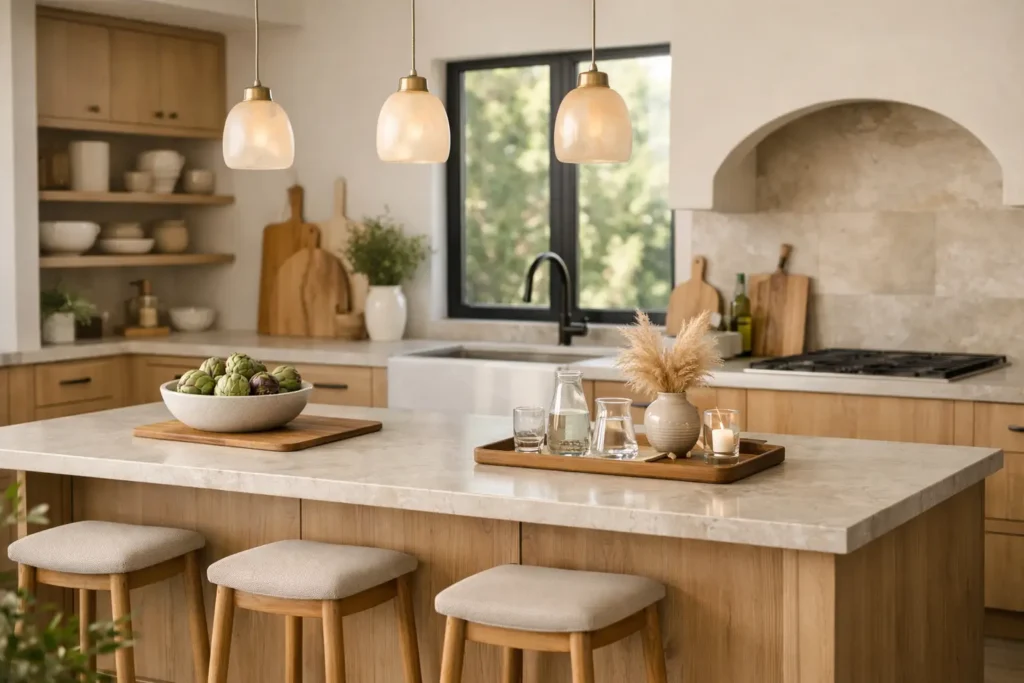
This does not mean every kitchen needs dark cabinets or a dramatic renovation. A warm neutral wall color can change the entire feeling of existing white cabinetry. So can woven counter stools, a wood tray for daily essentials, or a small lamp on a safe, out-of-the-way counter. The most successful rooms will feel collected over time rather than purchased all at once.
Warm woods are back, but not in a heavy way
Natural wood cabinetry is one of the clearest directions for 2026, especially white oak, walnut-inspired midtones, and softer stains with visible grain. The appeal is easy to understand: wood brings instant warmth to surfaces that can otherwise feel cold and hard.
If full wood cabinets are not in the plan, look for smaller ways to add the effect. Swap a few open shelves for wood, choose a wood-front rolling cart, or bring in cutting boards and serving pieces that are pretty enough to leave out. Renters can get a similar feeling through stools, window shades, and accessories without changing permanent fixtures.
Softer Color Is Replacing Stark Contrast
High-contrast black-and-white kitchens can still look striking, but many homeowners are choosing colors with less visual tension. Creamy cabinets paired with warm metal finishes, green-gray islands, and softly veined stone all create a calmer backdrop for daily life.
Painted cabinetry will remain popular, particularly in earthy, grounded shades. Deep green and navy are still lovely choices, but expect more softened versions: sage instead of emerald, smoky blue instead of bright navy, and warm taupe instead of cool gray. These shades tend to work well with existing finishes, which matters when replacing every countertop or appliance is not realistic.
Before committing to cabinet paint, test samples next to your backsplash, floor, and countertop at different times of day. A color that looks cozy in a photo can turn muddy or unexpectedly yellow under your kitchen lighting. This small step prevents one of the most expensive decorating mistakes.
The Hardworking Island Gets More Personal
In many homes, the kitchen island is part prep station, part homework desk, part coffee bar, and part gathering place. Kitchen design trends for 2026 acknowledge that reality with islands that look less like a plain block of cabinetry and more like a piece of furniture designed for the room.
Expect to see furniture-style details such as turned legs, open end shelves, reeded panels, contrasting paint, and wood accents. Some kitchens will use a mix of finishes, with painted perimeter cabinets and a wood island, to make the layout feel less uniform.
Function still has to lead. If your island is the only real prep surface, avoid filling it with decor. A bowl of fruit and one useful tray may be enough. If seating is the priority, make sure there is comfortable knee space and room to pull stools back without blocking the main path through the kitchen. A beautiful island that creates a daily traffic jam is not an upgrade.
Storage Will Be Designed Around Real Habits
The best-looking kitchens are often the ones where clutter has an easy place to go. That is why practical storage is becoming a major design feature, not an afterthought. Deep drawers, pullout pantry shelves, appliance garages, tray dividers, and dedicated zones for coffee or snacks help counters stay clearer without forcing you to live like a minimalist.
You do not need custom cabinetry to benefit from this trend. Start by noticing what always lands on your counter. If it is lunchboxes, create a basket or drawer near the door. If it is coffee supplies, gather them on a tray near the machine. If cooking tools spill out of a crowded drawer, add simple dividers before buying more organizers.
The trade-off is that highly specific storage can become limiting if your needs change. A built-in spice drawer is wonderful for someone who cooks often, but less useful than flexible drawers for a household that may move or evolve. Prioritize adaptable organization first, then add specialty storage where it will genuinely earn its space.
Mixed Metals Will Look Intentional, Not Matched
Matching every metal finish in the kitchen is no longer the only polished option. In 2026, mixed metals can make a kitchen feel warmer and more lived-in, especially when they are repeated thoughtfully. A brushed brass faucet might sit beautifully with aged bronze cabinet pulls, while stainless appliances remain their practical neutral selves.
The key is to keep the mix simple. Choose one finish as the main character, then use a second finish in smaller doses. For example, use satin nickel for most hardware and aged brass for lighting. Too many competing finishes can look accidental, especially in a small kitchen where everything is visible at once.
This is also a budget-friendly update. Replacing pulls, a faucet, or a pendant light can give older cabinets a fresh point of view without the cost and mess of a full renovation.
Lighting Is Becoming More Layered and More Cozy
A single ceiling fixture rarely makes a kitchen feel good from morning through evening. The 2026 approach is layered lighting: practical task lighting where you chop and cook, ambient light that softens the room, and a decorative fixture that adds personality.
Under-cabinet lighting is one of the most useful upgrades for both homeowners and renters who can use plug-in or rechargeable options. It brightens counters, makes evening cleanup easier, and gives the room a warm glow after the main lights are off. Pendants over an island can add style, but size matters. Oversized fixtures can overwhelm a compact kitchen, while tiny pendants may disappear over a large island.
If you have an empty counter corner away from water and heat, a small lamp is another cozy detail gaining attention. It is not a replacement for task lighting. It is simply a way to make the kitchen feel less utilitarian when the day winds down.
Stone Looks More Natural and Less Perfect
Countertops and backsplashes are leaning toward movement, texture, and natural variation. Honed finishes, softly veined quartz, handmade-look tile, and earthy stone colors help kitchens feel less sterile than glossy, uniform surfaces.
That does not mean natural stone is automatically the right choice. Marble has undeniable character, but it can etch and stain, which may be frustrating in a busy family kitchen. Quartz often offers easier maintenance, while laminate has come a long way for budget-conscious projects. The best material depends on how you use the room, not just what photographs well.
For a smaller refresh, consider extending an existing backsplash with a simple tile, changing outdated grout color where appropriate, or adding a washable runner to bring in texture underfoot. A room can feel fresh without replacing every surface.
Decor Will Be Useful, Personal, and Easy to Live With
The finishing layer of 2026 kitchens is not about filling every shelf. It is about displaying the things that make the room feel welcoming and useful: a favorite ceramic pitcher, cookbooks you actually open, framed family recipes, a bowl of seasonal fruit, or a collection of handmade mugs.
Open shelving remains an it-depends choice. It can make a small kitchen feel open and provide a home for everyday items, but it also requires regular editing and cleaning. If you love the look but not the upkeep, try one narrow shelf or a glass-front cabinet instead of removing all your upper doors.
A kitchen should support the life happening inside it, from rushed breakfasts to slow weekend dinners. Choose one or two kitchen design trends 2026 ideas that solve a real frustration in your home, then leave room for the details that tell your own story. That is what turns a useful kitchen into a place you genuinely love coming back to.
How to Choose the Right Kitchen Design Trends for Your Home
Not every trend deserves a place in every kitchen. The best updates are the ones that solve everyday problems while still fitting your home’s style and your budget.
Before making changes, ask yourself:
Which part of my kitchen frustrates me most? Do I need better storage or better style? Will this trend still feel practical in five years? Does it work with the finishes I already have?
Starting with these questions usually leads to smarter decisions than simply copying a photo online. A kitchen that supports your daily routine will always feel more successful than one designed only around current trends.
Final Thoughts From Experience
Kitchen trends come and go, but the kitchens people enjoy living in tend to have one thing in common: they are designed around everyday life instead of perfect photos.
One pattern I’ve noticed is that the most successful updates are rarely the biggest or the most expensive. Improving lighting, creating better storage, choosing warmer finishes, or making room for the way your family actually cooks often has a greater impact than replacing every cabinet or countertop.
It’s also worth remembering that trends should inspire, not dictate your decisions. A color or material that looks beautiful online may not be the best fit for your home’s natural light, your maintenance preferences, or the way you use your kitchen every day. The best kitchens evolve over time, adding thoughtful improvements as needs change instead of trying to achieve a finished look overnight.
If you’re planning updates this year, focus first on the changes that make your kitchen easier to use. Comfort, functionality, and timeless materials almost always outlast fast-moving design trends. When your kitchen supports your daily routine and feels welcoming at the end of a busy day, you’ve created something far more valuable than a fashionable space—you’ve created a room that truly feels like home.
About the Author
Fher is an architect specializing in residential design and space optimization. With hands-on experience improving how homes function and feel, he shares practical insights to help homeowners create spaces that are both beautiful and livable.