
A small living room should never feel like a limitation.
In fact, some of the most functional, comfortable, and visually impressive homes I’ve seen were also some of the smallest.
But over the years, I’ve noticed something consistent in residential spaces:
Most small living rooms don’t feel small because of square footage alone — they feel small because of design decisions.
Oversized furniture, poor layouts, harsh lighting, visual clutter, and trend-driven choices often create spaces that feel tighter and more uncomfortable than they actually are.
The good news is that most of these problems can be fixed without expensive renovations.
In this guide, I’ll walk you through the most common small living room mistakes I see in real homes, why they happen, and what actually works better from both a functional and design perspective.
Why Small Living Rooms Often Feel Smaller Than They Really Are
One of the biggest misconceptions in interior design is believing that size alone determines how spacious a room feels.
From my experience working with residential spaces, perception matters just as much as dimensions.
I’ve seen:
- Large living rooms feel cramped
- Tiny apartments feel open and balanced
The difference usually comes down to:
- Layout
- Lighting
- Furniture proportions
- Visual flow
- Clutter control
A well-designed small living room feels intentional.
A poorly designed one feels overwhelming.
1. Using Furniture That Is Too Large for the Room
This is probably the most common mistake I see.
Many people assume:
“Bigger furniture equals more comfort.”
But in small spaces, oversized furniture often creates the opposite effect.
Large sectionals, bulky recliners, or oversized coffee tables can:
- Interrupt movement
- Reduce breathing room
- Make the room feel visually heavy
What Actually Works Better
In smaller living rooms, I usually recommend:
- Sofas with slimmer arms
- Raised-leg furniture
- Compact nesting tables
- Pieces that serve multiple purposes
Furniture that visually “floats” tends to create a lighter atmosphere and improves the perception of space.
This is especially important in apartments where every visual inch matters.
2. Pushing All Furniture Against the Walls
This mistake is extremely common because people think:
“More empty center space = bigger room.”
But in practice, it often creates an awkward and disconnected layout.
When all furniture sits directly against the walls:
- The room loses intimacy
- Conversation areas feel unnatural
- The center becomes empty without purpose
What I Often Recommend Instead
Even in compact spaces, slightly floating the sofa or repositioning seating inward can dramatically improve:
- Flow
- Balance
- Comfort
One thing I’ve noticed in real redesign projects is that small adjustments in furniture positioning often make a bigger difference than buying new decor.
3. Blocking Natural Light Without Realizing It
Natural light changes everything in small spaces.
But many living rooms unintentionally block it through:
- Heavy curtains
- Tall furniture near windows
- Dark window treatments
Why This Matters
Light creates openness and visual depth.
Once natural light is interrupted, the room immediately feels:
- Heavier
- Flatter
- More enclosed
What Actually Helps
From my experience:
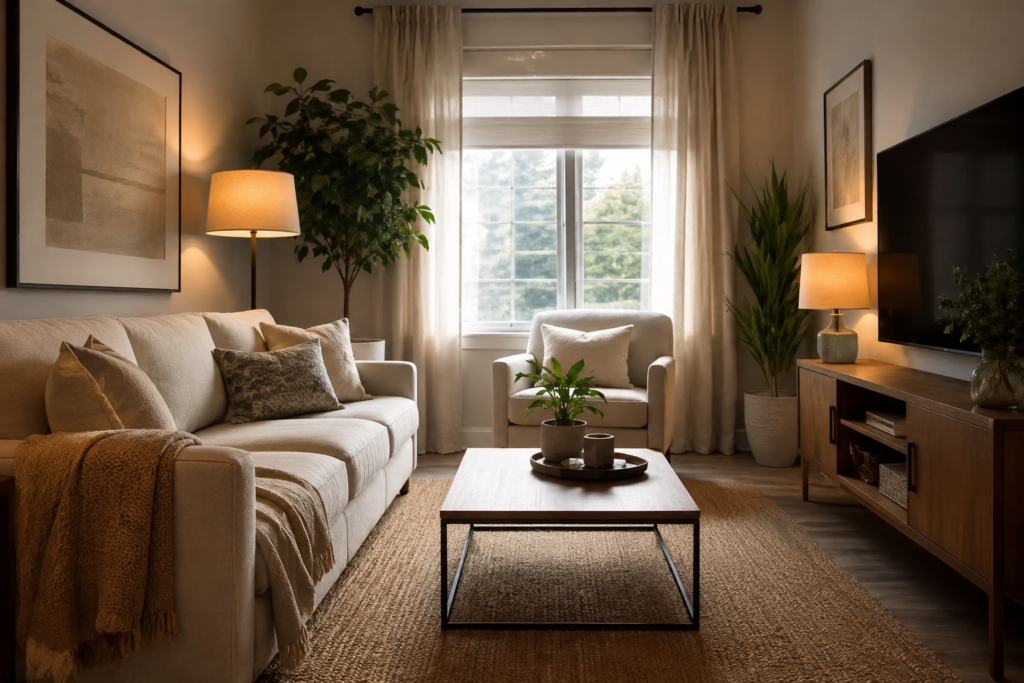
- Sheer curtains work much better in compact rooms
- Keeping windows visually open improves spaciousness
- Mirrors can help reflect light when used intentionally
However, mirrors only work when they reflect something visually pleasant — not clutter.
4. Using Only One Overhead Light
Lighting is one of the most underestimated elements in home design.
A single ceiling light creates:
- Flat shadows
- Harsh brightness
- Poor ambiance
This is especially problematic in small living rooms because it compresses the space visually.
What Layered Lighting Does Better
In smaller living rooms I’ve worked on, layered lighting consistently creates:
- More warmth
- Better depth
- Softer transitions between areas
I usually recommend combining:
- Floor lamps
- Table lamps
- Wall lighting
- Warm indirect lighting
One mistake I often see is choosing lighting based only on appearance instead of atmosphere.
Good lighting should shape how the room feels — not just illuminate it.
5. Choosing the Wrong Rug Size
This mistake affects proportions more than most people realize.
Small rugs visually break the room apart and make furniture arrangements feel disconnected.
What Works Better
A rug should visually anchor the seating area.
In most cases:
- At least the front legs of the furniture should sit on the rug
- Tiny “floating rugs” should be avoided
From a design perspective, proportion creates harmony.
And harmony makes spaces feel calmer and more spacious.
6. Overdecorating Open Shelves
Open shelving looks beautiful online — but often fails in real homes.
One of the biggest mistakes I see is treating every shelf as a place to display more objects.
This creates:
- Visual noise
- Clutter
- A room that feels smaller instantly
What Actually Works
In small spaces, negative space matters.
I usually recommend:
- Fewer decorative items
- Larger objects instead of many tiny ones
- Empty breathing areas between decor pieces
One well-styled shelf almost always looks better than five overcrowded ones.
7. Ignoring Vertical Space
Small living rooms require smarter use of height, not just floor space.
Many people forget that walls can dramatically influence how spacious a room feels.
Ways to Use Vertical Space More Effectively
I often recommend:
- Hanging curtains higher than the window frame
- Using vertical artwork
- Installing wall-mounted lighting
- Creating upward visual lines
These techniques naturally guide the eye upward and make ceilings appear taller.
In apartments especially, vertical visual flow can completely change how a room feels.
8. Using Too Many Dark or Heavy Visual Elements
Dark colors are not always bad.
But in smaller living rooms, balance becomes extremely important.
Heavy visual elements such as:
- Dark bulky furniture
- Thick curtains
- Oversized decor
- Heavy wood finishes
…can absorb light and reduce openness.
What Works Better in Real Homes
From my experience, small living rooms feel best when they combine:
- Light foundational tones
- Warm textures
- Controlled contrast
- Balanced materials
The goal is not to make the room look sterile or completely white.
The goal is balance.
9. Following Trends Instead of Functionality
This is one of the biggest mistakes in modern interior design overall.
Social media has created many living rooms that:
- Look good in photos
- Feel uncomfortable in real life
I often see spaces filled with:
- Trendy furniture
- Excessive decor
- Layouts that ignore daily use
What Actually Matters Most
A living room should support:
- Movement
- Comfort
- Conversation
- Daily routines
Design is not just visual.
It’s behavioral.
A beautiful room that feels uncomfortable will never truly succeed.
10. Buying Furniture Before Planning the Layout
This mistake creates problems from the very beginning.
Many homeowners:
- Buy furniture impulsively
- Choose based on aesthetics alone
- Ignore measurements and circulation
Then later realize:
- The room feels crowded
- Movement feels restricted
- Nothing fits properly
What I Recommend First
Before buying anything:
- Measure the room carefully
- Identify the focal point
- Define how the space will actually be used
- Create walking paths mentally first
From my experience, planning prevents most design mistakes before they happen.
Real Layout Adjustments That Instantly Improve Small Living Rooms
Some of the most effective changes I’ve seen require little or no money.
Examples include:
- Rotating furniture to improve flow
- Removing unnecessary side tables
- Creating clearer walkways
- Reducing visual clutter near windows
- Repositioning lighting sources
One thing I’ve consistently learned is this:
Small spaces respond dramatically to small changes.
Mistakes I Commonly See in Apartments
Apartment living rooms often present unique challenges.
The most common mistakes I see include:
- Oversized sectionals in narrow layouts
- Blocking windows with furniture
- Too many decor accents
- Poor lighting distribution
- Furniture chosen without considering scale
In smaller apartments, restraint is often more powerful than decoration.
What Actually Makes a Room Feel Bigger
People often assume expensive renovations are necessary.
But the rooms that feel the most spacious usually share the same characteristics:
- Clear visual flow
- Proper proportions
- Controlled clutter
- Good lighting
- Intentional furniture placement
Interestingly, square footage is rarely the deciding factor.
Final Thoughts (From Experience)
A small living room does not need to feel limiting.
Most of the time, the biggest improvements come from:
- Better decisions
- Better proportions
- Better balance
Over the years, I’ve seen compact spaces transform completely through smarter layouts, improved lighting, and more intentional design choices.
And in many cases, removing elements creates a bigger improvement than adding more decor.
Because ultimately, good design is not about filling a space.
It’s about helping the space function better for real life.
About the Author
Fher is an architect specializing in residential design and space optimization. Through Everyday Home Style, he shares practical, experience-based insights to help homeowners create spaces that are functional, balanced, and comfortable in everyday life.