
The fastest way to make a rental feel less temporary is to stop treating the walls like they belong to someone else. The best renter friendly wall decor ideas work because they add personality without creating a repair project later, which is exactly the sweet spot most renters need.
If you have blank beige walls, strict lease terms, or a security deposit you would like to keep, you still have options. A lot of them, actually. The trick is choosing decor that looks intentional in your space, not just removable in theory. Some ideas are better for small apartments, some work best in family homes, and some are worth skipping if your walls have delicate paint or textured finishes.
What makes wall decor renter friendly?
Truly renter friendly wall decor should come down cleanly, leave minimal residue, and avoid permanent changes like drilling, patching, or repainting unless your lease clearly allows it. That sounds simple, but the details matter.
For example, peel-and-stick products can be great on smooth walls and frustrating on textured ones. Adhesive hooks can hold a surprising amount of weight, but they are only as reliable as the paint underneath them. Even leaning art against the wall, which feels risk-free, works better in some rooms than others. In a narrow hallway or a kid-heavy living room, it may be more annoying than stylish.
Before you decorate, test one removable product in a hidden spot and check your lease for language around mounting, paint damage, and temporary wallpaper. Five minutes of caution can save you a lot of end-of-lease stress.
12 renter friendly wall decor ideas that actually feel stylish
1. Build a gallery wall with lightweight frames
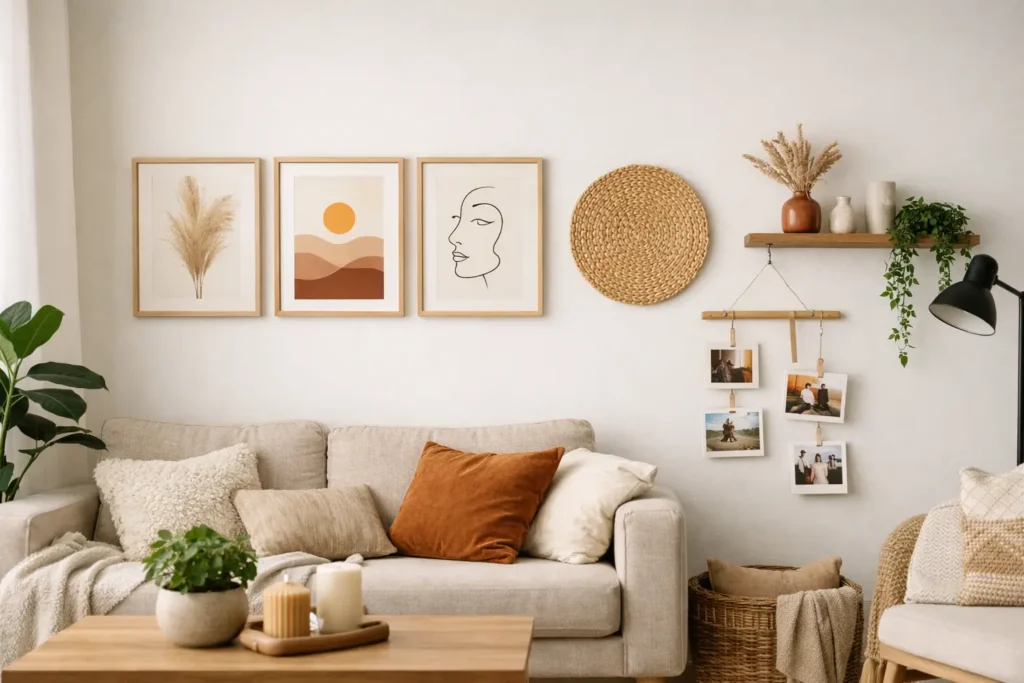
A gallery wall is one of the easiest ways to make a rental feel personal fast. Use lightweight frames, printable art, family photos, postcards, or even fabric swatches so you can hang everything with removable strips instead of nails.
The key to making it feel polished is consistency. You do not need matching frames, but you do need a plan. Stick to a simple color palette, similar mat sizes, or a repeating theme so the arrangement looks collected rather than chaotic.
2. Try peel-and-stick wallpaper on one wall
If your room feels flat, peel-and-stick wallpaper can add color and pattern in a big way. It works especially well behind a bed, in a dining nook, or on the wall you see first when you walk into the room.
This is one of those renter friendly wall decor ideas that depends heavily on your wall surface. Smooth painted drywall usually gives the best result. Old paint, heavy texture, or humid bathrooms can be trickier. If you are nervous, start small with a closet wall or the back of a bookshelf before committing to a larger area.
3. Use wall decals for quick pattern and charm
Wall decals have come a long way from nursery-only designs. You can find subtle arches, botanical motifs, geometric shapes, and faux molding effects that look far more elevated than you might expect.
They are especially useful if you want visual interest without covering an entire wall. A cluster over a desk, a soft pattern in a child’s room, or a simple border in an entry can make a space feel finished with very little effort.
4. Lean oversized art instead of hanging it
Not every piece needs to go on the wall to have wall impact. Oversized art leaning on a console, dresser, mantel, or even the floor can create that layered, lived-in look many rentals need.
This works beautifully in bedrooms and living rooms where you want a relaxed feel. It is less ideal in tight walkways or homes with very young kids or active pets, where stability matters more than style.
5. Add removable wall sconces or puck lights
Lighting changes a room faster than most decor, and renters often have very little built-in lighting to work with. Battery-powered sconces or puck lights mounted with removable adhesive can make your walls look styled while also making the room feel warmer.
This is one of the most practical upgrades on the list because it solves two problems at once. You get decor and better ambiance. Look for simple shapes and shades that coordinate with your furniture so they feel intentional, not improvised.
6. Hang a textile or tapestry for softness
If your space feels boxy or echoey, fabric on the walls can help. A woven hanging, tapestry, vintage scarf, quilt, or even a beautiful tea towel collection can bring in softness and color without much weight.
Textiles are also helpful in rentals where the paint color is not your favorite. Covering more visual space with fabric can reduce how much attention goes to the wall itself. Just keep scale in mind. A tiny textile on a big wall tends to feel lost.
7. Install a picture ledge with tension or furniture support
A traditional mounted picture ledge may not be lease-friendly, but you can get a similar look by styling narrow ledges on top of furniture or using freestanding shelf solutions that sit flush against the wall. This gives you the layered look of art without committing to exact placement.
It is perfect for people who like to switch things up. You can rotate prints, framed photos, and small objects seasonally without redoing the whole wall.
8. Create wall interest with mirrors
Mirrors are one of the smartest decorating tools for renters because they do more than fill space. They reflect light, make small rooms feel bigger, and add a finished touch to entryways, bedrooms, and dining areas.
Go lightweight if you plan to hang one with adhesive strips. For larger mirrors, leaning can be the safer choice. Just be honest about your room size and traffic flow. In a tiny apartment, an oversized mirror may feel glamorous or completely in the way.
9. Style removable hooks as part of the decor
Removable hooks do not have to be hidden. A row of clean, simple hooks can become wall decor when you use them to hang baskets, hats, lightweight art, or small seasonal accents.
This idea works well in entryways, kitchens, and kids’ rooms where function matters just as much as looks. It is also a good choice if you are decorating on a tight budget because the items you hang can change over time.
10. Use peel-and-stick mural panels
If wallpaper feels too repetitive, a mural panel can create a focal point with less commitment. Think soft landscapes, abstract washes, or oversized florals that act almost like art.
Murals tend to work best when the rest of the room is fairly simple. If your furniture, bedding, and accessories are already busy, adding a bold mural may tip the room into visual overload. In a calmer space, though, it can make a rental feel custom.
11. Layer cork, cane, or wood-look panels
There are now lightweight decorative panels made to attach temporarily, and they can add texture in a way flat art cannot. Faux slat panels, cane-style pieces, or framed cork tiles can warm up a wall and bring in that cozy, natural look many people want right now.
This idea works especially well in home offices and dining areas where you want a little character without a lot of color. As always, check the adhesive and remove carefully. Some textured products grip more strongly than expected.
12. Turn everyday objects into wall decor
Sometimes the most believable decor is the kind that feels useful. Hanging cutting boards in the kitchen, woven trays in the dining area, or pretty baskets in a hallway gives your walls personality while keeping the room grounded in real life.
That practical-pretty balance fits rental living well. You are not trying to stage a showroom. You are trying to create a home you love, with pieces that work hard and look good doing it.
How to choose the right renter friendly wall decor ideas for your space
Start with the room’s biggest problem. If it feels dark, choose mirrors or removable lighting. If it feels plain, go for wallpaper, decals, or art. If it feels cold, add textiles or wood-toned pieces. Decorating gets easier when you solve one clear problem instead of chasing a vague idea of style.
Scale matters too. Small art on a large wall often makes a room feel more unfinished, not less. In smaller rentals, fewer larger pieces usually look calmer than lots of tiny ones competing for attention.
And do not forget the wall finish itself. Smooth walls give you more flexibility. Textured walls may limit adhesives, which means leaning decor, lightweight hangings, and furniture-supported styling become more practical choices.
Common mistakes renters make with wall decor
The biggest one is trusting packaging more than the wall. Just because a product says removable does not mean it will behave perfectly on every paint finish. Testing first is always worth it.
Another common mistake is spreading decor evenly across every wall. Real rooms usually look better when one or two areas get the focus and the rest stay quieter. This gives the eye a place to land and keeps the space from feeling busy.
Finally, many renters choose decor only because it is temporary, not because they actually like it. That is how you end up with a room full of safe choices that still feels unfinished. Temporary does not have to mean generic.
At Everyday Home Style, we love ideas that make a rental feel personal without making life harder later. Your walls do not need permanent changes to tell your story. They just need a little intention, the right materials, and decor that feels like you.
Professional Tips Before You Hang Anything
After working with homeowners, renters, and small-space layouts, I’ve noticed that wall decor problems rarely come from the decor itself. Most issues happen because people focus on what they want to hang before considering the wall surface, room proportions, and daily use of the space.
Before installing any renter-friendly wall decor, take a close look at the wall finish. Smooth painted drywall gives you the most flexibility, while textured walls often reduce the effectiveness of removable adhesives. In older rentals, paint quality can vary significantly from one room to another, so testing products in an inconspicuous area is always worth the extra few minutes.
I also recommend thinking about furniture placement before decorating. Artwork, mirrors, and wall accents tend to look more intentional when they visually connect with furniture below them rather than floating independently on a large wall. This simple design principle creates a more balanced and professionally styled look.
Finally, resist the urge to decorate every empty wall immediately. The most inviting homes usually have a mix of decorated areas and visual breathing room. A well-chosen focal point often has more impact than multiple smaller decorations competing for attention.
Final Thoughts From Experience
One thing I’ve learned through years of residential design work is that renters often underestimate how much impact walls have on the overall feel of a home. People tend to focus on furniture first, but blank walls are usually what make a rental feel temporary and unfinished.
The good news is that creating a home that reflects your personality does not require permanent renovations, expensive custom work, or risking your security deposit. In many cases, a thoughtfully placed mirror, a well-composed gallery wall, or a removable wallpaper accent can completely change how a room feels.
When helping clients improve rental spaces, I always encourage them to focus on function before decoration. Ask yourself what the room is missing. Does it need warmth? Better lighting? More personality? A stronger focal point? Once you identify the real problem, choosing the right wall decor becomes much easier.
I also believe that the best renter-friendly decorating decisions are the ones that can move with you. Instead of investing heavily in solutions tied to a specific apartment, prioritize artwork, mirrors, textiles, and decorative pieces that can adapt to future homes. Over time, these pieces become part of your personal style rather than temporary fixes for a single space.
At the end of the day, great design is not about ownership—it is about creating a home that supports your daily life. Whether you are renting for one year or ten, your space deserves to feel comfortable, personal, and intentionally designed.
About the Author
Fher is an architect specializing in residential design and space optimization. With hands-on experience improving how homes function and feel, he shares practical insights to help homeowners create spaces that are both beautiful and livable.