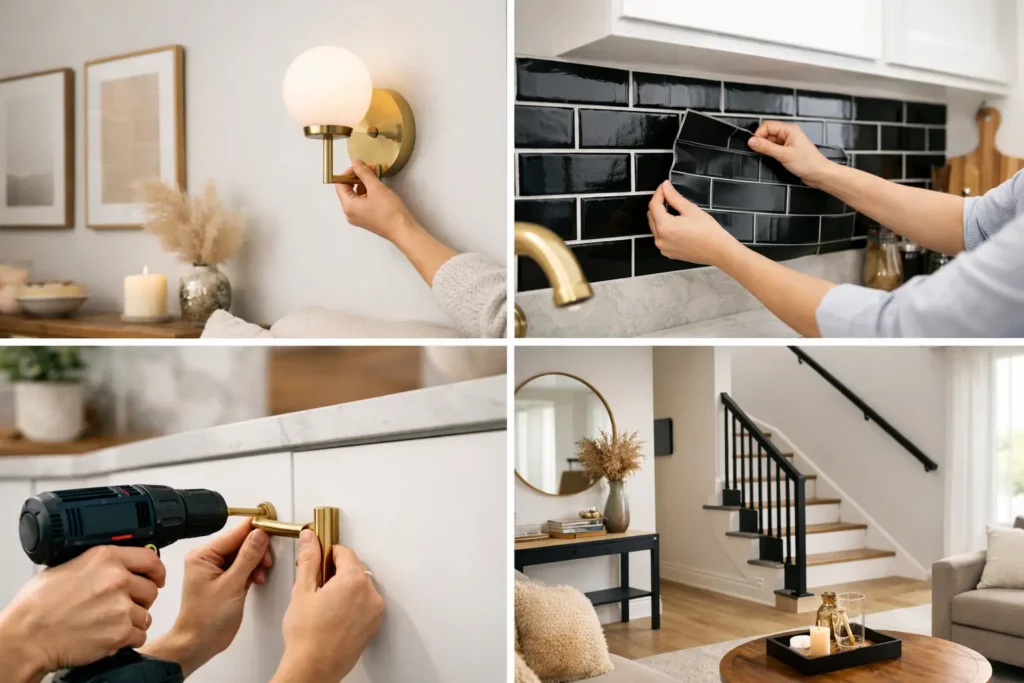

You do not need a full renovation budget to make your home feel better by the end of the weekend. The best easy diy home upgrades are the ones that fix a daily annoyance, add a little style, and make your space feel more like you. A swapped light fixture, a painted piece of furniture, or a cleaner entryway setup can change the mood of a room faster than most people expect.
That is the sweet spot for real-life home improvement – changes that feel noticeable without turning your house upside down. If you want your space to look more polished, more functional, and a little more intentional, these are the upgrades worth starting with.
Why easy DIY home upgrades work so well
Small upgrades have a way of solving bigger problems. When a room feels unfinished, it is often not because it needs all new furniture. It usually needs better lighting, cleaner lines, more useful storage, or one visual focal point that makes the space feel complete.
That is why easy DIY home upgrades are so satisfying. They are approachable, they cost less than major projects, and they give you visible progress quickly. For renters, they can make a temporary home feel more personal. For homeowners, they are a smart way to improve everyday living before committing to larger updates.
There is a trade-off, of course. Small projects will not fix bad layout, damaged flooring, or outdated plumbing. But they can absolutely make your kitchen feel fresher, your bedroom calmer, or your living room more finished.
1. Upgrade cabinet hardware
If your kitchen or bathroom feels dated, start with the hardware. Replacing old knobs and pulls is one of the simplest ways to make cabinets look newer and more intentional.
Matte black gives a crisp, modern look. Warm brass feels softer and more decorative. Brushed nickel is classic and easy to blend with existing finishes. The key is consistency. Mixing random metals and shapes can make the room feel more chaotic, not more styled.
Before you buy, measure the distance between screw holes on existing drawer pulls. If you choose a different size, you may end up patching and repainting. That can still be worth it, but it turns a quick project into a longer one.
2. Paint one piece of furniture instead of the whole room
A lot of people assume paint belongs on walls only, but furniture is often the better place to start. A tired nightstand, console, dresser, or bookshelf can become a standout piece with one can of paint and a little prep.
This works especially well if your room already has enough color and you just need more contrast or personality. Deep green, charcoal, creamy white, and muted blue all tend to look more elevated than overly bright shades. Swap the hardware at the same time, and the result can feel surprisingly custom.
The trade-off is durability. Furniture gets touched more than walls, so skipping sanding or primer usually shows later. If you want the piece to last, the prep matters.
3. Add peel-and-stick wallpaper in a small zone
Peel-and-stick wallpaper is one of those easy diy home upgrades that can look high-end when used with restraint. A full room can be beautiful, but a smaller application is often easier and less risky.
Try it on the back of a bookshelf, inside a linen closet, on a laundry room wall, or in a powder room. These smaller zones give you the visual payoff without the pressure of wrapping an entire bedroom in pattern.
For renters, this can be a smart way to bring in personality without making a permanent change. Just be realistic about the surface underneath. Textured walls, older paint, and humid spaces can all affect how well it sticks.
4. Replace basic light fixtures
Lighting changes everything. If a room feels flat, sterile, or a little builder-grade, the fixture may be the reason. Swapping out a basic flush mount, dining pendant, or vanity light can make the whole space feel more current.
You do not need anything overly dramatic. Often, a simple linen shade, glass globe, or clean-lined metal fixture is enough. The goal is to make the room feel considered, not crowded.
If wiring makes you nervous, this may be the moment to call in help. There is no shame in choosing the project that feels safe. An easy upgrade should still feel manageable.
5. Create a more useful entryway
Even a tiny entry can work harder. If shoes pile up by the door, bags land on chairs, and keys disappear daily, the space is asking for structure.
A narrow bench, a row of hooks, and a tray for small essentials can turn a messy drop zone into something that feels calm and welcoming. If floor space is limited, go vertical with wall hooks and a floating shelf. Add a mirror, and the area instantly feels brighter and more complete.
This is one of the most practical upgrades because you notice it every single day. It is not just about looks. It changes how your home functions the moment you walk in.
6. Frame your bathroom mirror
A plain builder-grade mirror can make the whole bathroom feel unfinished. Framing it with trim is a simple project that adds definition and warmth without replacing the mirror itself.
Wood trim painted to match your vanity feels cohesive. A black frame adds contrast. A natural wood tone can soften a bright white bathroom and make it feel less stark.
Measure carefully before cutting anything, and think about moisture. Bathrooms need finishes that can handle humidity. It is a small detail, but it makes a big difference in how polished the room feels.
7. Use caulk and paint to clean up tired edges
This is not the glamorous project, but it may be the one with the biggest before-and-after effect. Fresh caulk around a tub, sink, backsplash, or window trim makes a room look cleaner almost immediately.
Pair that with touch-up paint on scuffed baseboards, door frames, and trim, and your home starts to feel better cared for. These are the details people often cannot name, but they notice when they are done.
It is also one of the most budget-friendly ways to refresh a space before guests come over or before you tackle bigger plans.
8. Install open shelving where it actually helps
Open shelving can be beautiful, but it depends on how you live. In the right spot, it adds storage and style. In the wrong spot, it becomes a place for visual clutter.
A small shelf above a coffee station, in a laundry nook, or over a desk can be genuinely useful. It gives everyday items a home and can free up cabinet or counter space. The trick is not to overload it. A few practical pieces, one decorative object, and some breathing room usually look better than a shelf packed edge to edge.
If you know you do not love styling shelves, choose closed storage instead. Your home should support your habits, not fight them.
9. Refresh switch plates, outlet covers, and vents
These are easy to ignore until they are freshly replaced. Yellowed switch plates, dented vents, and mismatched outlet covers can make a room feel older than it is.
Replacing them is inexpensive and fast, especially if you are already painting or updating hardware. It is the kind of finishing touch that helps a room look cleaner and more intentional without anyone quite knowing why.
In older homes, check sizing before you buy. Not every vent or plate will match newer standard pieces exactly.
10. Make over a wall with picture ledges or trim
If a room feels blank but you are not ready for a full gallery wall, picture ledges are a low-stress option. They let you layer frames, art, and a few small objects without committing to a dozen nail holes.
Simple trim molding is another smart upgrade if you want the room to feel more architectural. Even basic box molding in a dining room, hallway, or bedroom can add character that plain walls often lack.
This works best when the rest of the room stays fairly simple. If you already have bold wallpaper, heavy drapes, and lots of decor, extra wall detail may tip the space into looking busy.
11. Upgrade soft finishes for a custom feel
Not every DIY project needs a drill or paintbrush. Some of the most effective upgrades come from fabric and finish choices that make a room feel layered.
Try hemming curtains so they hang properly, adding trim to plain panels, changing pillow covers, or replacing an old lampshade with one that has more texture. These updates are subtle, but they make your home feel less pieced together and more thoughtfully styled.
This is where Everyday Home Style readers often get the biggest payoff. A room can be functional and still feel cozy, personal, and finished. Sometimes the right curtain length does more for a space than a much more expensive purchase.
How to choose the right easy DIY home upgrades first
If you are not sure where to begin, do not ask which project is trendiest. Ask what bothers you most when you use the space. That question usually points you in the right direction.
If your bathroom feels dull, start with the mirror or hardware. If your entry is chaotic, focus on storage and hooks. If your living room feels flat, change the lighting or add wall detail. Function first, style right behind it – that is usually the smartest order.
It also helps to choose one upgrade that changes how the room works and one that changes how it looks. That combination tends to make a home feel noticeably better without requiring a major budget or a month of unfinished projects.
A home you love is rarely built in one dramatic sweep. More often, it comes together through small choices that make daily life easier, prettier, and a little more comforting every time you walk through the door.
Common DIY Upgrade Mistakes to Avoid
DIY projects are a great way to improve your home, but a few common mistakes can turn a simple upgrade into a frustrating experience. Before you start, keep these pitfalls in mind.
1. Choosing projects based only on trends
A project that looks great on social media may not work for your home or lifestyle. Open shelving, bold paint colors, and statement lighting can be beautiful, but they should support how you actually use the space. Prioritize function first and trends second.
2. Skipping prep work
Whether you’re painting furniture, installing wallpaper, or updating trim, preparation matters. Cleaning surfaces, sanding when necessary, and using the right primer often determine whether a project looks professional or starts showing wear a few months later.
3. Taking on too many upgrades at once
It’s tempting to start several projects over a weekend, but unfinished tasks can quickly make a home feel more chaotic. Focus on one upgrade at a time, complete it properly, and enjoy the progress before moving on to the next project.
4. Ignoring scale and proportion
A common decorating mistake is choosing fixtures, shelves, mirrors, or artwork that are either too large or too small for the space. Before buying anything, take measurements and visualize how the finished result will fit within the room.
5. Forgetting about maintenance
Some upgrades look amazing on day one but require more upkeep than expected. Open shelves collect dust, light-colored fabrics show stains more easily, and trendy finishes may need regular touch-ups. Consider how much maintenance you’re realistically willing to handle before committing to a project.
6. Spending money where it won’t be noticed
Not every upgrade delivers the same impact. In my experience, improvements that affect daily routines—such as better lighting, smarter storage, updated hardware, or a more functional entryway—often provide more satisfaction than purely decorative changes. When working with a limited budget, focus on upgrades that improve both how a room looks and how it works.
The best DIY upgrades aren’t necessarily the most ambitious ones. They’re the projects that solve real problems, fit your lifestyle, and continue making your home feel better long after the work is finished.
Final Thoughts From Experience
After working with countless homes, I’ve noticed that the upgrades people appreciate most are rarely the biggest or the most expensive. They’re usually the ones that solve a daily frustration while making a room feel more intentional.
One mistake I see often is homeowners focusing on dramatic projects before addressing the small details that affect how a space functions. New countertops might look impressive, but if the entryway is still cluttered, the lighting is poor, or storage isn’t working, the home won’t feel significantly better to live in.
That’s why I always recommend starting with upgrades that improve both function and appearance. Better lighting, organized entryways, updated hardware, and cleaner finishes tend to deliver a surprisingly high return for the time and money invested. They create momentum, and that momentum often leads to smarter design decisions later.
The most successful homes aren’t built through one massive renovation. They evolve through a series of thoughtful improvements that reflect how the people living there actually use the space. If you’re deciding where to start, focus on the room or feature that frustrates you most on a daily basis. Solving that problem first will almost always have a bigger impact than chasing the latest design trend.
A well-designed home doesn’t need to be perfect. It needs to feel comfortable, functional, and personal—and often, a few carefully chosen DIY upgrades are enough to make that happen.
About the Author
Fher is an architect specializing in residential design and space optimization. With hands-on experience improving how homes function and feel, he shares practical insights to help homeowners create spaces that are both beautiful and livable.


Pingback: Galley Kitchen Transformation Ideas That Work - everydayhomestyle.io
Pingback: Sustainable Home Trends That Work in Real Life - everydayhomestyle.io