
A home can look polished without looking like it was copied straight from a showroom. The decor trends worth paying attention to are less about buying a whole new set of furniture and more about making rooms feel warmer, more personal, and easier to live in. That is good news whether you are furnishing your first apartment, refreshing a family living room, or trying to make a small house feel more like yours.
The biggest shift is toward spaces with character. Think comfortable seating, softer shapes, meaningful objects, and colors that make you want to stay awhile. You do not need to chase every new look. A few thoughtful changes can make your home feel current while still reflecting the people who live there.
Which Decor Trends Are Worth Bringing Home?
The most useful trends solve a real decorating problem. They add warmth to a builder-basic room, help an open space feel defined, or make an affordable home feel more collected. Here are seven ideas with enough staying power to use your own way.
1. Warm wood is replacing the all-gray look
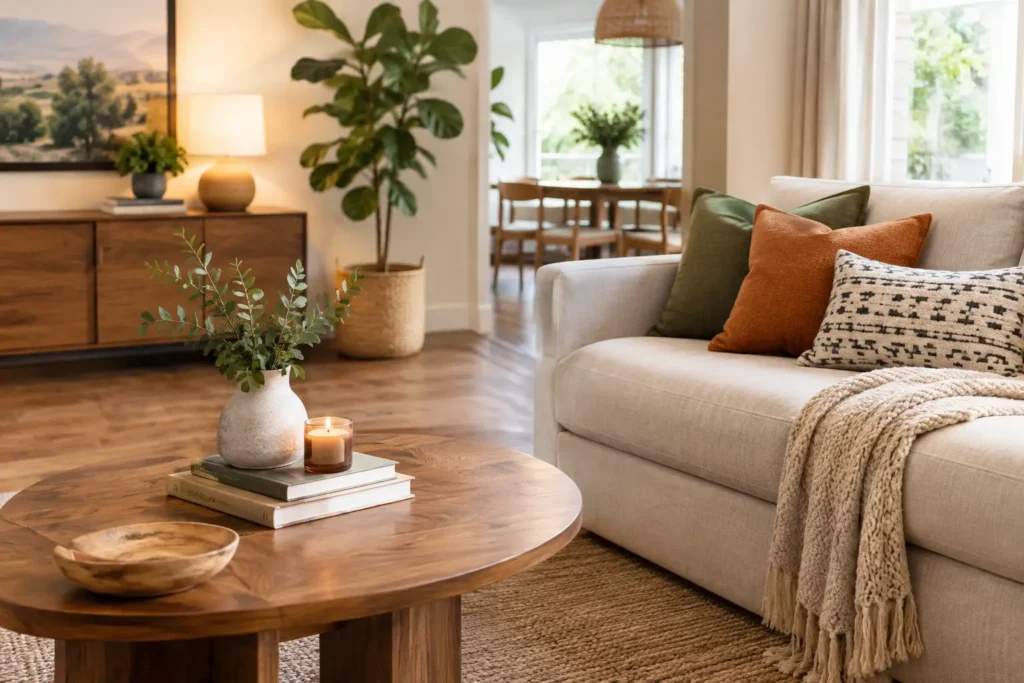
Cool gray finishes had a long run, but warmer woods are bringing back a sense of comfort. Oak, walnut, maple, and medium-toned vintage finishes all work beautifully with cream, soft white, olive green, and earthy clay colors. The goal is not to make every surface match. A room with a honey-toned side table, a darker picture frame, and a natural woven basket often feels more relaxed than one filled with identical furniture.
If replacing large furniture is not in the budget, start smaller. A wood tray on the coffee table, a thrifted stool beside the sofa, or warm-toned frames on a gallery wall can shift the feeling of a room quickly. Renters can get the same effect through accessories without changing floors or cabinets.
2. Curves make practical rooms feel softer
Rounded silhouettes are showing up in mirrors, lamps, coffee tables, dining chairs, and even storage pieces. They are especially helpful in rooms full of straight lines, such as kitchens with square cabinets or living rooms with a boxy sectional. One curved item can break up all that structure and make the space feel more welcoming.
Choose curves based on how you use the room. A round coffee table can be easier to walk around in a tight living room, particularly if kids or pets are always passing through. An arched mirror is a lower-commitment option that adds shape without taking up floor space. Avoid adding curves everywhere, though. A room needs some clean lines to keep it from feeling overly themed.
3. Color drenching creates a cozy, finished feeling
Color drenching means using one color across more than just the walls. You might paint the trim and doors the same shade, choose curtains in a similar tone, or bring in a rug that echoes the wall color. It can make a small room feel surprisingly intentional because your eye is not stopping at lots of sharp contrasts.
This look does not require a dark, dramatic paint color. Soft sage, dusty blue, muted terracotta, warm beige, and creamy mushroom can all create a layered effect. In a bedroom or office, color drenching can make the room feel calm and tucked away. In a large, bright living room, it can add the warmth that white walls sometimes lack.
Before committing, test the color in morning, afternoon, and evening light. Paint changes more than most people expect, and a shade that looks cozy online may read too muddy in a north-facing room. If painting feels like too much, try a tonal version with pillows, throws, art, and a table lamp shade.
4. Collected rooms beat perfectly matched sets
One of the most refreshing decor trends is also one of the most budget-friendly: rooms that look gathered over time. Instead of purchasing a matching bedroom or living room set, pair newer basics with a few pieces that feel personal. That could be a family heirloom, a flea market vase, books you actually read, or art from a local maker.
A collected look still needs a little editing. Pick a simple thread that ties things together, such as a repeated wood tone, a limited color palette, or similar metal finishes. Then let the individual pieces bring personality. For example, a clean-lined neutral sofa can live easily with an antique brass lamp, a colorful ceramic bowl, and a hand-me-down side table.
This approach is ideal if you are decorating slowly. Buy the sofa you need now, then give yourself time to find the accents that make it feel like home. Patience often creates a more interesting room than a single shopping trip ever could.
5. Lamps are doing more of the decorating work
Overhead lighting is useful, but it rarely makes a room feel inviting on its own. Layered lighting is becoming a key part of comfortable homes, with table lamps, floor lamps, sconces, and small accent lights used to create a softer glow. It is one of the easiest ways to make an ordinary room look more thoughtful after sunset.
Aim for light at more than one height. In a living room, that might mean a floor lamp by the reading chair, a table lamp on a console, and a small lamp on a bookshelf. In the bedroom, bedside lamps create a calmer routine than a bright ceiling fixture. Use warm white bulbs to avoid the harsh, bluish look that can make even a beautiful room feel cold.
For a quick upgrade, swap an outdated lampshade for linen, pleated fabric, or a shape with a little texture. It is a small detail, but it can change the mood of the entire corner.
6. Natural texture is replacing flat, overly polished surfaces
Homes are leaning into materials that look and feel real: linen, cotton, wool, rattan, cane, stone, ceramic, and unfinished-looking wood. These textures bring dimension to neutral rooms and make everyday spaces feel less sterile. They also work across many decorating styles, from modern farmhouse to coastal, traditional, and relaxed contemporary.
Texture matters most when your palette is quiet. A beige living room can look flat if every surface is smooth, but it feels rich when it includes a nubby throw, a woven shade, a clay vase, and a wool rug. You do not need all of those elements at once. Add texture gradually and leave some breathing room.
Be realistic about care, especially in busy households. A chunky wool rug may be lovely, but a washable low-pile rug might be the better choice under a dining table. Style should support your life, not create another chore.
7. Flexible spaces are becoming more intentional
Many homes now ask one room to do several jobs. A dining area may double as a work zone, a guest room may hold workout equipment, and a living room may need a spot for toys. The answer is not necessarily more storage bins. It is creating small zones that help each activity feel contained.
Use a rug to define a seating area, a narrow console to create an entry drop zone, or a small desk that can close up at the end of the day. Furniture that earns its footprint is especially valuable in apartments and smaller homes. Think storage ottomans, benches with drawers, expandable dining tables, and wall-mounted shelving.
The best flexible spaces do not advertise every function at once. When work is done, tuck away supplies. When guests arrive, clear the dining table. A few simple reset habits help a multipurpose room remain peaceful instead of constantly feeling unfinished.
How to Use Decor Trends Without Starting Over
A trend is useful when it gives you a fresh lens for what you already own. Before buying anything, walk through the room and notice what feels off. Maybe the sofa is comfortable but the lighting is too bright. Maybe the walls are fine, but the room needs warmer wood and less visual clutter. Solving that one issue will have more impact than adding random trendy accessories.
Try the one-third rule for a manageable refresh: keep roughly two-thirds of the room as it is, then change one-third through textiles, lighting, art, paint, or smaller furniture. This keeps your budget steady and prevents a space from looking dated when the next wave of inspiration appears.
It also helps to give trends time. Save a few images, notice what you still love after several weeks, and measure before you buy. A home you love is not built by reacting to every new idea. It grows through choices that make your daily routines more comfortable, your rooms more useful, and your cozy corner of the world more personal.
What I Would Prioritize in a Real Home
If you are working with a limited budget, there is no reason to tackle all seven trends at once. In fact, trying to do too much can make a room feel less personal.
I would start with lighting. If a room feels harsh or flat after sunset, adding a table lamp or floor lamp can make a bigger difference than buying several decorative pieces.
Next, look at comfort and layout. Make sure the furniture is easy to use and that there is enough space to move around it. A beautiful coffee table that makes everyone squeeze past the sofa is not a successful decorating choice.
After that, introduce warmth through wood and natural texture. These elements can soften a room without requiring a complete redesign. A woven basket, wood stool, linen curtains, or textured throw may be enough.
Then add personality. This is where art, books, collected objects, family pieces, and other meaningful details become important. They do not need to match perfectly. They just need to feel like they belong to the people who live there.
Trends should come last.
Once the room works well, choose one or two current ideas that genuinely appeal to you. Maybe that is a curved mirror, a warmer wood tone, or a color-drenched bedroom. Using trends as accents rather than instructions makes it much easier to create a home that feels current without feeling temporary.
If you have to choose between something that looks good and something that makes the room easier and more enjoyable to live in, I would almost always choose the latter. Good decorating should improve everyday life, not just the way a room looks in a photograph.
Final Thoughts From Experience
After working through different decorating styles and seeing how they translate into real homes, I have learned that the rooms people enjoy most are rarely the ones that follow the most trends. They are the ones where the choices make sense together and support the way the household actually lives.
That is why I would not start with a shopping list when refreshing a room. I would start by asking what is not working. Is the room too cold at night? Does the furniture make it difficult to move around? Does everything look like it came from the same store? Or does the space simply lack a few personal details?
Those answers usually point to a better solution than chasing whatever happens to be popular.
If I were refreshing a room today, I would prioritize lighting, comfort, and texture before adding decorative accessories. A warmer lamp, a better rug, or a comfortable chair can change the way a room feels much more than a shelf full of trendy objects. Once those basics work, I would bring in one or two current trends that genuinely fit the space.
I would also resist the temptation to make everything match. Some of the most welcoming rooms have a mixture of old and new, smooth and textured, simple and decorative. A piece with a little history can often give a room more character than several brand-new accessories.
Finally, I would buy more slowly than I think I need to. Decorating takes time, and that is not a problem to solve. Leaving some space for a piece you find later, a photograph from a trip, or something that simply catches your eye can make a home feel much more personal.
The goal is not to create a room that looks perfect in a photograph. It is to create a home that feels good on an ordinary Tuesday evening.
That is the part of decorating that tends to last long after the trend has passed.
About the Author
Fher is an architect specializing in residential design and space optimization. With hands-on experience improving how homes function and feel, he shares practical insights to help homeowners create spaces that are both beautiful and livable.