
If your garage feels cluttered and disorganized, installing cabinets for the garage can completely transform the space. Whether you use your garage for storage, DIY projects, or as a workspace, the right cabinets help you maximize efficiency and keep everything in order.
In this guide, you’ll learn what garage cabinets are, their benefits, types, and how to choose the best option for your needs.
What Are Cabinets for the Garage?
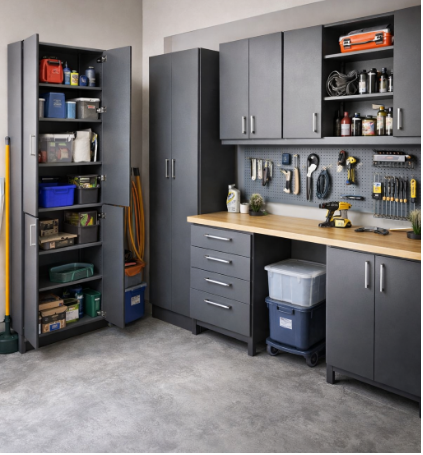
Cabinets for the garage are storage systems specifically designed to organize tools, equipment, and household items in a garage environment. Unlike regular cabinets, they are built to withstand dust, moisture, and heavy use.
They can include shelves, drawers, lockable doors, and modular components that allow you to customize your storage setup.
Why You Need Cabinets for the Garage
Garages often become a dumping ground for tools, seasonal items, and miscellaneous clutter. Without proper organization, it becomes difficult to find what you need.
Garage cabinets solve this problem by creating structured storage spaces that improve accessibility and efficiency. They also help protect your belongings from damage caused by dust, moisture, and dirt.
Benefits of Cabinets for the Garage
1. Better Organization
Garage cabinets provide designated spaces for tools and equipment, making it easier to find items quickly and maintain order.
2. Reduces Clutter
By storing items behind closed doors, cabinets eliminate visible mess and create a cleaner environment.
3. Protects Your Belongings
Cabinets shield your items from dust, moisture, and pests, helping extend their lifespan.
4. Maximizes Space
Well-designed cabinets make better use of vertical and wall space, freeing up floor area.
5. Improves Safety
Storing hazardous tools and chemicals inside cabinets reduces the risk of accidents, especially in homes with children or pets.
6. Adds Value to Your Home
A well-organized garage can enhance your home’s appeal and resale value.
Types of Cabinets for the Garage
Choosing the right type depends on your space and storage needs.
Wall-Mounted Cabinets
Mounted on the wall to keep the floor clear, ideal for small garages or limited space.
Freestanding Cabinets
Large, standalone units that offer maximum storage capacity for tools and bulky items.
Modular Cabinets
Flexible systems that can be rearranged or expanded over time as your needs change.
Rolling Cabinets
Portable cabinets with wheels, perfect for workshops where mobility is important.
Best Materials for Garage Cabinets
Material plays a key role in durability and performance.
Metal (Steel or Aluminum)
Strong, durable, and ideal for heavy tools. Resistant to wear and impact.
Wood
Aesthetic and sturdy, suitable for lighter storage and less humid environments.
Laminate or Engineered Wood
Resistant to moisture and temperature changes, making it a practical choice for garages.
How to Choose the Best Cabinets for the Garage
To get the most value from your investment, consider these factors:
Storage Needs
Think about what you plan to store—tools, sports equipment, or seasonal items.
Size and Space
Measure your garage carefully to ensure cabinets fit without overcrowding.
Weight Capacity
Choose cabinets that can handle heavy items if needed.
Accessibility
Store frequently used items at eye level and less-used items higher up.
Installation Type
Decide between wall-mounted or freestanding options based on your space.
Choosing Garage Cabinets Based on What You Store
One of the biggest mistakes homeowners make is selecting garage cabinets before deciding what will actually be stored inside them.
If your garage primarily houses hand tools and power tools, durable metal cabinets with adjustable shelves often provide the best long-term performance. They can handle heavier loads and withstand frequent use.
For seasonal decorations, camping gear, or household supplies, larger cabinets with deep shelves may be a better option because they accommodate bulky items more efficiently.
Sports equipment often benefits from a combination of cabinets and open storage. While cabinets help keep smaller accessories organized, larger items such as bicycles, helmets, and oversized gear may require dedicated wall storage solutions.
Before purchasing any cabinet system, create a list of the items you plan to store. This simple step can help you choose a setup that remains functional as your storage needs evolve.
Cabinets vs. Shelving: Which Is Better?
Both cabinets and shelving have their advantages, but cabinets offer more protection and a cleaner look.
- Cabinets: Better for enclosed, dust-free storage
- Shelving: Better for quick access and larger items
Many homeowners combine both for a balanced storage system.
Tips for Organizing Your Garage Cabinets
To get the best results, follow these tips:
- Declutter before installing cabinets
- Group similar items together
- Use labels for easy identification
- Store hazardous items in locked cabinets
- Keep frequently used tools within reach
Creating Garage Storage Zones for Better Organization
One of the most effective ways to keep a garage organized is to divide it into dedicated storage zones.
For example, tools can be stored in one section, gardening supplies in another, and seasonal decorations in a separate area. This approach reduces clutter and makes it easier to locate items when needed.
Frequently used items should be placed in the most accessible cabinets, while rarely used belongings can be stored in higher or less convenient locations.
Many professional organizers recommend assigning every item a designated storage area. This simple habit helps maintain order long after the initial organization project is complete.
Common Garage Cabinet Mistakes to Avoid
Even high-quality garage cabinets can become inefficient if they are not planned properly.
One common mistake is purchasing cabinets without measuring the available space carefully. Cabinets that are too large can restrict movement and make the garage feel cramped.
Another frequent issue is storing heavy items on shelves that are not designed to support significant weight. Always check manufacturer recommendations to avoid sagging shelves or structural damage.
Many homeowners also overlook future storage needs. Choosing a cabinet system with adjustable shelves or modular components often provides more flexibility as tools, equipment, and household items accumulate over time.
Finally, avoid filling every cabinet immediately. Leaving some open space makes future organization easier and prevents the system from becoming overcrowded.
Are Cabinets for the Garage Worth It?
Yes, cabinets for the garage are one of the most effective ways to improve storage, organization, and usability. They turn a chaotic space into a functional and efficient area that’s easier to maintain.
Final Thoughts From Experience
After organizing garages of different sizes, one thing becomes clear: the most effective storage systems are designed around how the space is actually used.
Many homeowners focus on maximizing storage capacity, but accessibility is just as important. A garage filled with cabinets may still feel cluttered if frequently used items are difficult to reach or poorly organized.
When choosing garage cabinets, focus on durability, flexibility, and the types of items you need to store. Adjustable shelves, well-planned storage zones, and room for future growth often provide more value than simply purchasing the largest cabinet system available.
A thoughtfully organized garage can save time, reduce frustration, and make everyday tasks easier. In many homes, garage cabinets are one of the most practical upgrades for improving both storage and functionality.
About the Author
Fher is an architect specializing in residential design and space optimization. With hands-on experience improving how homes function and feel, he shares practical insights to help homeowners create spaces that are both beautiful and livable.