
A rug can make a living room feel finished, turn a bedroom into a softer landing spot, or give a small apartment an instant sense of definition. But the wrong size can make even lovely furniture look scattered. This guide to choosing area rugs will help you find one that fits your room, your routine, and the way you want your home to feel.
The good news is that rug shopping does not require a designer’s eye or a huge budget. It starts with a few practical decisions: where the rug will sit, how much foot traffic it will handle, and whether you want it to quietly support the room or become the star of it.
Start With the Room, Not the Rug
It is easy to fall for a beautiful pattern online or in a store, then try to make it work at home. A more reliable approach is to look at your room first. Consider the furniture arrangement, the walking paths, natural light, pets, kids, and the purpose of the space.
A formal dining room may need a flat, easy-to-clean rug that lets chairs slide back without catching. A family room often benefits from a soft but durable option that can handle movie nights, snack crumbs, and plenty of socked feet. In a bedroom, comfort may matter more than stain resistance, especially if you want that first step out of bed to feel cozy.
Think about what the rug needs to do. It can anchor a seating area, protect hard flooring, soften a rental’s less-than-perfect carpet, or bring color to a neutral room. When you know its job, choosing becomes much easier.
Choose the Right Rug Size Before Anything Else
Size is the decision that has the biggest visual impact. A rug that is too small tends to float in the middle of the room, making furniture look disconnected. When in doubt, going one size larger is usually the more polished choice.
Living room rug sizing
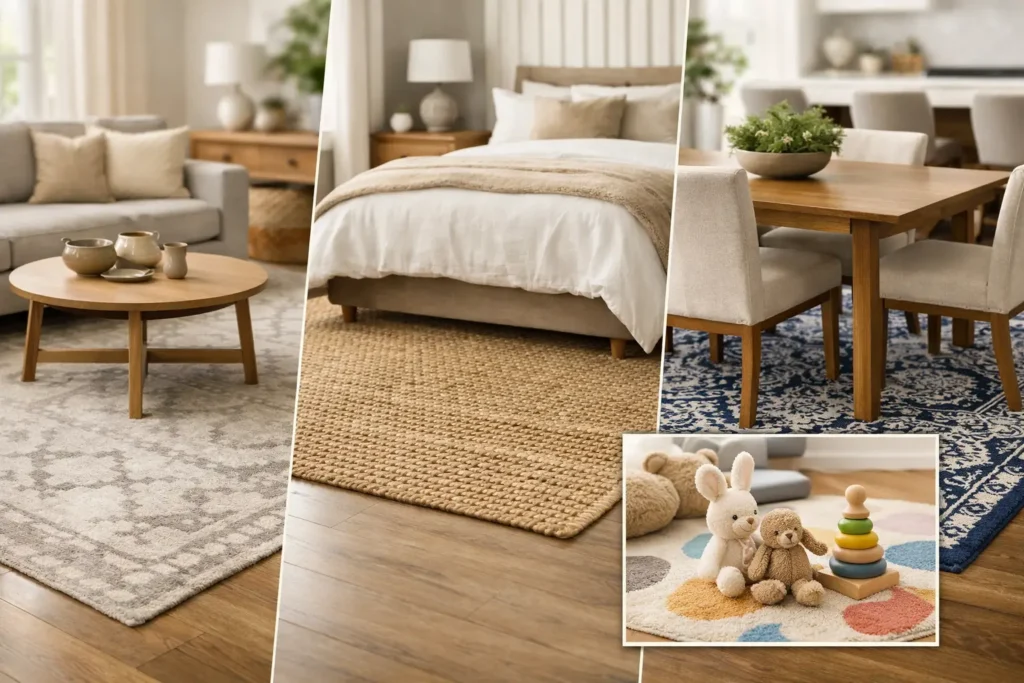
In a living room, aim to have at least the front legs of your sofa and chairs sitting on the rug. This creates one connected conversation area rather than a collection of separate pieces. In a larger room, placing all furniture legs on the rug can feel especially generous and pulled together.
An 8-by-10-foot rug works well in many average living rooms, while a 9-by-12-foot rug may be better for open layouts or larger sectionals. A 5-by-8-foot rug can work in a compact apartment, but it should still reach beneath the front legs of the main seating whenever possible.
Dining room rug sizing
For a dining table, the rug should extend at least 24 inches beyond every edge of the table. That extra space allows chairs to remain on the rug when pulled out. Measure with chairs in their everyday position, not tucked tightly under the table.
Round tables often look wonderful on round rugs, but a rectangular rug can work beautifully too. The key is leaving enough room for movement. A rug that catches chair legs will become frustrating fast, no matter how good it looks.
Bedroom rug sizing
In bedrooms, a large rug can sit under the lower two-thirds of the bed, extending beyond both sides and the foot. For a queen bed, an 8-by-10-foot rug is often a comfortable fit. King beds usually need a 9-by-12-foot rug to avoid looking undersized.
If a full-size rug is not in the budget, use two runners along each side of the bed or one runner at the foot. This is an especially smart solution for renters and anyone furnishing a room in stages.
Hallways, entryways, and kitchens
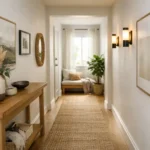
Runners bring warmth to narrow spaces that can otherwise feel forgotten. Leave a few inches of flooring visible along each side so the runner feels intentional rather than wall-to-wall. In an entryway, make sure the rug does not block the door swing. In the kitchen, choose a runner that sits where you stand most often, such as in front of the sink or along the main prep area.
Before buying, use painter’s tape to outline the rug dimensions on the floor. It is a simple trick, but it lets you see whether the size supports the room’s layout before you spend a dollar.
A Guide to Choosing Area Rugs by Material
The prettiest rug in the world is not a good fit if it cannot keep up with your household. Material affects softness, durability, cleaning, cost, and how the rug feels underfoot.
Wool is a longtime favorite because it is soft, naturally durable, and forgiving with everyday use. It can be more expensive and may shed when new, but a well-made wool rug can last for years. It is a lovely choice for bedrooms, living rooms, and spaces where comfort matters.
Cotton rugs are casual, lightweight, and often washable, making them useful in kitchens, bathrooms, and laid-back entryways. They are typically less plush and may need a rug pad to stay put.
Synthetic materials, including polypropylene and polyester, are practical workhorses. They are usually budget-friendly, stain-resistant, and easy to clean, which makes them a natural pick for busy family rooms, dining spaces, and homes with pets. The trade-off is that they may not feel as luxurious as wool, and lower-quality versions can show wear sooner.
Natural fibers such as jute, sisal, and seagrass add texture that feels relaxed and collected. They are especially beautiful in neutral rooms, coastal-inspired spaces, and homes that need a little warmth without another bold pattern. Keep in mind that they can feel rough under bare feet and may not be ideal for damp areas or frequent spills.
For a home with kids or pets, washable rugs can be a real sanity saver. They are not always as thick or substantial as traditional rugs, but the convenience can be worth it in a breakfast nook, playroom, or high-traffic hallway.
Pick a Color and Pattern That Works With Real Life
A rug does not need to match every color in your room. In fact, rooms often feel more personal when the rug connects with just a few existing elements, such as the sofa, curtains, artwork, or a favorite throw pillow.
If your furniture is neutral, a patterned rug can add personality without asking you to repaint or replace major pieces. Look for a pattern that includes at least one color already present in the room, plus one or two shades you would like to introduce.
For colorful sofas, dramatic wallpaper, or a room with lots of visual activity, a quieter rug may create the breathing room the space needs. Solid rugs and subtle tonal patterns can still offer plenty of interest through texture.
Practicality matters here, too. Very light solid rugs show dirt more quickly, while very dark rugs can reveal lint, pet hair, and dust. A medium-toned rug with a varied pattern is often the most forgiving choice for everyday homes. It gives you the softness and style you want without turning every tiny mark into a problem.
Do Not Skip the Rug Pad
A rug pad may not be glamorous, but it makes a noticeable difference. It helps prevent slipping, adds cushioning, protects the floor beneath, and can make a thinner rug feel more substantial.
Choose a pad designed for your flooring type, especially over hardwood, vinyl, or laminate. Avoid anything that could discolor or damage the finish. For a dining room or entryway, a thinner pad keeps the surface stable. In a bedroom or lounge space, a thicker pad can add a little extra comfort.
Shop Smart Without Settling
A larger rug naturally costs more, but there are ways to make a room feel finished without stretching the budget too far. Consider a durable synthetic rug in high-traffic zones and save a more luxurious material for a bedroom or quieter sitting area. You can also layer a smaller patterned rug over an affordable natural-fiber base to create a fuller look.
Pay attention to pile height as you shop. Low-pile rugs are easier to vacuum and better for dining areas, doors, and homes with mobility concerns. Plush, high-pile rugs feel inviting in bedrooms and cozy corners, but they can hold onto crumbs and pet hair.
Finally, give yourself permission to choose what fits your life, not just what looks perfect in a styled photo. The right rug is one you are happy to walk on, live with, and enjoy every day. A thoughtful choice can make even a simple room feel more settled, more welcoming, and more like a home you love.
Final Thoughts From Experience
Choosing an area rug is one of those decorating decisions that looks simple until you start measuring the room, comparing materials, and thinking about how the space is actually used.
From a practical standpoint, I’ve found that the most successful rug choices usually come from answering a few basic questions before getting attached to a particular style: How much traffic does this room get? What furniture needs to sit on the rug? How often will it need to be cleaned? And how much maintenance am I realistically willing to do?
Size should usually come first. A beautiful rug that is too small can make an otherwise well-planned room feel disconnected, while the right size can pull the furniture together and make the entire space feel more intentional. That is why I recommend marking the rug dimensions on the floor with painter’s tape before ordering. It takes only a few minutes and can prevent a surprisingly expensive mistake.
Material is just as important. A soft wool rug may be wonderful in a bedroom or quieter living space, but a busy dining area or a home with pets may call for something easier to clean. There is no single “best” rug material. The better question is whether the material makes sense for the room and your everyday routine.
I also wouldn’t overlook the rug pad. It is one of those small purchases that can make a rug feel more secure, comfortable, and substantial. It can also help prevent the rug from shifting every time someone walks across it.
Finally, don’t choose a rug based only on how it looks in a perfectly styled photograph. Think about the version of your room that exists on an ordinary Tuesday. There may be shoes by the door, crumbs under the dining table, a dog walking across the living room, or someone pulling a chair back from the table.
That is the room your rug has to work in.
The best area rug is not necessarily the most expensive, the trendiest, or the most dramatic. It is the one that fits the space properly, works with the furniture, suits the amount of traffic, and is easy enough to live with that you still enjoy it years after bringing it home.
About the Author
Fher is an architect specializing in residential design and space optimization. With hands-on experience improving how homes function and feel, he shares practical insights to help homeowners create spaces that are both beautiful and livable.